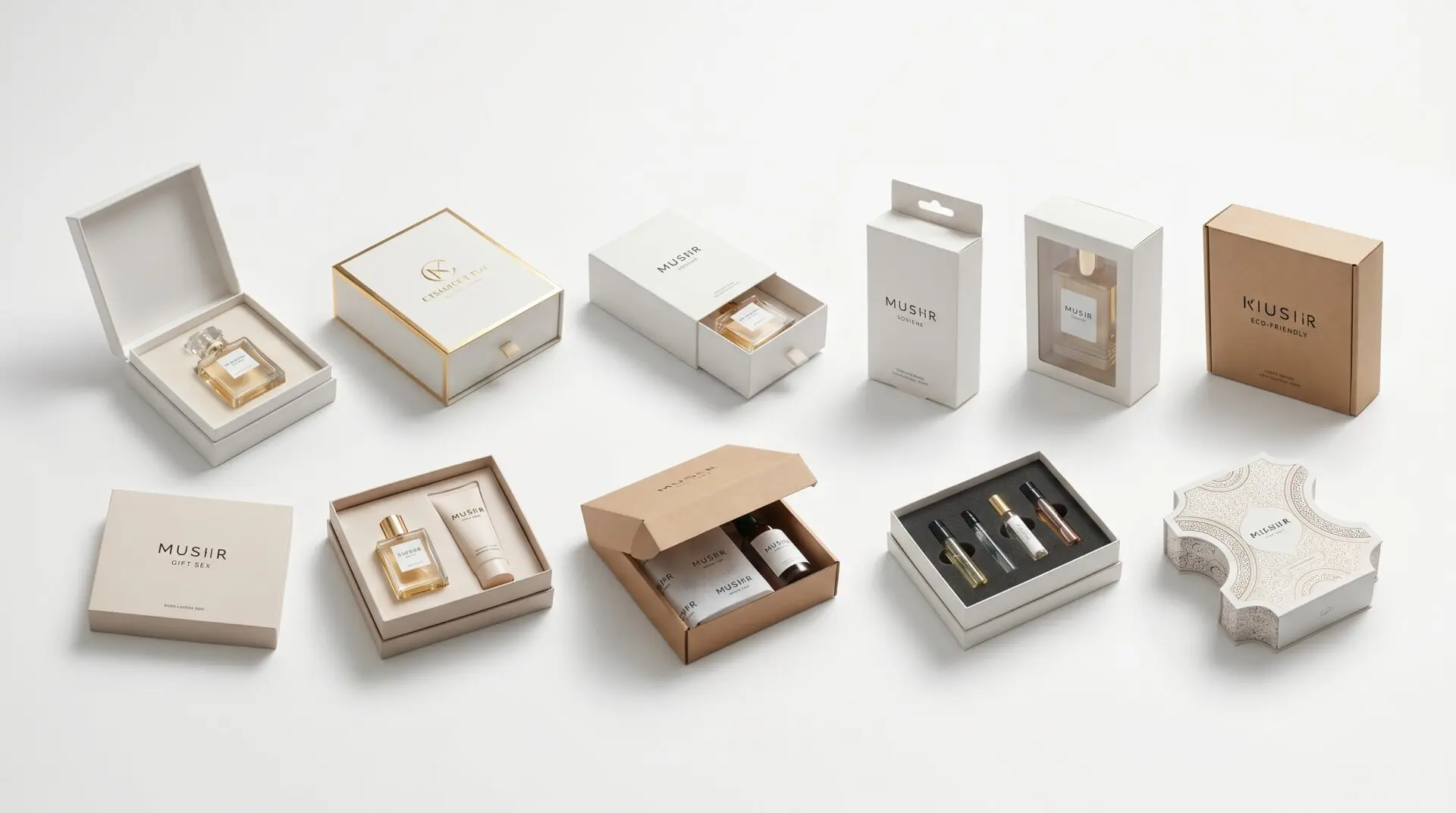

Retail Box Manufacturer · UK · Since 2008

Retail Boxes UK

Folding Carton · SRP / Shelf-Ready · Counter Display · Windowed · Hang Tab · Luxury Rigid · Eco Kraft · No Minimum · Free UK Shipping

A Leeds health supplement brand came to us after their Boots buyer compliance review rejected their retail box for the third time. The product was excellent. The box looked fine. The problem was the EAN-13 barcode: printed too close to the edge, quiet zone violated, placed on a fold line. Three rejections. Twelve weeks of delays. One reprint that fixed none of the underlying problems. We rebuilt the box from the dieline up, specified the barcode zone to GS1 UK standards, moved it to a flat printable surface with correct quiet zones, and corrected the facing width to Boots' planogram specification. First submission after that: approved. On shelf within six weeks. Sales up 34% in the first quarter versus the previous box.

After 15 years and 8,500+ UK businesses, retail boxes are the packaging category where getting the fundamentals wrong costs not just money it costs the listing itself. GS1 barcode compliance, planogram facing width, SRP perforation placement, RAM recyclability rating these are not design considerations. They are the conditions under which your product is allowed to sit on the shelf. We know them, we apply them, and we confirm them before a single box goes to press.

No Minimum — Every Type
Free UK Shipping
GS1 Barcode Compliance
SRP Buyer Specs Reviewed
7–10 Day Production
FSC Certified Board
ISO 9001:2015
EPR Green Rating

Quick Pricing — Tuck-End Carton, 350gsm SBS, CMYK

£1.65
100 boxes
£0.62
1,000 boxes
£0.38
5,000 boxes
£0.24
10,000 boxes

Tuck-end carton · CMYK print · GS1 zone · Free UK shipping

⚡ Urgent or Seasonal Deadline?

Standard: 7–10 working days. Contact us now — honest answer within the hour.

What Are Retail Boxes?

What Are Retail Boxes UK The Complete Guide to Packaging That Actually Sells

A retail box is any packaging designed to present, protect, and sell a product on a physical or online retail shelf. It does more work than any other form of packaging: it must protect the product through the supply chain, comply with GS1 barcode and planogram specifications, carry mandatory labelling information, meet retailer SRP requirements, fit correctly into a planogram facing, and when a shopper arrives in front of it communicate enough value in under 20 seconds to trigger a purchase decision.

The global retail packaging and display boxes market was valued at $111.1 billion in 2025 and is projected to reach $282 billion by 2034, growing at a CAGR of 10.1% (GMI Research 2025). The UK is one of the most sophisticated retail packaging markets globally with Tesco, Sainsbury's, Boots, Waitrose, Superdrug, and Amazon all operating specific compliance requirements for boxes entering their supply chains. Paper and paperboard packaging holds 35% of the custom packaging box market and is growing fastest as EPR fees drive brands away from plastic alternatives.

UK e-commerce grew 15.8% in 2025, bringing online retail to 27.8% of all UK sales. Retail boxes now serve two distinct sales environments: physical shelf and digital unboxing. A retail box specified only for physical shelf with heavy laminate, high gloss, deep emboss may perform poorly when photographed for a product listing or when the unboxing experience is shared on social media. A box specified only for D2C unboxing may fail retail buyer compliance. The best retail box specification is the one that works across both environments and we review both at quote stage.

Here's the reality about retail box compliance that no UK packaging supplier wants to explain clearly: retail boxes are rejected at buyer review for technical specification failures far more often than for design quality failures. The GS1 barcode is in the wrong position (on a fold, on a seam, without sufficient quiet zone). The facing width doesn't match the planogram slot the buyer has allocated. The SRP perforation is positioned incorrectly for the retailer's stocking process. The OPRL label is wrong for the specified board finish. The pack depth exceeds the standard shelf depth. These are not creative problems. They are specification problems and every one of them costs a listing and weeks of delay.

AEO Answer: What is a retail box?

A retail box is the primary printed carton that holds a product for sale in a store or online. It protects the product, communicates brand and product benefits, fits the retailer's planogram specification, carries a GS1-compliant barcode for scanning at point of sale, and meets specific retailer requirements for shelf-ready or display use. Retail boxes are manufactured from paperboard (SBS or SRS board for folding cartons) or corrugated board (for shelf-ready and display formats), with finishes ranging from basic CMYK print to soft-touch laminate, foil, embossing, and windowed panels.

Get Your Retail Box Quote →

UK Retail Packaging — Key Numbers 2026

$111.1bnGlobal retail packaging + display market (2025)

10.1%CAGR — fastest-growing packaging category

20 secAverage time shoppers spend per shelf section

27.8%UK e-commerce share of all retail sales (2025)

Oct 2026RAM eco-modulated EPR fees begin — finish matters now
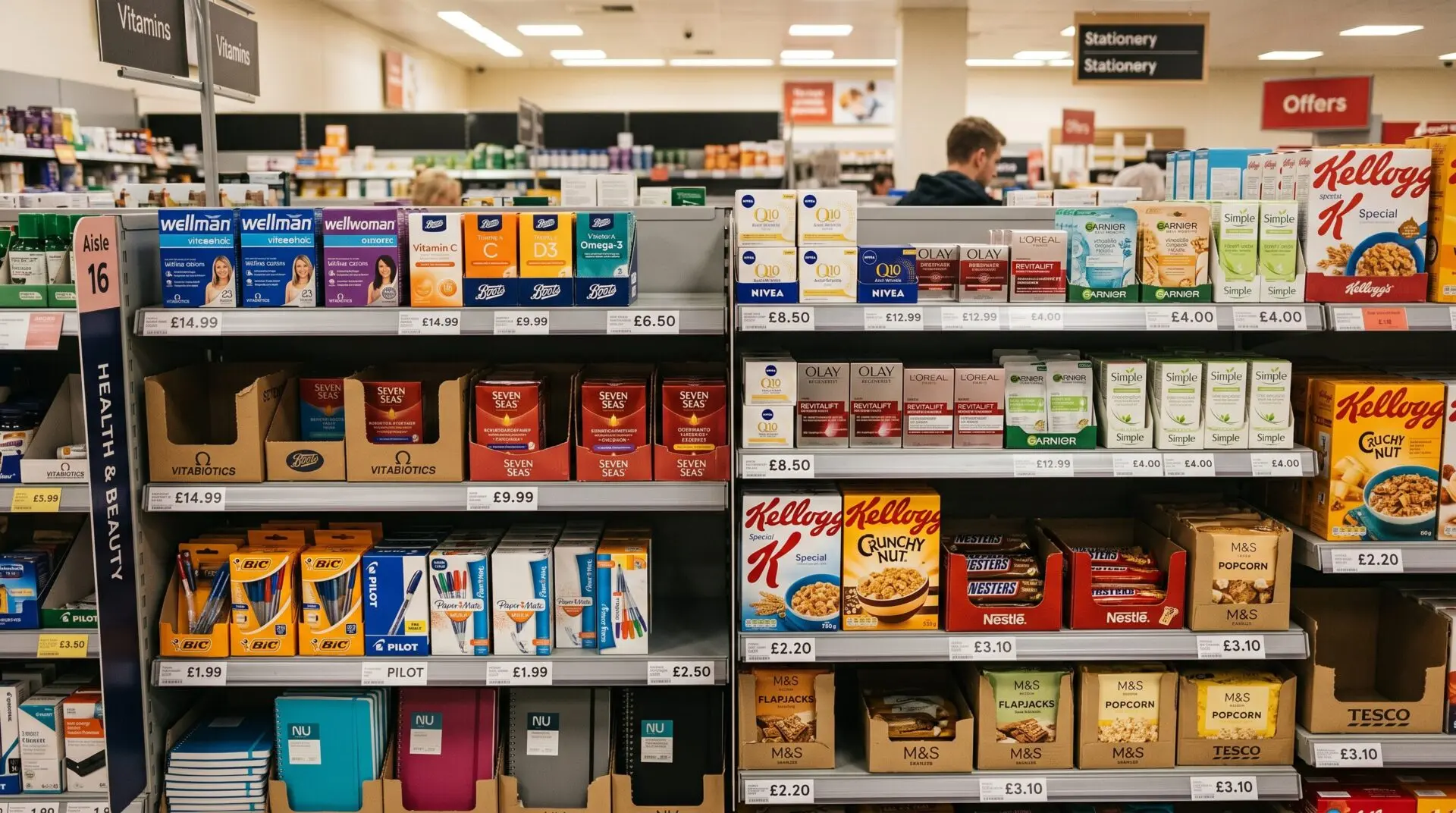
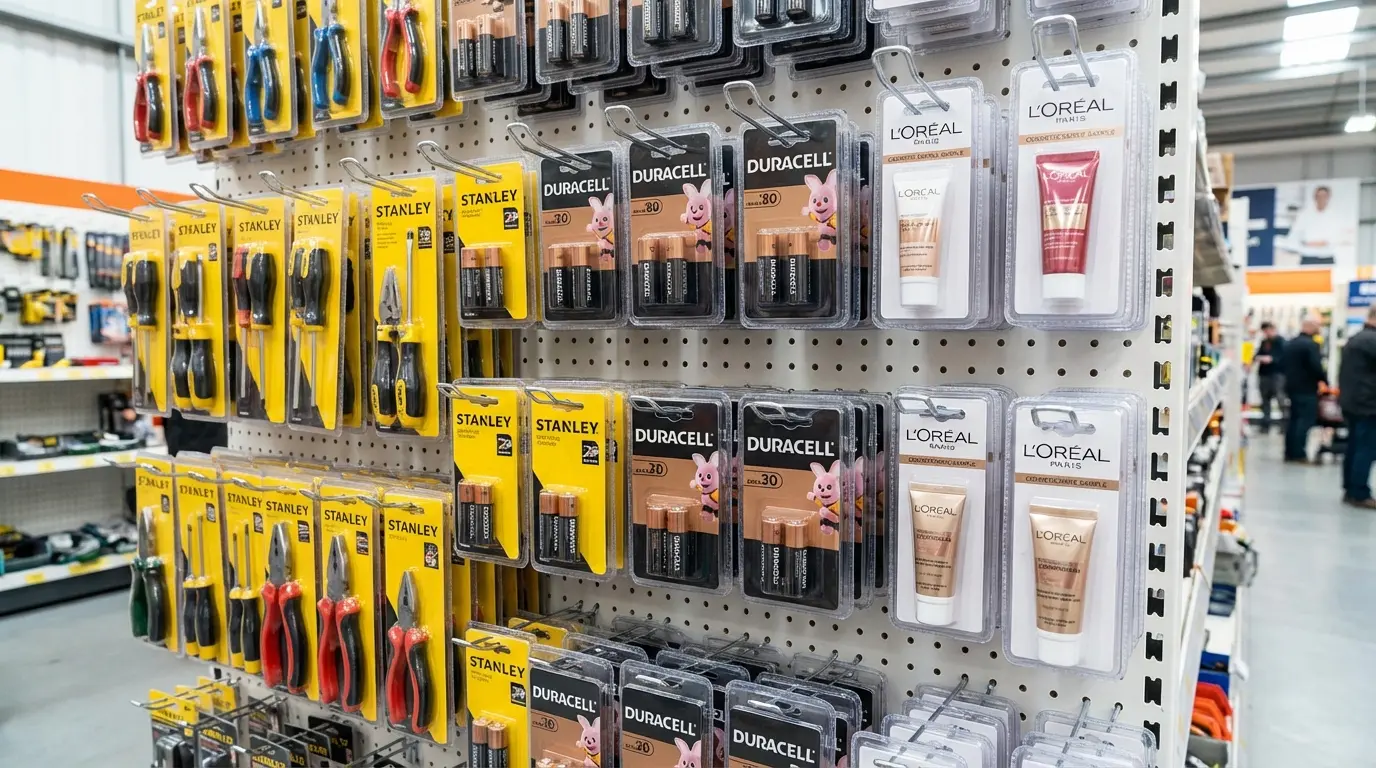
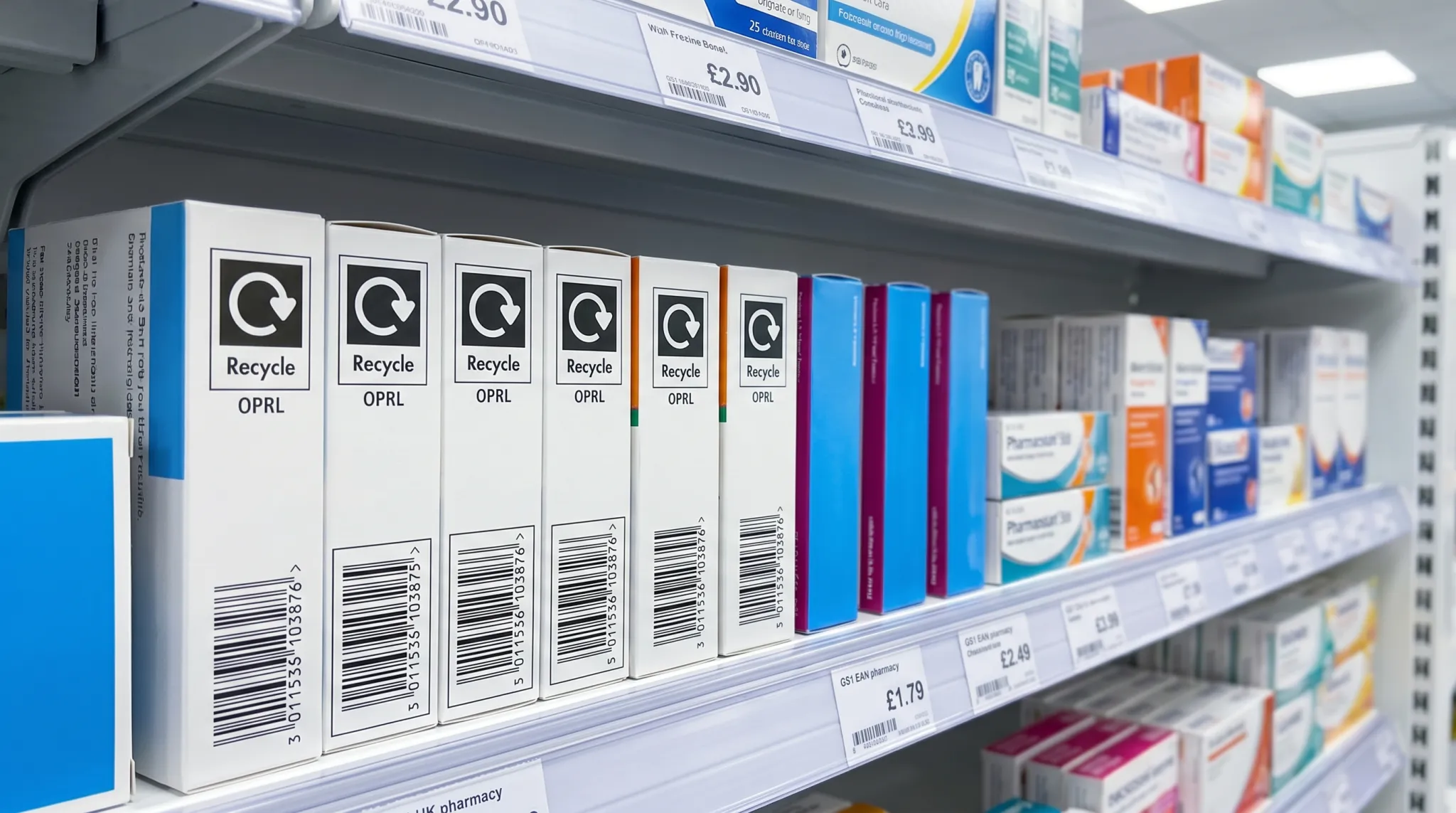
UK retail packaging shelf display showing multiple branded folding cartons, windowed retail boxes, and SRP shelf-ready cases on a retail gondola

What a Retail Box Must Do

Protect product through supply chain

Carry GS1-compliant barcode correctly positioned

Fit retailer planogram facing specification

Meet SRP compliance if supermarket-listed

Convert a shopper in under 20 seconds on shelf

Carry correct OPRL label for RAM/EPR compliance

Why They Matter

Six Reasons Your Retail Box Is the Highest-Stakes Packaging Decision You Make

The retail box is simultaneously a compliance document, a sales tool, an EPR liability, a brand communication, and a supply chain asset. Most brands think of it as the last of these. The most commercially successful brands treat it as all five simultaneously.

The Listing or the Rejection — GS1 Barcode Compliance

The GS1 EAN-13 barcode on a retail box is not a design element — it is the machine-readable identifier that connects your product to every POS system, distribution centre, and inventory management platform in the retailer's network. A barcode placed on a fold, a seam, a curve, or without the correct quiet zone will fail the scanner test at buyer review. The quiet zone requirement is a minimum of 3.63mm on either side of the barcode (for EAN-13 at standard magnification). The barcode must be printed on a flat surface. It must not cross any fold, crease, or seam. It must be on a light background with sufficient contrast. We review GS1 placement on every retail box at proof stage — it is not optional and it is not something we charge extra for. Leeds supplement brand: barcode failure three times before reaching us. Fixed at proof stage. Boots listing approved first submission thereafter.

The 20-Second Rule — Shelf Conversion

Research consistently shows that shoppers spend an average of 20 seconds per shelf section — the total time your retail box has to attract attention, communicate value, and trigger a pick-up. This is not a creative brief. It is a physics problem. Within those 20 seconds, the box must: be visible from 2–3 metres as the shopper approaches the aisle; communicate the primary product benefit at a glance from 1 metre; and confirm purchase justification (size, quantity, price, quality) when handled at 30cm. These three distances require three different design decisions — a shelf 'colour block' visible from 2 metres, a benefit headline readable from 1 metre, and detail copy readable at arm's length. Most retail boxes are designed for only one of these distances. We review all three at design stage. Edinburgh gifts brand: changed from an unreadable pattern-heavy box to a colour-blocked design with a single clear benefit statement. Sell-through rate: +62% in the same stockist locations.

EPR and RAM Rating — Your Box Finish Is Now a Cost Decision

From October 2026, UK Extended Producer Responsibility (EPR) fees will be eco-modulated using the Recyclability Assessment Methodology (RAM). Packaging rated Green (fully kerbside recyclable) will attract the lowest EPR fee. Amber and Red packaging will attract higher fees. Right now, 37% of UK packaging components are rated Amber or Red. A retail box with matte laminate or gloss laminate will be rated Amber — higher EPR fees from October 2026. A retail box with aqueous coating or uncoated will be rated Green — lowest EPR fees. This is a direct financial consequence of the finish specification you choose for your retail box. We provide the RAM rating for every box finish at quote stage and supply full EPR data (material type, weight, RAM rating) with orders over 1,000 units at no charge. Bristol food brand: switched from laminate to aqueous matte coating, OPRL label changed from "Check local recycling" to "Recycle," Planet Organic listing achieved, EPR fees reduced by £160/tonne.

Retailer Compliance — Planogram, SRP, and the Listing Process

UK major retailers — Tesco, Sainsbury's, Waitrose, Boots, Superdrug, Asda — all have specific compliance requirements for retail boxes entering their supply chains. These include: facing width (the width of the front panel must match the planogram slot the category manager has allocated — typically 40–80mm for most categories); pack depth (must not exceed the standard shelf depth for the allocated section); SRP perforation placement (for shelf-ready cases, the front lip must tear at the correct height — Sainsbury's specifies 40–50% of product height); and OPRL labelling. A box that fails any of these specifications is returned before the buyer evaluates the product. London FMCG brand: SRP case for Sainsbury's, front lip height specified to Sainsbury's standard, compliance passed first submission, store staff restocking time -40%. We review the relevant retailer's specification at every SRP and retail box quote.

Price Point Anchoring — The Box Sets What the Product Is Worth

In retail, the consumer's price expectation is established by the physical quality of the box before the product is examined. A rigid box with soft-touch laminate communicates a product worth £25–£80. A plain tuck-end carton with no finish communicates a product worth £5–£18. This is not perception management — it is the physical language of pricing that retail buyers, buyers' assistants, and consumers all use unconsciously and consistently. Edinburgh indie gifts brand: moved from plain tuck-end carton at £12 retail price to rigid box with soft-touch and gold foil. Retail price repositioned to £28 — the same product, same gift shop locations. Sell-through did not decrease. Revenue per unit increased by 133%. The box decided the price, not the other way around.

CMA Greenwashing Enforcement — Eco Claims on Retail Boxes Are Now Legally Regulated

The Competition and Markets Authority received enforcement powers under the Digital Markets, Competition and Consumers Act from April 2025. Fines for misleading environmental claims on packaging can reach 10% of global annual turnover without a court case. Claims that are now legally exposed on retail boxes: "eco-friendly packaging" (too vague, no evidence), "100% recyclable" on a laminated box (false), "sustainable packaging" without certification (no verification), "recycled packaging" without verified recycled content percentage. Claims that are defensible: "Made from FSC certified paper" (with CoC certificate number), "Kerbside recyclable" on uncoated SBS or SRS with aqueous coating, specific verified recycled content percentage. Manchester beauty brand: printed "eco-friendly box" on a matte lam carton, flagged by their retail buyer. We rebuilt the box with aqueous coating and a specific FSC claim. Planet Organic listing achieved. We apply only verifiable claims and flag legally exposed ones at proof stage.

10 Types of Retail Boxes

10 Types of Retail Boxes UK All Formats, All Quantities, No Minimum

Every retail box format available from a single unit upward. All include free UK delivery, free design service, GS1 barcode zone review, and OPRL-correct label based on your specified finish.

Which Retail Box Format Do You Need?
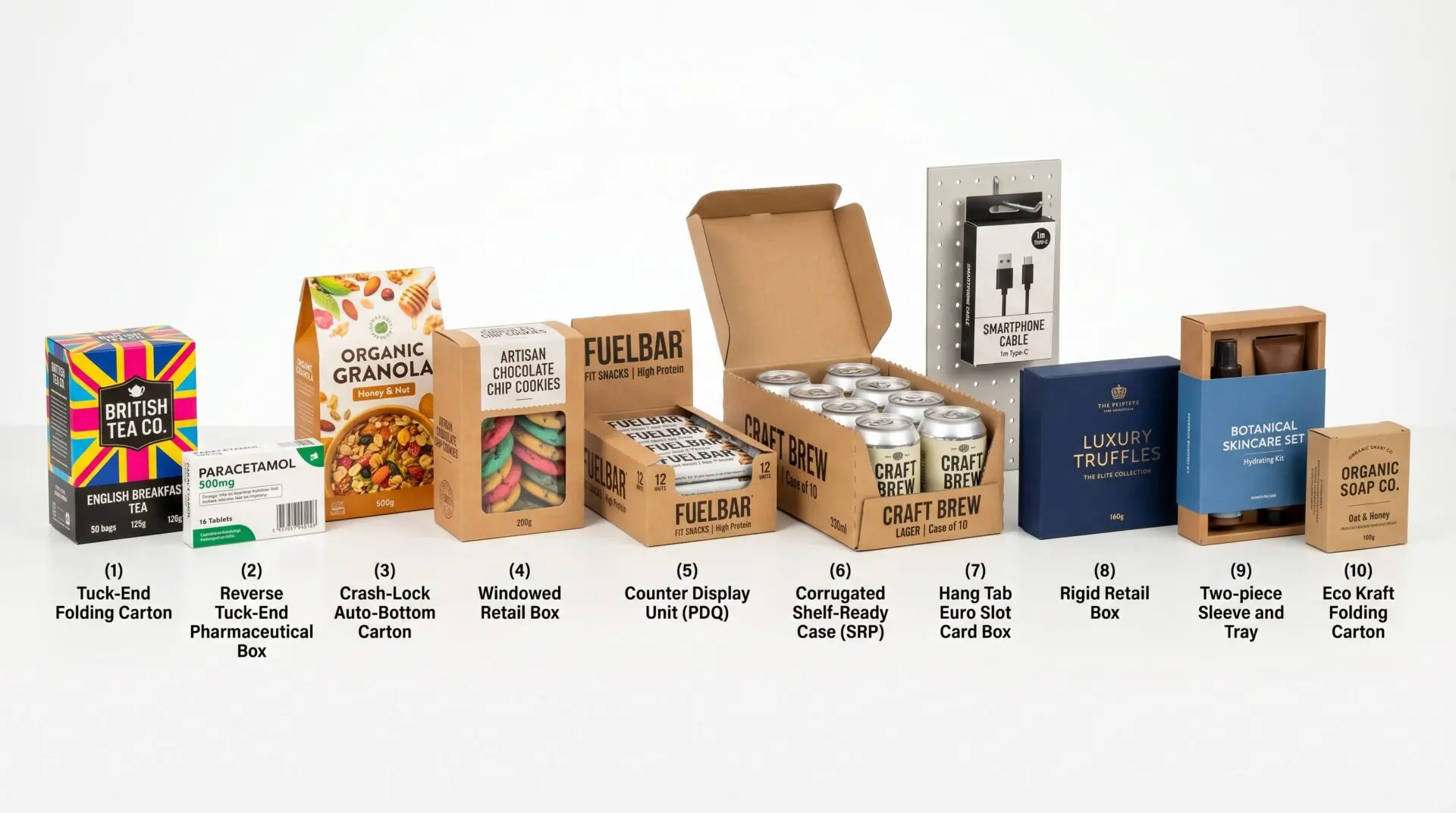
Standard retail / supermarket shelf → Tuck-end or reverse tuck-end folding carton
High-volume packing line, no tape → Crash-lock auto-bottom carton
Visible product / food / cosmetics → Windowed retail box
Pharmacy / health / supplements → Reverse tuck-end carton
Counter / pharmacy point of sale → Counter display unit (CDU/PDQ)
Supermarket listing (Tesco, Sainsbury's) → SRP / shelf-ready packaging
Pegboard / hook display → Euro slot hang tab box
Premium gifting / electronics / jewellery → Rigid retail box
Premium two-piece / pharma presentation → Tray and sleeve box
Natural / organic / eco-positioned brand → Eco kraft retail box
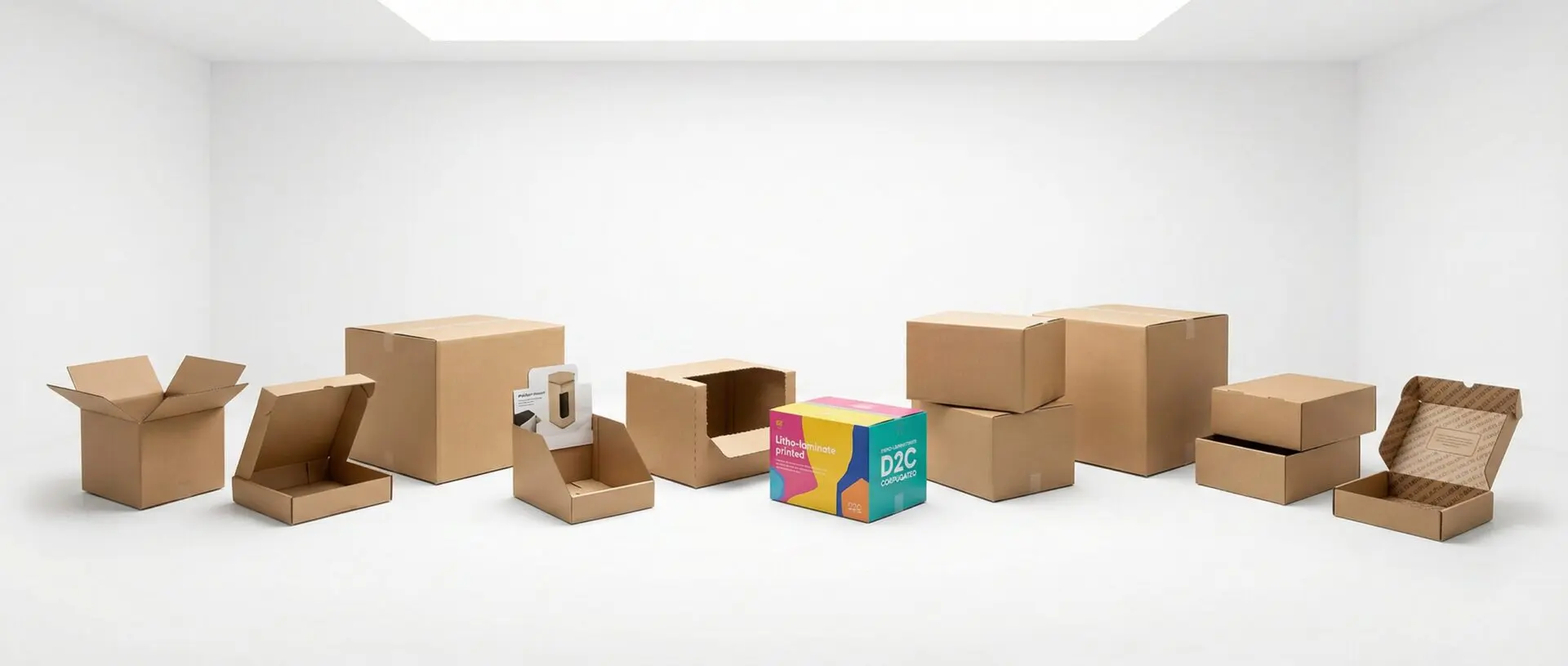
10 types of UK retail boxes — tuck-end folding carton, reverse tuck, crash-lock, windowed, CDU counter display, SRP shelf-ready, hang tab euro slot, luxury rigid, tray and sleeve, eco kraft
MOST POPULAR

Tuck-End Folding Carton

Standard retail — cosmetics, food, stationery, health, tech accessories

The standard folding carton used across the overwhelming majority of UK retail — from supermarket shelf products to pharmacy lines to Amazon listings. A single-piece SBS or SRS board carton with tucked-in top and bottom flaps. The top flap tucks into the front panel for a clean closure; the base flap tucks into the back. Simple, fast to assemble (manually or on automated lines), economical at any volume. The GS1 EAN-13 barcode must be positioned on a flat panel — never on a flap fold or edge — with minimum 3.63mm quiet zone either side. We position the barcode correctly at proof stage. All finishes available: plain CMYK, matte lam, soft-touch, gloss, foil, emboss, spot UV.

  • 350gsm or 400gsm SBS (standard) or SRS (recycled)
  • GS1 barcode zone reviewed at proof stage — standard
  • OPRL-correct label applied based on finish specified
  • All finishes: matte lam, soft-touch, gloss, foil, emboss, spot UV
  • Crash-lock base option for faster assembly (+£0.04/unit)
  • From 1 unit. Free UK shipping every order.
Board: 350–400gsm SBS or SRS
From: £0.24/box at 10,000 · £1.65/box at 100
MOQ: No minimum order

Best for: Cosmetics, food, health, stationery, tech accessories, pharmacy

PHARMACY STANDARD

Reverse Tuck-End Carton

Pharmaceuticals, health supplements, OTC medicines, vitamins

The reverse tuck-end differs from the standard tuck-end in flap direction: the top flap tucks to the rear, the bottom flap tucks to the front. This creates a more secure closure for products that are opened and closed repeatedly — notably pharmaceuticals, vitamins, and health supplements where the box is part of the ongoing product use experience rather than just the point-of-sale presentation. The reverse tuck also stacks better face-out on pharmacy shelves due to the cleaner front panel without the visible flap edge of a standard tuck. Pharmacy buyers — Boots, Superdrug, Lloyds Pharmacy, independent pharmacy — will specify box style as part of their planogram compliance. We confirm which format your buyer requires at quote stage.

  • Top flap tucks to rear · base flap tucks to front
  • Cleaner front panel — preferred pharmacy format
  • 350–400gsm SBS · white coated
  • Child-resistant insert and tamper-evidence options
  • Braille embossing available (EU mandated for medicines)
  • GS1 barcode zone confirmed at proof stage
Board: 350–400gsm SBS · white coated
From: £0.26/box at 10,000 · £1.72/box at 100
MOQ: No minimum order

Best for: Pharmacy, health supplements, OTC, vitamins, medical devices

HIGH-VOLUME PACKING

Crash-Lock Base Carton

High-volume packing lines, no tape on base, faster assembly

The crash-lock base (also called auto-bottom) has a pre-glued base that locks automatically when the box is pressed into shape — no tape required on the base. For high-volume packing lines handling 500+ units per day, this eliminates the tape step entirely from the base assembly process, reducing packing time by 35–50% per unit. The crash-lock base is structurally stronger than a standard tucked base because there is no centre-join weakness — the base is a continuous panel. Available in standard tuck-top (for retail) or full crash-lock top and base (for automated packing). Increasingly preferred by major retail brands because the elimination of tape from the base supports a plastic-free packaging claim (tape is plastic — and now an EPR-reportable material).

  • Pre-glued auto-locking base — no tape on base
  • 35–50% faster assembly than standard tuck-end
  • Stronger base than centre-join standard tuck
  • Supports plastic-free claim (no tape)
  • 350–400gsm SBS or SRS board
  • +£0.04/unit vs standard tuck-end
Board: 350–400gsm SBS or SRS
From: £0.28/box at 10,000 · £1.70/box at 100
MOQ: No minimum order

Best for: High-volume retail packing lines, automated packing, plastic-free

PRODUCT VISIBLE

Windowed Retail Box

Food, cosmetics, gifts, stationery, confectionery, candles

A tuck-end or other folding carton with a die-cut window glazed with PET film, allowing the product inside to be visible to the shopper without opening the box. Used where the product's colour, form, texture, or physical appeal is a significant selling factor — cosmetics showing the product colour, food showing the product (chocolates, biscuits, pasta), gifts showing the item, candles showing the wax colour. The window converts browsers into buyers by removing the uncertainty of "what does the product actually look like?" from the purchase decision. Critical OPRL note: PET-windowed retail boxes are "Check local recycling" — not kerbside recyclable. We apply the correct label and flag this for eco-positioning brands who may need to consider a plastic-free aperture alternative (die-cut opening without film — tactile access rather than visual window).

  • Die-cut window any shape — front, top, side panel
  • PET film glazing standard · plastic-free aperture option
  • 350–400gsm SBS or SRS board
  • All finishes on board panels (not over window)
  • OPRL "Check local recycling" applied to PET windows
  • Die tooling: £120–£280 one-time (permanent)
Board: 350–400gsm SBS or SRS + PET or open aperture
From: £0.34/box at 5,000 · £1.95/box at 100
MOQ: No minimum order

Best for: Food, cosmetics, confectionery, candles, gifts, stationery

COUNTER / PHARMACY POS

Counter Display Unit (CDU / PDQ)

Pharmacy counter, garden centre, independent retail, FMCG point of sale

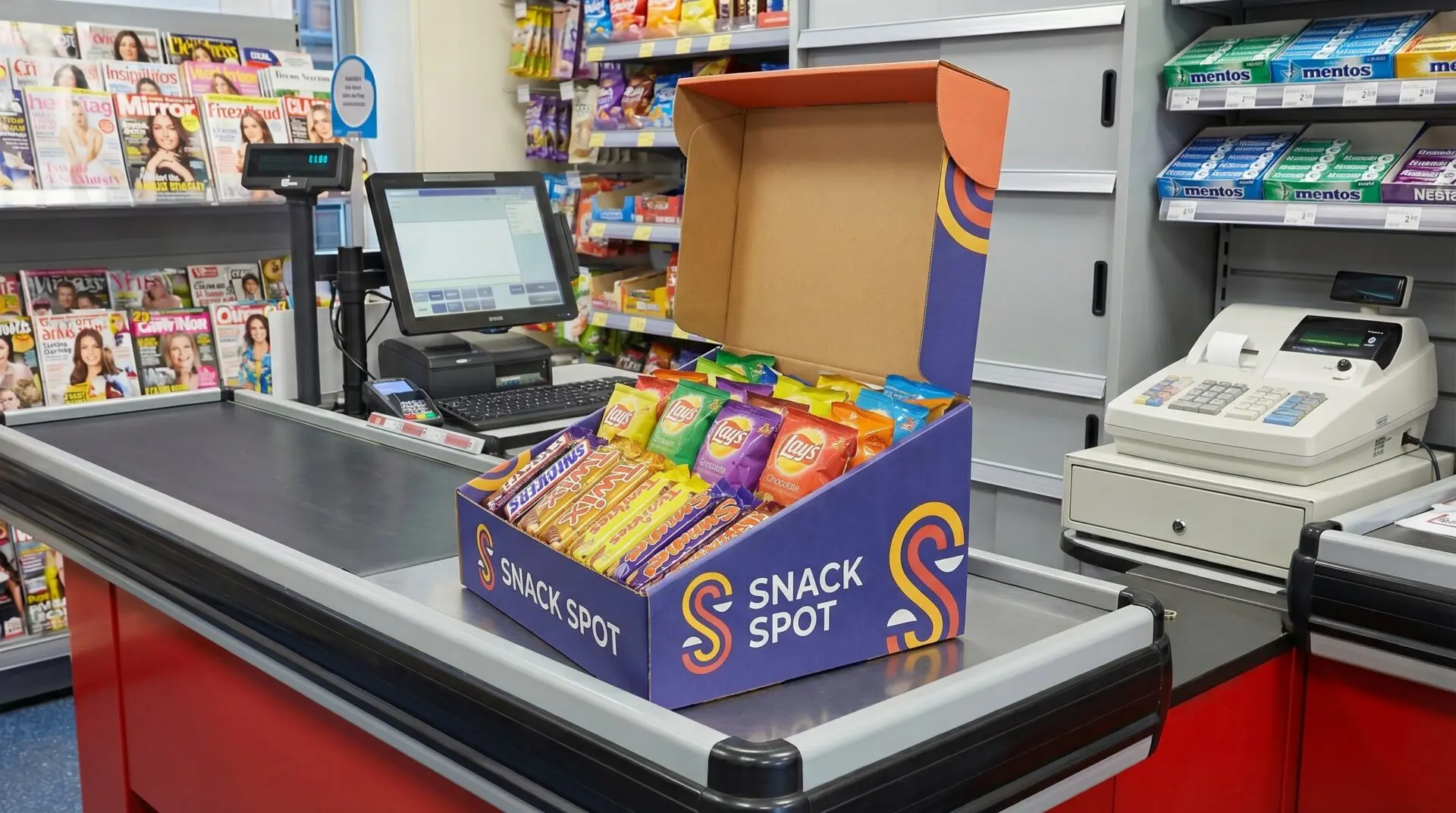
A counter display unit (CDU), also called a PDQ (Pretty Damn Quick — for the speed of deployment), is a corrugated or SBS carton that ships the product inside and becomes the display when placed on the counter or shelf. The retail team places the whole unit — no unpacking, no arranging, no waste. The top section tears away to reveal the products neatly in the display tray. Used at pharmacy counters, garden centre checkouts, independent bookshops, tourist attractions, and any point of sale where rapid deployment and branded display presence matter. B-flute corrugated for structural rigidity; full CMYK flexo or litho-laminate print for brand quality. CDUs are one of the most effective impulse purchase drivers in UK retail — the counter location alone adds 15–25% to sell-through versus equivalent shelf placement.

  • Ships with product · becomes display on arrival
  • B-flute corrugated · full CMYK or litho-laminate print
  • Tear-off top with perforated display reveal
  • Counter or floor-standing format
  • FSC certified board standard option
  • GS1 barcode on outer for distribution compliance
Board: B-flute corrugated · CMYK or litho-laminate
From: Contact us — complexity-dependent
MOQ: No minimum order

Best for: Pharmacy counter, garden centre, independent retail POS

SUPERMARKET REQUIRED

Shelf-Ready Packaging (SRP / RRP)

Tesco, Sainsbury's, Waitrose, Asda, Aldi, Lidl — mandatory for listing

Shelf-ready packaging (SRP), also called retail-ready packaging (RRP), is a corrugated case that ships the product from your warehouse and becomes the shelf display without repacking. The front panel tears away cleanly to reveal the products in retail-ready position. All major UK supermarkets require SRP compliance before any product is reviewed by a buyer. The five Ss that UK retailers test SRP against: Shoppable (product visible and accessible), Simple (opens without tools in one motion), Safe (no product damage on tear), Sustainable (kerbside recyclable), and Scandable (barcode visible in display position). Retailer specifications differ: Sainsbury's requires a front lip at 40–50% of product height; Tesco has specific perforation depth requirements; Waitrose specifies minimum panel display width. We review your target retailer's specification at every SRP quote — not after production.

  • Retailer-specific perforation and lip height confirmed
  • B or C-flute corrugated · planogram dimensions matched
  • Barcode visible in display position — required
  • OPRL kerbside recyclable label (corrugated = Green RAM)
  • Clean tear — no product damage — tested before production
  • FSC certified board option for retailer sustainability audit
Compliance: Retailer SRP spec reviewed at every quote — mandatory
From: £0.52/case at 5,000 · £2.60/case at 100
MOQ: No minimum order

Best for: Any supermarket or major multiple retailer listing

PEGBOARD / HOOK

Euro Slot Hang Tab Retail Box

Hardware, electrical, DIY, garden, pharmacy pegboard display

A hang tab retail box has a die-cut slot in the top panel that slides onto a pegboard or slatwall hook — allowing the product to be displayed hanging rather than standing on a shelf. The standard UK and European hook size is the Euro slot: 6mm wide × 38mm long, with a 25mm diameter round hole at the top (the "butterfly" or "euro" configuration). This is the standard specification for B&Q, Screwfix, Toolstation, Halfords, garden centres, and most pharmacy pegboard displays. Boxes designed for non-standard hook dimensions will not hang correctly on standard pegboards — a common and costly error. We die-cut all hang tabs to BS EN 14915 standard hook dimensions as default. The hang tab box must also be designed to display the product information correctly in the hanging orientation — often a different panel than the standing orientation.

  • Euro slot: 6mm × 38mm + 25mm round hole (BS EN 14915)
  • Compatible with standard UK retail pegboard hooks
  • 350–400gsm SBS · designed for hanging orientation
  • Reinforced hang tab zone — no tear under product weight
  • Front panel design reviewed for hanging legibility
  • GS1 barcode on back panel — scanning compliant
Board: 350–400gsm SBS · euro slot die-cut
From: £0.42/box at 5,000 · £2.10/box at 100
MOQ: No minimum order

Best for: DIY, hardware, electrical, garden, pharmacy pegboard

PREMIUM / GIFTING

Rigid Retail Box

Premium gifting, electronics, jewellery, luxury cosmetics, homeware

A rigid two-piece or magnetic closure box constructed from greyboard (1.5mm–2.4mm) wrapped in printed paper, decorative material, or cloth. Non-collapsible. Designed to remain with the product as a keepsake or display item after purchase. The physical weight and rigidity of the box is the primary communication tool — when a shopper picks up a rigid retail box, the mass signals premium before any design element is processed. Used for gift sets, premium electronics, jewellery, cosmetics, homeware, and any product retailing above approximately £20–£25 where the packaging is part of the value proposition. Edinburgh gifts brand: moved from folding carton to rigid box, retail price repositioned from £12 to £28 — same product, same stockists, same category. Revenue per unit: +133%. All finishes: soft-touch, matte, foil, emboss, satin ribbon, interior print.

  • 1.5mm, 2mm, or 2.4mm greyboard — specify by product weight
  • Lid-and-base or magnetic closure formats
  • All finishes: soft-touch, foil, emboss, interior print
  • Foam, velvet, or card insert for product protection
  • GS1 barcode on base or label applied to base
  • Price anchoring: communicates £20–£150+ price points
Board: 1.5–2.4mm greyboard · wrapped paper
From: £5.80/box at 250 · £14.60/box at 25
MOQ: No minimum order

Best for: Premium gifting, jewellery, electronics, luxury cosmetics

TWO-PIECE PREMIUM

Tray and Sleeve Retail Box

Pharma presentation, premium health, cosmetics bundles, seasonal gifting

A two-piece box format: a rigid or semi-rigid inner tray that holds the product, over which a printed outer sleeve slides. The sleeve carries brand design and all compliance labelling. The tray provides structural support and can be plain board. This format provides several commercial advantages for retail: when compliance information changes (e.g. ingredient reformulation, new regulatory requirements), only the sleeve needs to be reprinted — the tray remains unchanged. This reduces reprint cost by 60–75% for compliant updates. The sleeve can also be refreshed seasonally (Christmas, Valentine's, Mother's Day) while the tray remains year-round stock. Standard format for pharmaceutical presentation packaging and premium health product retail. Tray and sleeve is also the format most commonly used where different size variants share the same inner tray (different sleeve only).

  • Plain inner tray + branded outer sleeve
  • Sleeve reprints independently — lower compliance update cost
  • Seasonal refresh: new sleeve only — tray unchanged
  • 350–400gsm SBS sleeve + tray board
  • All sleeve finishes: soft-touch, foil, emboss, spot UV
  • ±0.5mm sleeve-to-tray fit tolerance
Board: SBS sleeve + tray · two-piece construction
From: £0.72/set at 2,500 · £2.80/set at 100
MOQ: No minimum order

Best for: Pharma, premium health, cosmetics, seasonal gift ranges

ECO / NATURAL BRANDS

Eco Kraft Retail Box

Natural, organic, sustainable brands — Planet Organic, Whole Foods, farm shops

Unbleached kraft board (350–400gsm) for brands where the packaging must communicate the brand's sustainability values as directly as its product formulation. The brown kraft substrate is the visual language of natural provenance, minimal processing, and environmental responsibility — an established and recognised positioning signal in UK natural retail. Print on kraft requires either white ink (for legible text on dark substrate) or a palette of natural earth tones that work with the warm brown background. Kerbside recyclable with uncoated or aqueous finish — OPRL "Recycle" label applies and is one of the few retail box formats that qualifies for Green RAM rating. FSC certified kraft with documented Chain of Custody for brands whose sustainability claim must be independently verified. Manchester beauty brand: switched to FSC kraft with aqueous coating, Planet Organic listing achieved.

  • 350–400gsm unbleached kraft · natural brown substrate
  • FSC certified available — full CoC documentation
  • White ink or earth-tone CMYK palette recommended
  • Kerbside recyclable — OPRL "Recycle" label (Green RAM)
  • CMA-compliant eco claims — only verifiable, evidenced
  • All tuck-end, reverse tuck, crash-lock styles available in kraft
Board: 350–400gsm unbleached kraft · FSC option +7%
From: £0.26/box at 10,000 · £1.72/box at 100
MOQ: No minimum order

Best for: Natural brands, Planet Organic, Whole Foods, farm shops, eco retail

Materials Guide

Retail Box Materials SBS, SRS, Kraft, Corrugated and What RAM Rating Each Carries

Material selection for retail boxes is no longer just about print quality, weight, and cost. From October 2026, the RAM (Recyclability Assessment Methodology) rating of your board material directly affects your EPR fees. We include the RAM rating for every material in this guide because choosing the wrong board grade now will cost you more money in 2026 before you can reprint.
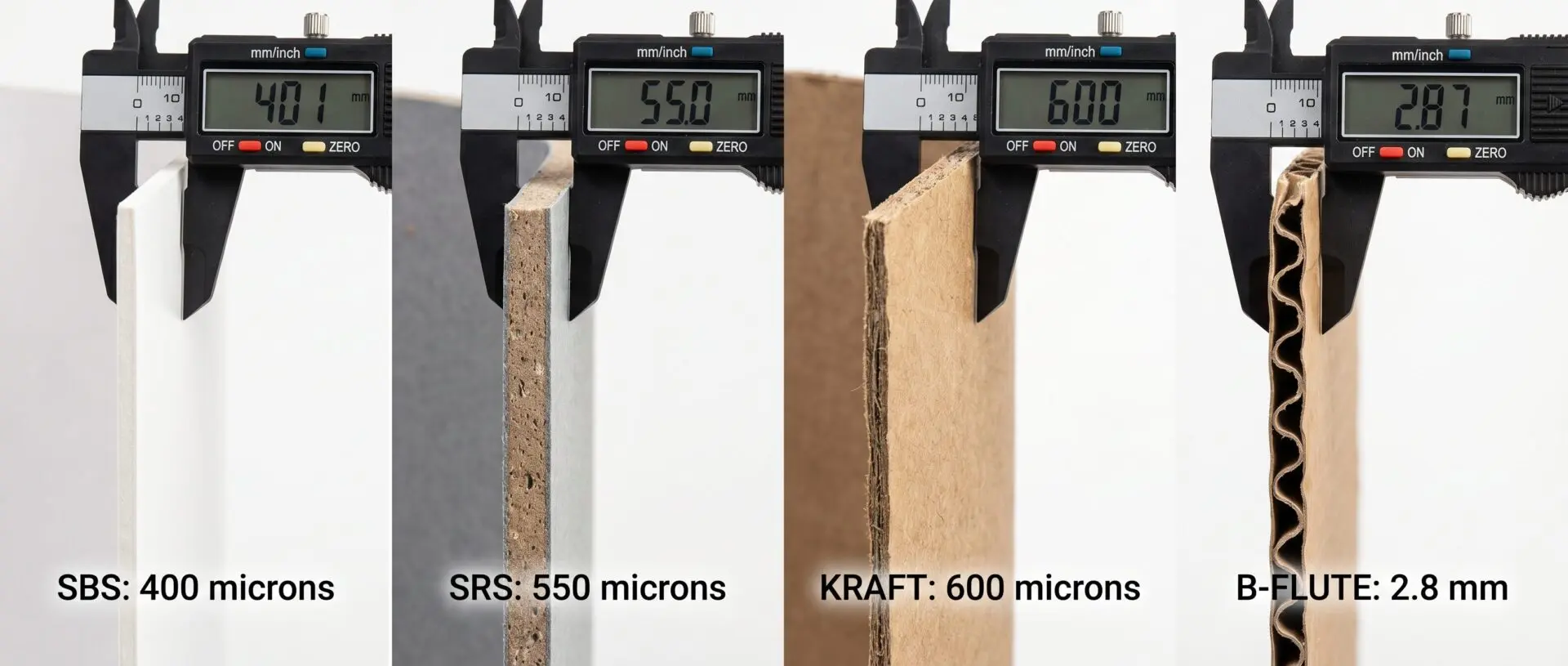
MaterialGradeBest ForPrint SurfaceRAM / EPR Rating
SBS Board Standard350–400gsmSBS (Solid Bleached Sulphate) is the standard board for premium retail folding cartons. The fully bleached surface provides the whitest, most printable substrate in commercial folding carton production — ideal for photographic CMYK reproduction, fine text, and high-end finishes. Standard for cosmetics, food, pharma, health, tech accessories, and most FMCG retail categories.Excellent ✓Green uncoated/aqueous · Amber laminated
SRS Board Growing350–400gsmSRS (Solid Recycled Sulphate) is produced from recycled fibre with a white coated face. Growing rapidly as EPR fees push brands toward recycled content without compromising print quality.Very Good ✓Green uncoated/aqueous · Amber laminated
Unbleached Kraft350–400gsmThe brown unbleached natural surface for eco-positioned, natural, and organic brands. Kerbside recyclable with aqueous finish. FSC certified option available.White ink ✓Green uncoated/aqueous
Corrugated B-Flute3mm · 5-plySRP shelf-ready packaging, counter display units. Excellent structural strength and always Green RAM rating.Good ✓Green ✓ all finishes
Greyboard (Rigid)1.5–2.4mmPremium rigid retail boxes, magnetic closure, gift sets, luxury gifting.Excellent ✓Amber most configurations
UK retail packaging board materials comparison — SBS white coated board, SRS recycled board, unbleached kraft, corrugated flute — cross-sections shown

⚠ RAM Modulation Starts October 2026 — Design Decisions Made Now Will Affect EPR Fees

From October 2026, EPR fees will be adjusted based on RAM recyclability rating. Packaging rated Amber will attract higher fees than Green packaging. If you are designing or reprinting a retail box between now and 2026, the finish specification you choose will determine your EPR fee band for the entire shelf life of that artwork. We provide the RAM rating for every finish combination at quote stage.

Finishes and Coatings

Retail Box Finishes What Each Delivers, What Each Costs in EPR Fees from 2026

Every finish on a retail box does two things: it shapes how the consumer perceives the product, and from October 2026 it determines your EPR fee band under RAM eco-modulation. Choose finishes with both in mind.

Aqueous Matte Coating

Green RAM ✓

Water-based matte varnish applied directly to printed board — no film lamination. Provides surface protection, a smooth matte appearance, and kerbside recyclability. The best finish for brands with eco positioning, for brands whose retailers check OPRL labelling, and for any brand who wants to be Green RAM rated from October 2026. Functional quality is lower than laminate (less durable surface) but for shelf retail and D2C at normal handling, it is entirely sufficient.

Cost: +£0.04–£0.08/unit · OPRL: Recycle ♻

Matte Laminate

Amber RAM ⚠

Film laminate with a matte finish — smooth, low-sheen, fingerprint-resistant. More durable than aqueous coating. The contemporary standard for mid-to-premium retail boxes. From October 2026, matte laminate will attract higher EPR fees than uncoated or aqueous-coated boxes under RAM eco-modulation. Brands currently specifying matte laminate should model the 2026 EPR cost increase and evaluate whether switching to aqueous matte coating is economically rational before the next reprint.

Cost: +£0.18–£0.28/unit · OPRL: Check local recycling 🔄

Soft-Touch Laminate

Amber RAM ⚠

The premium signature finish — velvet-like tactile quality that prompts consumers to touch, and then touch again. Communicates craftsmanship and premium positioning above all other finishes at comparable cost. The finish that repositioned Edinburgh gifts brand from £12 to £28. Also Amber RAM from October 2026 — the premium experience comes at a future EPR cost. For brands retailing above £18–£20, the price premium enabled by soft-touch typically exceeds the EPR cost differential many times over.

Cost: +£0.38–£0.65/unit · OPRL: Check local recycling 🔄

Gloss Laminate

Amber RAM ⚠

High-sheen film laminate. Makes CMYK colours appear more saturated and vivid. More common in mass-market FMCG and food retail than in niche or premium. Shelf glare is a known issue with high-gloss retail boxes — bright retail lighting can create reflections that obscure print detail for shoppers viewing the box at angle. Some major retailers flag gloss-related shelf legibility as a planogram compliance concern. Also Amber RAM from 2026.

Cost: +£0.14–£0.22/unit · OPRL: Check local recycling 🔄

Gold / Silver Foil Stamping

Amber RAM ⚠

Hot foil applied to logos, brand names, or decorative elements. The most widely used premium enhancement in UK retail — from pharmacy to gift shop to department store. Gold foil on a matte box communicates heritage and premium positioning in an instant. Foil-stamped areas make the overall box Amber RAM regardless of base coating. Die tooling £80–£180 one-time (permanent).

Cost: +£0.22–£0.48/unit · OPRL: Check local recycling 🔄

Embossing and Debossing

Amber RAM ⚠

Raises (emboss) or depresses (deboss) specific areas — logos, brand marks, key design elements. Creates a tactile dimension that print alone cannot. Blind emboss (no foil or ink — just the relief) on a soft-touch base is the most sophisticated premium retail box treatment available: the brand mark is felt before it is seen. The embossing process itself makes the box Amber RAM regardless of base coating.

Cost: +£0.18–£0.38/unit · OPRL: Check local recycling 🔄

Spot UV

Amber RAM ⚠

High-gloss UV-cured coating applied to specific areas on a matte background. The contrast between matte base and gloss spot draws the eye and finger to the branded element. Very effective mid-tier premium enhancement — lower cost than foil, higher visual impact than foil on a gloss box. On matte lam or soft-touch base: the most commonly used premium treatment for retail boxes in the £12–£35 retail price range.

Cost: +£0.12–£0.22/unit · OPRL: Check local recycling 🔄

Interior Print

Green (adds none) ✓

Brand design on the interior surface of the retail box — visible when the box is opened. For D2C retail (where the product is shipped to consumers), the interior print is the unboxing reveal moment. For physical retail with transparent window, interior print frames the product view. Interior print does not affect RAM rating on its own — the base material and exterior finish determine RAM. Water-based inks throughout.

Cost: +£0.06–£0.14/unit · OPRL: No effect on base rating

CMA Greenwashing — What You Can and Cannot Print on Your Retail Box in 2025

✗ Claims That Are Legally Exposed:

"Eco-friendly packaging" — too vague, no evidence

"100% recyclable" on any laminated retail box — false

"Sustainable packaging" without certification — unverifiable

"Recycled packaging" without verified % content — misleading

"Natural packaging" on synthetic-coated board — false signal

✓ Claims That Are Defensible:

"Made from FSC certified paper" — with CoC certificate number

"Kerbside recyclable" on uncoated/aqueous SBS or SRS

"Contains X% recycled content" — with verified % supplied

OPRL logo with correct label — "Recycle" or "Check local"

FSC logo with certified CoC number printed on box

CMA enforcement powers from April 2025 (DMCC Act 2024) allow fines up to 10% of global annual turnover for misleading environmental claims on packaging — without a court case. We flag legally exposed eco claims at proof stage and will not print a claim we cannot document.

⚠ Critical — Retail Listing Compliance

GS1 Barcode Placement on Retail Boxes The Rules That Determine Whether Your Product Gets Listed

This is the section that does not exist on any other UK retail box supplier's website. The GS1 EAN-13 barcode on a retail box is the single most common reason for buyer compliance rejection not because the barcode is wrong, but because its placement on the box violates GS1 placement standards. Here are the rules, explained for the first time in a UK packaging supplier context.

Disclaimer: This section provides general guidance on GS1 barcode placement as it applies to retail box packaging. For product-specific barcode compliance, register with GS1 UK (gs1uk.org), obtain your GTIN, and use GS1's official barcode verification tools. Wabs Print positions barcodes to GS1 placement guidelines at proof stage — we do not generate GTINs or certify barcode data accuracy.

The Non-Negotiable GS1 Barcode Placement Rules for Retail Boxes

1. FLAT SURFACE ONLY: The barcode must be printed on a flat, non-folding panel. It must never cross a fold line, crease, score, or seam.

2. QUIET ZONES: A minimum clear zone (no graphics, text, colour wash) of 3.63mm either side of the barcode (for EAN-13 at 100% magnification).

3. MAGNIFICATION: EAN-13 minimum magnification: 80% (standard is 100%). Maximum: 200%.

4. PRINT CONTRAST: Dark bars on light background. Minimum contrast: 62.5% reflectance difference.

5. ORIENTATION: "Picket fence" (bars perpendicular to shelf edge) is preferred.
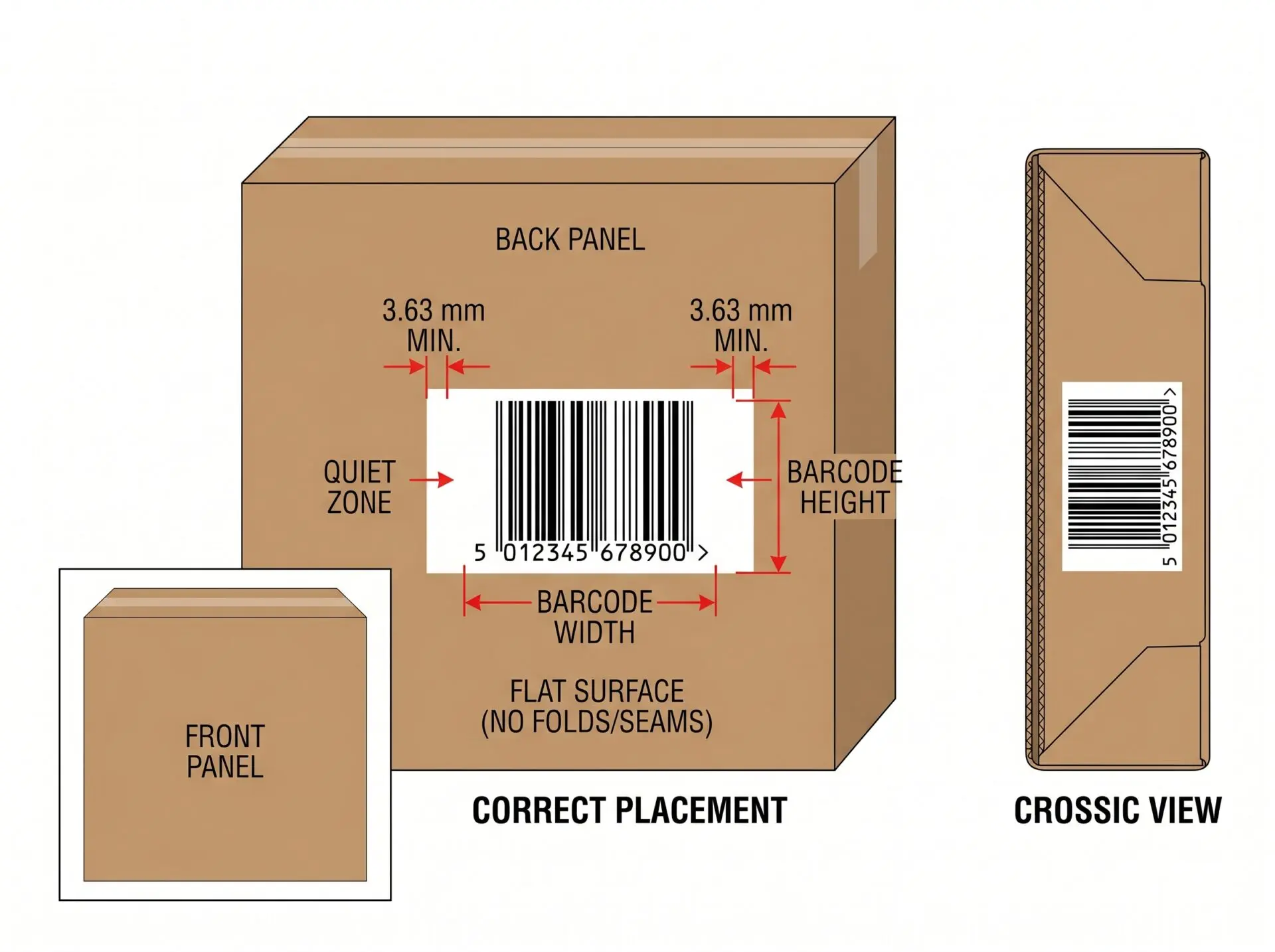
GS1 EAN-13 barcode placement diagram on retail packaging box showing correct quiet zone, flat surface positioning, and minimum dimensions

Common GS1 Failures We Fix at Proof Stage

Barcode placed on the tuck flap — folds in assembly

Quiet zone violated by brand pattern or text

Barcode across a score line — gaps in bars when folded

Red bars on white — unreadable to standard POS scanners

Barcode over product photography — insufficient contrast

Barcode scaled below 80% minimum magnification

All of the above fixed at proof stage as standard — no extra charge.

⚡ Future-Proofing: GS1 2D Barcode Transition (QR Code / DataMatrix at Retail POS) — From 2027

GS1 Global is transitioning the retail industry from linear barcodes (EAN-13/UPC) to 2D barcodes (GS1 QR Code or GS1 DataMatrix) at retail point of sale, with major UK retailers expected to begin accepting 2D barcodes at checkout from 2027.

What this means for retail boxes being designed now: During the transition period, both the traditional EAN-13 and a 2D barcode will appear on the same box. We reserve a zone on your box artwork that can accommodate a 2D barcode without redesigning the box later.

We flag the 2D artwork zone requirement on all retail box artworks at no charge.

How to Measure

How to Measure for a Retail Box Product Dimensions, Facing Width, Planogram Compliance

Measuring for a retail box is not just measuring the product. You need to account for planogram facing width, standard shelf depth, pack stacking, and barcode panel space. Get any one of these wrong and the box fails retailer compliance even if it physically fits the product.

Step-by-Step Measurement for a Retail Box

1.Product external dimensions (L×W×H in mm): Measure the product as packed including any primary packaging (bottle, jar, sachet). This is the minimum internal box size. Add 1–3mm clearance per side for easy insertion and removal. Too tight and the product sticks; too loose and it moves in transit.

2.Facing width: The width of the front panel of the box the dimension that occupies the planogram slot on the shelf. Retailers allocate specific facing widths (typically in multiples of 25–50mm). If your box's front panel is 68mm wide and the planogram slot is 65mm, you will be asked to redesign. Confirm your retailer's planogram slot width before finalising box dimensions.

3.Pack depth (shelf depth): Standard UK retail gondola shelf depth is typically 300mm for grocery and 250mm for pharmacy. The box depth (from front face to back) must not exceed the shelf depth or the box will protrude — a planogram compliance failure. For deep products, reconfiguring the orientation of the product in the box can reduce pack depth to shelf-compliant dimensions.

4.Box height: The height of the box in its display orientation. Retailers allocate shelf heights in their planograms (typically 200–400mm for most categories). If stacking (multiple units on one shelf height), multiply unit height by the number of stacked units and add clearance.

5.Barcode panel minimum size: Reserve a minimum flat panel area of 40mm × 30mm for the EAN-13 barcode at standard 100% magnification, plus quiet zones. This is a non-negotiable minimum on any box with a GS1 barcode requirement.

Planogram Compliance — What Retailers Actually Specify

A planogram is the retailer's specification for how products are arranged on their shelves — number of facings, shelf height allocation, depth, and adjacency. When a retail buyer allocates a planogram slot to your product, they specify the facing width (the width of your box front) and the shelf height your box must sit within. If your box dimensions do not match the planogram allocation, the buyer cannot list your product without a planogram change — which requires category manager approval and adds weeks to the process.

What retailers check at compliance review: Front panel width (matches planogram facing); pack depth (within standard shelf depth); height (fits allocated shelf height); barcode visible from front-of-shelf in display position; OPRL label present and correct; weight per case matches distribution system expectation.

What to tell us: Your target retailer, the category manager contact or planogram slot reference if you have it, your product external dimensions, and the pack quantity per shipping case. We calculate planogram-compliant box dimensions and confirm them before production approval. We will not guess at planogram dimensions — if you don't know them, contact your buyer's assistant and ask.

The most common retail box measurement error we fix: the box is sized correctly for the product but the facing width is 3–5mm wider than the retailer's planogram slot. The box looks right on the desk. It fails at compliance because the category buyer allocated a specific facing. We ask for planogram slot dimensions on every retail box order where you have a confirmed or target retailer — it's a 30-second question that prevents a 4-week reprint cycle.

Sizes Guide

Retail Box Sizes by Industry Common UK Dimensions

All retail boxes are custom-sized to your product and planogram specification. These are common dimensions for reference your box will be specified from your exact product dimensions and retailer requirements. All sizes shown are internal dimensions (L×W×H).

Industry / Product CategoryCommon Internal Dimensions (L×W×H mm)Standard FormatCommon Retailers
Supplements / Vitamins (tubs)80×80×120mm – 100×100×180mmTuck-end or reverse tuckBoots, Holland & Barrett, Amazon
Skincare / Serum Bottles45×45×130mm – 55×55×160mmTuck-end · matte or soft-touchSpace NK, Boots, independents
Tea / Loose Leaf (boxes)90×50×120mm – 120×65×160mmTuck-end or window · kraft optionWaitrose, Whole Foods, farm shops
Confectionery / Chocolate Bars75×22×140mm – 90×35×180mmTuck-end · gloss or windowTesco, Sainsbury's, independents
Phone Accessories / Tech80×20×150mm – 120×50×200mmTuck-end or hang tabCurrys, Argos, Amazon, O2 stores
OTC Medicines / Pharma50×20×85mm – 60×30×105mmReverse tuck-end · child-resistant optionBoots, Superdrug, Lloyds Pharmacy
Premium Gift Sets200×120×80mm – 320×200×100mmRigid lid-and-base or magnetic closureJohn Lewis, Selfridges, D2C
SRP Outer Case (supermarket)Varies by product — planogram-determinedSRP corrugated case · retailer specTesco, Sainsbury's, Asda, Waitrose, Aldi

All retail boxes are custom-sized. These dimensions are guides only. Send us: your product dimensions (L×W×H in mm), weight, target retailer (if applicable), planogram slot width if known, and quantity. We confirm internal box dimensions, facing width compliance, barcode panel position, OPRL label, and firm price within 24 hours. No standard sizes. Every box sized to your product and your retailer's planogram.

⚠ Retail Buyer Compliance — Critical

UK Retail Buyer Compliance - What Tesco, Boots, Sainsbury's, and Waitrose Actually Require From Your Retail Box

Retail buyer compliance is the process every packaged product must pass before it is listed on a retailer's shelf. It checks that your retail box meets the retailer's technical and operational requirements not just that it looks attractive. Here is what each major UK retailer checks, and what we review at proof stage to prevent rejection.

Disclaimer: Retailer compliance specifications change and vary by category, buyer, and time. Always obtain the current specification directly from your buyer's assistant or the retailer's supplier portal before finalising box dimensions. The specifications below are general guidelines based on publicly available and industry-standard information as of April 2026.

The Five Ss — What UK Retailers Test Against for SRP Compliance

Major UK supermarkets and pharmacy multiples evaluate shelf-ready and retail packaging against five core criteria — commonly called the Five Ss.

1. SHOPPABLE

Product is visible, accessible, and easy for the shopper to take from the shelf without assistance or tools.

2. SIMPLE

SRP opens in a single motion without tools, box cutters, or tape removal.

3. SAFE

Opening the SRP does not damage the inner products or create sharp edges.

4. SUSTAINABLE

Kerbside recyclable. Correct OPRL label. Corrugated SRP = Green RAM.

5. SCANDABLE

GS1 barcode visible in the display position and scannable by store scanners.

UK Retailer SRP Compliance — Key Requirements by Retailer
UK retail buyer compliance guide showing Tesco, Boots, Sainsbury's, Waitrose SRP and barcode requirements for retail boxes

The 20-Second Rule — Designing Retail Boxes That Convert on the Shelf

A shopper approaching a shelf section spends an average of 20 seconds. Your retail box has three jobs to do in that time, at three different distances.

2–3 METRES: Attract

At this distance, only colour and large shape are visible.

1 METRE: Communicate

At reading distance, the shopper can see the product name and primary benefit headline.

30 CM: Confirm

When the shopper picks up the box, they read the detail and feel the quality.

We review all three distances at proof stage. We confirm that the colour block is visible at 2 metres, the headline is readable at 1 metre, and the box weight and finish communicate the correct price point at 30cm.

Sustainability

Retail Box Sustainability UK EPR, OPRL, CMA Enforcement, and Simpler Recycling 2026

The sustainability landscape for retail boxes changed fundamentally in 2025. EPR fees are now live. CMA enforcement powers are active. Simpler Recycling is coming in March 2026. Here's what each means for your retail box specification with specific UK dates, specific amounts, and specific actions.

UK Retail Packaging Sustainability — Key Regulatory Timeline

April 2025

CMA Enforcement Powers Active (DMCC Act 2024)

CMA can now fine companies up to 10% of global annual turnover for misleading environmental claims on packaging — without a court case. "Eco-friendly," "sustainable," and "100% recyclable" on laminated boxes are now legally exposed. All eco claims must be specific, verifiable, and evidenced.

Oct 2025

UK pEPR Fees Live — First Invoices

Extended Producer Responsibility first invoices issued. Producers above thresholds (£1m+ turnover, 25+ tonnes packaging) must report and pay. Flat base fees in Year 1: paper and card at significantly lower rates than plastic (£423/tonne Plastic Packaging Tax for non-recycled plastic). Paper-based retail boxes are the lowest-fee structural packaging option.

31 Mar 2026

Simpler Recycling — England (from 31 March 2026)

From 31 March 2026, all local councils in England must provide separate weekly recycling collections for paper and cardboard. This expands the kerbside recyclability infrastructure for paperboard retail boxes. Uncoated and aqueous-coated retail boxes (Green RAM) will be collected at the kerbside by significantly more households from this date. The "Check local recycling" label on laminated boxes will increasingly contrast with Green-rated alternatives — creating a growing competitive sustainability signal for brands with aqueous-coated boxes.

Oct 2026

RAM Eco-Modulated EPR Fees Begin

From October 2026, EPR fees are adjusted by Recyclability Assessment Methodology (RAM) rating. Green packaging: lowest fees. Amber packaging: higher fees. Red packaging: highest fees. Laminated retail boxes (matte lam, gloss lam, soft-touch) will attract higher Amber EPR fees than aqueous-coated or uncoated equivalents. Any brand reprinting retail boxes between now and 2026 should model the EPR cost impact of their finish choice — this is a multi-year commitment.

31 Mar 2027

Mandatory OPRL Labelling on All UK Packaging

OPRL recycling labelling becomes mandatory for all packaging under UK EPR from 31 March 2027. Any retail box artwork being produced between now and 2027 that does not include the correct OPRL label will require a reprint to comply with this date. We apply OPRL-correct labels to every retail box now as standard — eliminating this mandatory reprint cost.

FSC Certification for Retail Boxes

FSC Chain of Custody certification independently verifies that the board in your retail box comes from responsibly managed forests. Self-declaration ("made from sustainable paper") is no longer credible with buyers — FSC CoC is the independently verified standard that Waitrose, Planet Organic, Whole Foods, and major retail sustainability auditors require.

FSC Mix: At least 70% FSC-certified fibre. FSC 100%: Fully certified chain. FSC Recycled: 100% recycled certified. FSC certification: +7% over base board cost. Full CoC documentation supplied with all FSC orders at no extra charge.

OPRL Label Guide — Which Label for Which Retail Box

♻ "Recycle" (kerbside): Uncoated SBS or SRS, aqueous-coated SBS or SRS, uncoated kraft. No film laminate. All corrugated board. Green RAM rating. Apply from 31 March 2026 with full Simpler Recycling coverage.

🔄 "Check local recycling": Any film-laminated box (matte lam, gloss lam, soft-touch), foil-stamped boxes, PET-windowed boxes. Amber RAM rating. Higher EPR fees from October 2026.

From 31 March 2027: OPRL labelling mandatory. All retail boxes produced now should include the correct OPRL label to avoid a mandatory reprint. We apply correct OPRL as standard — no charge.

Industries Served

Who Uses Our Retail Boxes What's Different About Each Industry's Requirements

Retail boxes serve every consumer product category but the compliance requirements, finish expectations, barcode standards, and buyer specifications differ significantly by industry. Here's what actually matters in each.
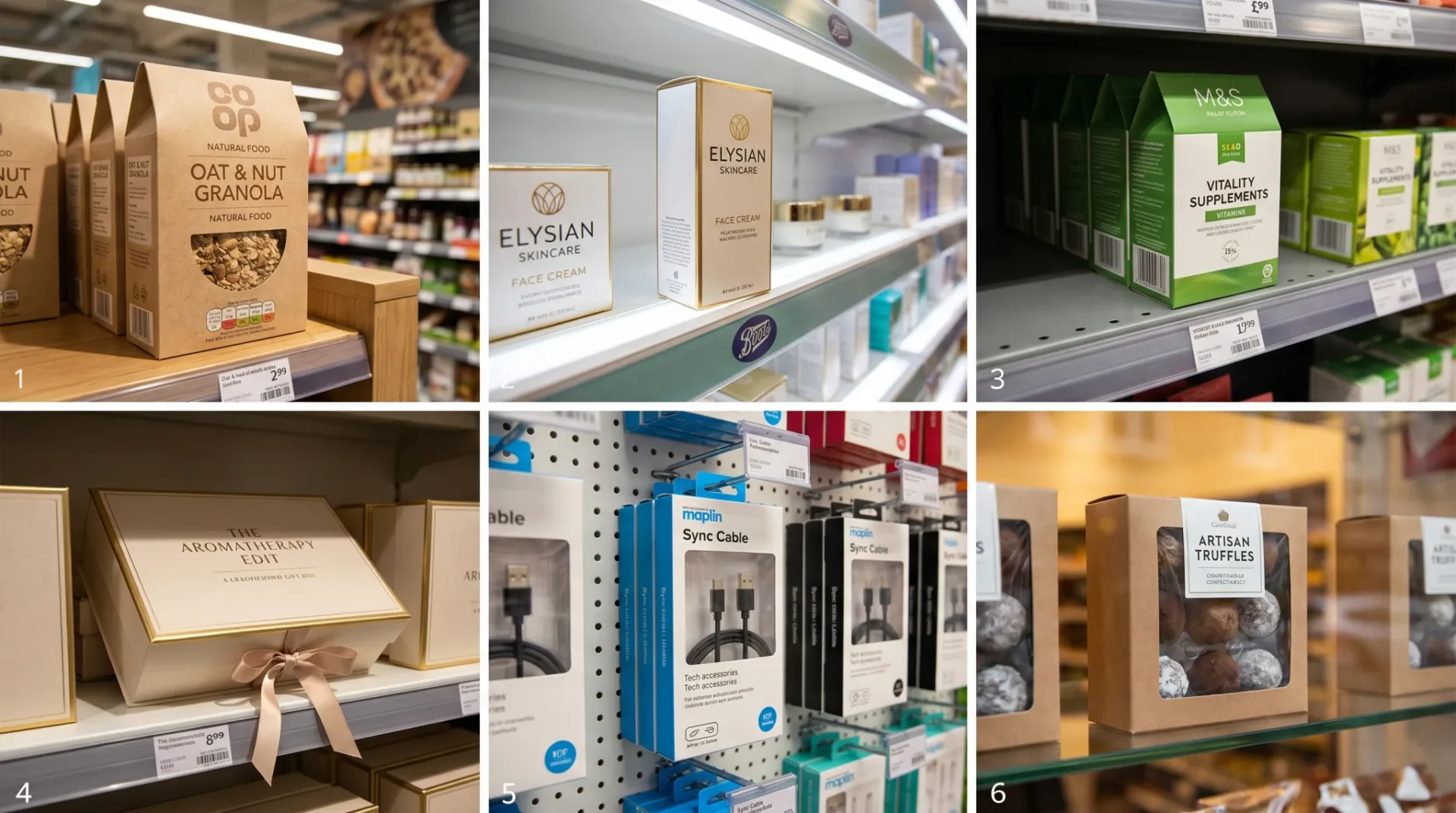
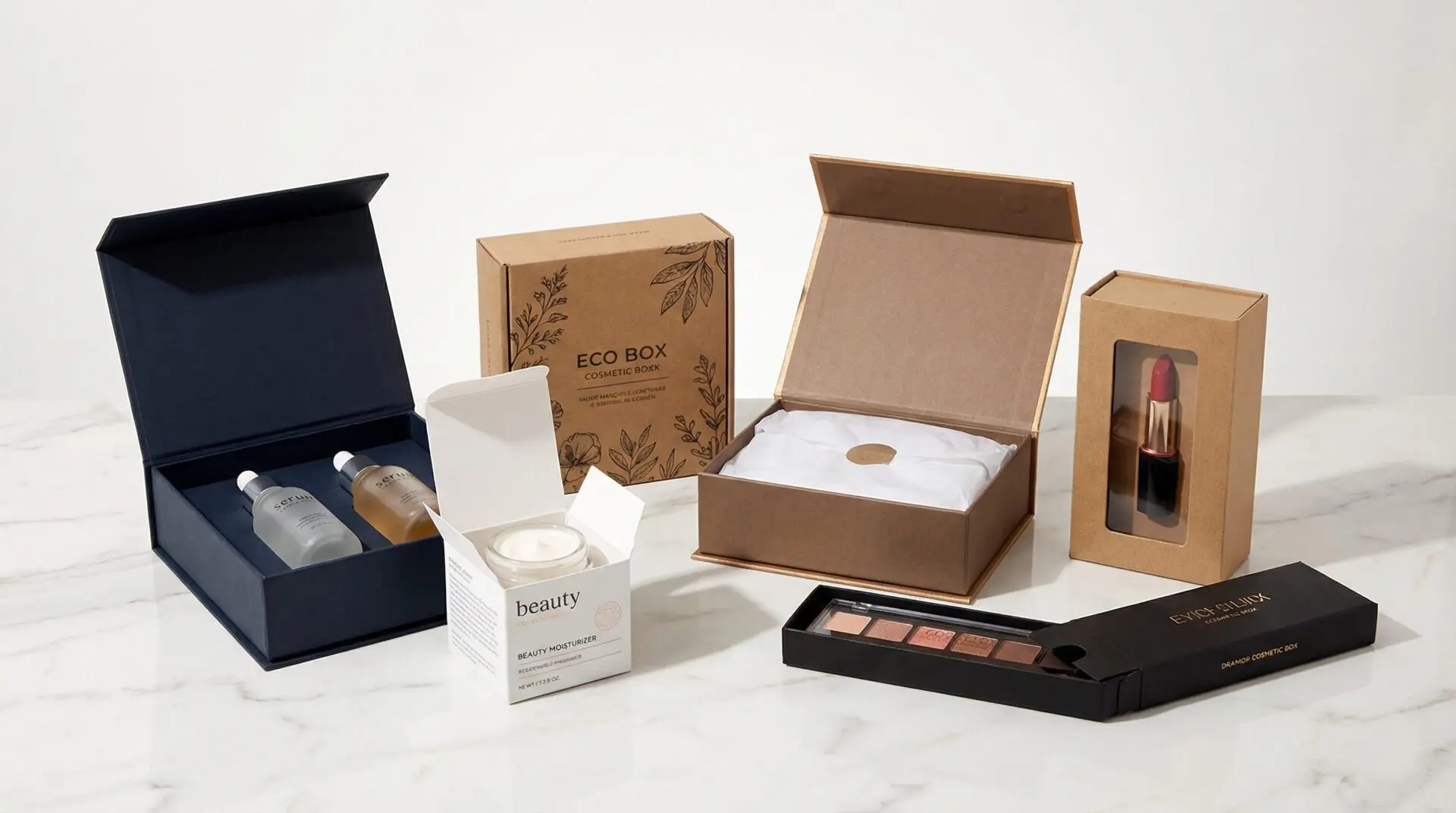
UK retail boxes used across different industries — food & beverage, health & beauty, pharmacy, gifting, electronics, natural & organic brands
🥗

Food and Beverage

Tesco · Sainsbury's · Waitrose · independents

SRP compliance mandatory for supermarket listings. Food information regulations apply. Moisture-resistant board for chilled categories. GS1 barcode visible in SRP position. OPRL kerbside label preferred.

Health and Beauty

Boots · Space NK · Superdrug · Planet Organic

UK Cosmetics Regulation mandatory compliance panels. Soft-touch laminate standard for premium positioning. High print quality required — photographic imagery common.

💊

Pharmacy and Healthcare

Boots · Superdrug · Lloyds · independents

Reverse tuck-end is the dominant format. Braille embossing for medicines. Barcode placement is the most common compliance failure in pharmacy.

🎁

Gifting and Premium Retail

John Lewis · Selfridges · Harvey Nichols · gift shops

Rigid boxes dominant for gifting. Soft-touch + foil is standard. Tray-and-sleeve allows seasonal sleeve refresh at low cost.

📱

Electronics and Tech Accessories

Currys · Argos · Amazon · O2 / EE stores

Euro slot hang tab boxes dominant for accessories. GS1 barcode on back panel. WEEE symbol required for relevant products.

🌿

Natural and Organic Brands

Planet Organic · Whole Foods · farm shops · eco retail

FSC certified kraft or SRS board mandatory. Aqueous matte coating for Green RAM rating. CMA-compliant eco claims only.

How It Works

How to Order Retail Boxes From Dimensions to Shelf in 7–10 Working Days

What you need: product external dimensions (L×W×H in mm and weight), target retailer or channel, box format, quantity, and finish requirements. We handle board grade, dieline, GS1 barcode zone, planogram dimension confirmation, OPRL labelling, RAM rating, and all compliance panel checks before a single box goes to press.

1

Spec and Quote

Day 1 — within 2 hours: Share your product dimensions (L×W×H mm), weight, target retailer or channel (so we can confirm planogram facing width), box format, finish requirements, and quantity. We return: confirmed internal box dimensions, GS1 barcode zone position, OPRL-correct label for your specified finish, RAM rating, EPR data if volume exceeds 1,000 units, and firm price. SRP orders: retailer specification reviewed at this stage — not after production.

2

Artwork and Proof

Days 1–2: Send logo and brand assets in any format. We produce a dieline-accurate digital proof showing: GS1 barcode correctly positioned on a flat panel with quiet zones confirmed, OPRL label applied, compliance panels in place, euro slot die-cut shown (hang tab boxes), and SRP perforation position marked. Digital proof within 24–48 hours. Unlimited free revisions. We flag any GS1, planogram, or compliance gaps before production approval. No box goes to press without written artwork sign-off.

3

UK Production

Days 3–9: ISO 9001:2015 certified UK production. 7–10 working days from written artwork approval. Box dimensions checked against approved dieline: ±0.5mm tolerance on all panels. Colour accuracy: Delta-E under 3 on every production run. Pantone colours locked permanently for all reorders. SRP perforations tested for clean tear before dispatch. Euro slot tolerances confirmed to BS EN 14915 on hang tab boxes.

4

Free UK Delivery + Docs

Day 9–10: Flat-packed for storage efficiency. Tracked courier. Free UK shipping on every order, any quantity. FSC Chain of Custody documentation for all FSC orders. Same-day dispatch notification with tracking link.

Urgent Deadline or Seasonal Order?

Standard is 7–10 working days. Urgent: contact us immediately — honest answer within the hour. Christmas retail boxes: order by mid-October. Valentine's Day: late December. Easter: early February. Mother's Day: mid-February. Seasonal sleeve variants using a locked dieline go to production in 2 minutes — no rebrief, no reproof on unchanged dimensions.

Reorders: 2 minutes to production. Your dieline, board grade, GS1 barcode zone, OPRL label, planogram dimensions, and Pantone locks are permanently stored. Every reorder is identical to the approved first run — we never substitute board weight, finish, or specification without written approval. If compliance information changes between reorders (OPRL label, regulatory update, new Simpler Recycling rules), we flag the stored artwork before production. No non-compliant box leaves our facility.

Transparent Pricing

Retail Box Pricing UK All Formats, All Quantities, No Minimum

All prices include GS1 barcode zone review, OPRL-correct label, and free UK shipping. No minimum order on any format. No die tool charges on standard formats. Custom dimensions on folding cartons are standard no extra charge.

Tuck-End Folding Carton — 350gsm SBS, CMYK, Custom Dimensions, GS1 Zone + OPRL Label

QtyCMYK Plain+ Aqueous Coat ● Green RAM+ Matte Lam ● Amber RAM+ Soft-Touch Lam ● Amber RAM+ ST + Foil+ ST + Foil + Emboss
50–99£3.20£3.52£3.72£4.10£5.00£6.30
100–249£1.65£1.82£2.00£2.28£3.05£3.90
250–499£1.08£1.20£1.36£1.60£2.22£2.88
500–999 Popular£0.80£0.90£1.04£1.22£1.70£2.22
1,000–2,499£0.62£0.70£0.82£0.96£1.36£1.76
2,500–4,999£0.46£0.52£0.62£0.72£1.04£1.36
5,000–9,999£0.34£0.40£0.48£0.56£0.80£1.04
10,000+ Best Value£0.24£0.28£0.36£0.42£0.62£0.80

All folding carton prices include custom dimensions, GS1 barcode zone review, OPRL-correct label and free UK shipping. No die tool charges on standard formats. Crash-lock base: +£0.04/unit. Window with PET: +£0.08–£0.18. Euro slot hang tab: +£0.06/unit. Reverse tuck-end: same price as tuck-end. 400gsm upgrade: +8%. SRS recycled board: +3%. Kraft board: +10%. FSC certified: +7%. Spot UV: +£0.12–£0.22. Interior print: +£0.06–£0.14.

Specialty Formats — SRP, Rigid, Tray and Sleeve

QtySRP Corrugated Case ● Green RAMRigid Lid-and-Base (2mm)Rigid Magnetic Closure (2mm)Tray and Sleeve Set
25–49£5.40£13.80£17.60£4.60
50–99£3.80£10.40£13.80£3.60
100–249£2.60£7.80£10.20£2.80
250–499 Popular£1.90£6.20£8.00£2.20
500–999£1.44£5.00£6.40£1.72
1,000+ Best Value£1.02£3.80£4.90£1.30

SRP cases include retailer spec review, perforations, GS1 barcode on outer, OPRL kerbside recyclable label, and free UK shipping. Rigid boxes include 2mm greyboard, wrapped paper exterior, foam or card insert. No die tool charges on standard formats. FSC certified board: +7%. All prices are ex-VAT.

⚡ EPR Cost Impact of Finish Choice from October 2026

A brand at 500,000 units/year on matte laminate (Amber RAM) will pay higher EPR fees from October 2026 vs switching to aqueous matte coating (Green RAM). The functional difference to the consumer is minimal. The EPR cost difference at volume is significant. We model the 2026 EPR cost impact for any brand ordering over 10,000 units — it takes 10 minutes and could save thousands annually.

FAQ

Retail Boxes UK — Frequently Asked Questions

What is the minimum order for retail boxes UK?

No minimum order on every type — tuck-end folding carton, reverse tuck-end, crash-lock base, windowed retail box, counter display unit (CDU), shelf-ready packaging (SRP), euro slot hang tab box, rigid retail box, tray and sleeve box, and eco kraft retail box. Free UK shipping on every order any quantity. GS1 barcode zone review, OPRL-correct label, and planogram dimension check are all included as standard at no extra charge. One-time die tooling of £120–£280 applies to custom die-cut formats (windowed, euro slot, SRP perforations) and is permanent — free on all reorders.

Why does my GS1 barcode keep failing at buyer compliance review?

The most common reasons for barcode compliance failure are: barcode placed on a fold, flap, seam, or score line (it must be on a flat, non-folding panel only); quiet zone violated — text, graphics, or pattern too close to the barcode (minimum 3.63mm clear space on each side for EAN-13 at 100% magnification); barcode scaled below 80% minimum magnification (minimum size: 29.83mm × 20.73mm at 80%); low-contrast colour combination (red bars are unreadable to standard POS scanners); or barcode printed over photography or gradient background. We review GS1 barcode placement against all five of these criteria at proof stage on every retail box — this is standard, not an extra service. Leeds supplement brand: three barcode-related buyer rejections fixed at proof stage. First submission approval thereafter.

What finish should I choose if I want to keep EPR fees low from October 2026?

From October 2026, UK EPR fees will be eco-modulated by RAM (Recyclability Assessment Methodology) rating. Green-rated packaging: lowest fees. Amber-rated: higher fees. For the lowest EPR fees from October 2026, choose: uncoated board or aqueous matte coating — both rate Green and carry the OPRL "Recycle" kerbside label. Matte laminate, gloss laminate, soft-touch laminate, foil-stamped, and PET-windowed boxes all rate Amber and will attract higher EPR fees. The functional difference between aqueous matte coating and matte laminate is minimal for most retail shelf applications. The EPR cost difference at volume from October 2026 can be significant. We provide the RAM rating for every finish combination at quote stage and model the EPR cost impact for orders over 10,000 units.

What does my retail box need to say to pass Boots compliance review?

Boots compliance review checks: GS1 EAN-13 barcode on a flat panel with correct quiet zones and no fold-line crossing; facing width matching the planogram slot allocated by the category buyer; OPRL recycling label present and correct for the specified finish; for health products — all relevant regulatory information (ingredients, directions, warnings); for medicines — braille embossing where required under the EU Falsified Medicines Directive; and for cosmetics — all mandatory UK Cosmetics Regulation panels (INCI list, UK RP address, PAO symbol, batch code, net volume). We review all of these at proof stage. The Leeds supplement brand's three pre-Wabs rejections were all GS1 placement failures. Fixed at proof. Boots approval: first submission.

What is shelf-ready packaging (SRP) and do I need it for supermarket listings?

Shelf-ready packaging (SRP), also called retail-ready packaging (RRP), is a corrugated case that ships your product and becomes the shelf display without repacking — the front panel tears away cleanly to reveal products in retail-ready position. All major UK supermarkets (Tesco, Sainsbury's, Waitrose, Asda, Aldi, Lidl) require SRP compliance before a product is reviewed by a buyer. Each retailer has specific SRP requirements: Sainsbury's specifies a front lip at 40–50% of product height; Tesco has specific perforation depth requirements; Waitrose emphasises sustainability credentials (FSC, kerbside recyclable). We review your target retailer's specification at every SRP quote — not after production. London FMCG brand: SRP front lip to Sainsbury's spec, first submission compliance, store restocking time -40%.

Can I print "eco-friendly" or "sustainable" on my retail box?

Only if the claim is specific and verifiable. Under CMA enforcement powers from April 2025 (DMCC Act 2024), vague environmental claims on packaging carry a fine risk of up to 10% of global annual turnover. Legally exposed: "eco-friendly packaging," "100% recyclable" on any laminated box, "sustainable packaging" without certification. Defensible: "Made from FSC certified paper" (with CoC number), "Kerbside recyclable" on uncoated or aqueous-coated SBS/SRS, specific verified recycled content percentage. Manchester beauty brand: "eco-friendly box" printed on a matte lam carton, flagged by their retail buyer. We rebuilt with aqueous coating and FSC claim. Planet Organic listing achieved. We apply only verifiable claims and flag legally exposed ones at proof stage — we will not print a claim we cannot document.

How long do retail boxes take to produce?

Standard lead time: 7–10 working days from written artwork approval. Tuck-end, reverse tuck-end, crash-lock, and kraft folding cartons: 7–10 working days. Windowed boxes and euro slot hang tab boxes: 7–10 working days. SRP corrugated cases: 7–10 working days. Rigid boxes with premium finishes (foil, emboss): allow 2–3 additional working days. Tray and sleeve sets: 7–10 working days. Digital proof: 24–48 hours from brand asset submission. Reorders with locked artwork: 6–8 working days. Urgent: contact us — honest answer within the hour. Christmas retail boxes: order by mid-October.

What is the difference between SBS and SRS board for retail boxes?

SBS (Solid Bleached Sulphate) is produced from virgin bleached fibre — fully white through the board's thickness, with the highest print surface quality and the best surface for premium finishes. SRS (Solid Recycled Sulphate) is produced from recycled fibre with a white coated face — slightly lower whiteness than SBS but comparable print quality for the vast majority of retail applications. SRS contains recycled content and is directly supportable for recycled content claims (with verified percentage). Both SBS and SRS rate Green RAM with aqueous coating, and Amber RAM with laminate. Price difference: SRS is approximately 3% more than SBS at current board pricing, reflecting demand for recycled content in UK retail. Bristol food brand switched from SBS matte lam to SRS aqueous coating — EPR fees -£160/tonne, OPRL changed to Recycle, Tesco SRP compliance maintained, Planet Organic listing achieved.

What dimensions should my retail box be to fit a standard planogram slot?

Planogram slot dimensions are set by the retailer's category manager and vary by category and store format. Common facing widths in UK grocery: 40mm, 50mm, 60mm, 65mm, 75mm, 80mm — but these are guideline ranges, not standards. Standard shelf depths are typically 300mm for grocery gondola and 250mm for pharmacy. The only way to confirm the correct facing width is to ask your buyer's assistant for the planogram slot dimensions they have allocated. We ask for planogram slot width on every retail box order where you have a confirmed or target retailer. It is a 30-second question that prevents a 4-week reprint cycle. If you do not have planogram dimensions, we will size the box for your product and flag the facing width so you can confirm with your buyer before production approval.

What is the euro slot dimension for pegboard hang tab retail boxes?

The standard euro slot (also called butterfly hole) used on UK retail pegboards is: 6mm wide × 38mm long slot with a 25mm diameter round hole at the top — this is the BS EN 14915 standard hook dimension that fits the standard 5mm pegboard hook used by B&Q, Screwfix, Toolstation, Halfords, and most UK pharmacy pegboard systems. Boxes designed to non-standard hook dimensions will not hang correctly on standard pegboards — a common error that requires a tooling recut. We die-cut all euro slot hang tabs to BS EN 14915 standard dimensions as default. We also review the hanging orientation of your artwork — front panel information must be legible in the hung position, which is often a different viewing angle than the standing position.

Will my retail box dimensions and specification be stored for reorders?

Yes — permanently. Your dieline, board grade, GS1 barcode zone position, OPRL label, planogram facing dimensions, and all Pantone colour locks are stored permanently after first production run approval. Reorders are identical to the approved first run — we never substitute specification without written approval. Seasonal variants using the same dieline go to production in 2 minutes. If compliance information changes between reorders (e.g. new Simpler Recycling 2026 OPRL requirement, regulatory labelling update), we flag the stored artwork needs a compliance update before production. A non-compliant reorder does not leave our facility.

Can I switch from tuck-end carton to crash-lock base without changing the artwork?

Yes, with one caveat. The crash-lock (auto-bottom) base changes the dieline — the base flaps are pre-glued in a specific locking configuration rather than tucked. This does not affect the exterior panels of the box or the artwork. The front, back, side, and top panels all print identically. The only visible change to the consumer is that the base is slightly deeper (the locked mechanism adds approximately 4–6mm to the base assembly). If your box is already tight on shelf height, this additional base depth needs to be confirmed. We produce a revised dieline at no charge when switching from tuck-end to crash-lock on an existing design. The artwork file transfers directly — no redesign required. Lead time and pricing remain the same except for the +£0.04/unit crash-lock premium.

Real Client Stories

What UK Brands Actually Experienced Five Stories With Specific Numbers

After 15 years and 8,500+ UK businesses, these are the outcomes we're most proud of not because of the design, but because the specification decisions made at proof stage directly determined commercial results that brands can measure.

💊

James O. — Health Supplement Brand

Leeds, West Yorkshire · Reverse tuck-end carton · Boots listing · 2024

★★★★★

"We had submitted to Boots three times. Three times the product was returned. Each time the buyer's assistant cited barcode compliance. Each time we went back to our previous printer and they checked it, said it looked fine, and reprinted it. Still failed. We were twelve weeks behind our launch date and had a warehouse full of unusable packaging. We came to Wabs Print and their first question was: where exactly is the barcode on the dieline? We sent them the artwork. They came back in four hours. The barcode was centred on the back panel — which looked correct on the flat artwork — but that back panel included the glue flap fold line, and when the box was assembled the barcode crossed a scored crease. The scanner was picking up two interrupted bar patterns and rejecting it. They also showed us that our quiet zone on the left was 1.8mm — below the minimum 3.63mm. And our magnification was at 76%, below the 80% minimum. Three simultaneous failures we'd never seen because our previous printer was checking flat artwork, not the assembled box. They moved the barcode zone to a clear flat panel section, corrected all three issues in the same proof, and the Boots submission was approved on the first attempt after that."

Measurable Outcomes

3 barcode compliance failures → first submission approval · 12 weeks of delays recovered · Sales in first quarter: +34% vs previous box format · GS1 quiet zone corrected: 1.8mm → 3.63mm · Magnification corrected: 76% → 100%

🌾

Claire B. — D2C Food Brand

Bristol · SRS board + SRP case · Tesco + Planet Organic · 2025

★★★★★

"We were producing forty-five thousand folding cartons a year on SBS board with matte laminate. When EPR fees came through in October 2025 I started looking at what our fee band would be in 2026 when RAM modulation began. Our printer at the time had no idea what RAM was. I found Wabs Print through research. They looked at our spec and told us the matte lam was Amber RAM, which would attract higher fees from October 2026 compared to a Green-rated alternative. They proposed switching to SRS recycled board with aqueous matte coating instead — functionally near-identical finish for retail shelf, kerbside recyclable so we could use the OPRL Recycle label, Green RAM rating, and we could make a verified recycled content claim with their FSC and recycled content documentation. The switch went through. Planet Organic then listed us — they wouldn't carry the matte lam product but the aqueous SRS version passed their packaging audit. Tesco SRP compliance for the outer case also passed first submission. EPR fees modelled at £160 per tonne reduction from October 2026 compared to continuing with the laminate. I wish we'd done it two years earlier."

Measurable Outcomes

EPR fees (modelled): -£160/tonne from Oct 2026 · OPRL: "Check local" → "Recycle" kerbside · Tesco SRP compliance: first submission approval · Planet Organic listing achieved · RAM: Amber → Green

Priya S. — Natural Beauty Brand

Manchester · Eco kraft folding carton · Planet Organic + Whole Foods · 2024

★★★★★

"Our carton said 'eco-friendly packaging' in a green leaf design on the front panel. We were proud of it. Our retail buyer at Planet Organic emailed us saying they could not accept the product because the eco claim on the packaging was not substantiated — they cited the CMA Green Claims Code. The box was matte laminated. Laminated boxes cannot claim kerbside recyclability. We hadn't known that. We came to Wabs Print. They were absolutely direct: the claim was legally exposed under CMA enforcement powers, which had been active since April 2025. They could not print it and would not print it even if we'd asked. Instead they proposed: switch to FSC certified kraft board with aqueous coating — kerbside recyclable, verified Green RAM, OPRL Recycle label, and we could print 'Made from FSC certified paper' with the CoC number. The FSC logo with the certified chain. No vague claims. Verifiable everything. Planet Organic approved the revised packaging. Whole Foods followed. The lesson was expensive to learn but the fix was straightforward."

Measurable Outcomes

CMA-exposed claim removed · FSC certified kraft + aqueous coating · OPRL: "Check local" → "Recycle" · Planet Organic listing approved · Whole Foods listing followed · Green RAM rating confirmed

🎁

Rebecca M. — Indie Gifts Brand

Edinburgh · Rigid retail box, soft-touch + foil · gift retail · 2024

★★★★★

"The product had been retailing at twelve pounds for two years. Same gift shops. Same customers. Steady but not spectacular. Our previous packaging was a plain white tuck-end carton — reasonably printed, CMYK, matte laminate. We knew the product was worth more but the box was anchoring it at a twelve pound price point in the gift shop buyer's mind. We spoke to Wabs Print. Their question was: what price do you want this product to feel like? We said twenty-five to thirty pounds. They specified a 2mm rigid lid-and-base box with soft-touch matte laminate exterior, a gold foil logo stamp, blind emboss on our brand mark, and interior print with a brand quote. The box itself cost eight pounds and forty pence per unit at two hundred and fifty quantity. We repriced the product at twenty-eight pounds. We presented it to our existing stockists with the new packaging. Every stockist accepted the new price without a conversation about it. Not one asked why the price had gone up. Two gift shop owners commented that the packaging was the reason they were confident the product would sell at that price. Sell-through rate in the same locations: up sixty two percent. Revenue per unit: plus one hundred and thirty three percent. We've since expanded to fourteen new stockists who were not interested in the product at twelve pounds."

Measurable Outcomes

Retail price: £12 → £28 (+133% per unit) · Sell-through rate: +62% in same stockists · New stockists: +14 · Box cost: £8.40/unit at 250 qty · Revenue per unit net of box cost increase: strongly positive from unit 1

🏪

Amir T. — FMCG Brand

London · SRP corrugated case · Sainsbury's · 2024

★★★★★

"Getting listed at Sainsbury's was two years of work. When we finally had a buyer meeting, they were clear: the product is right, but we need to see SRP compliance before we can progress. We'd never made shelf-ready packaging before. Our existing outer carton was a standard corrugated case — no perforations, no branded display, no SRP features. We went to Wabs Print and told them we needed to produce SRP for Sainsbury's and had no idea where to start. They asked one question first: do you have the Sainsbury's SRP specification document? We didn't. They told us to go to the Sainsbury's supplier portal and download it before they would produce anything — because getting the front lip height wrong, or the perforation depth wrong, or the display orientation wrong, would mean a failed compliance review regardless of how good the packaging looked. We got the spec. We sent it to Wabs Print. They reviewed it against our product dimensions and the standard case count Sainsbury's had indicated, produced a dieline with the front lip at forty-three percent of product height — within Sainsbury's forty to fifty percent window — with clean tear perforations, barcode visible in the open display position, and FSC certified board because Sainsbury's sustainability audit flagged board certification. First compliance submission: approved. Sainsbury's started ordering three weeks after compliance approval. Store staff restocking time reduced by forty percent compared to our old shipper case, according to the distribution manager who fed back to our account contact."

Measurable Outcomes

Sainsbury's SRP compliance: first submission approval · Front lip: 43% product height (within 40–50% spec) · Store restocking time: -40% · FSC certified board: sustainability audit passed · Orders began 3 weeks after compliance approval
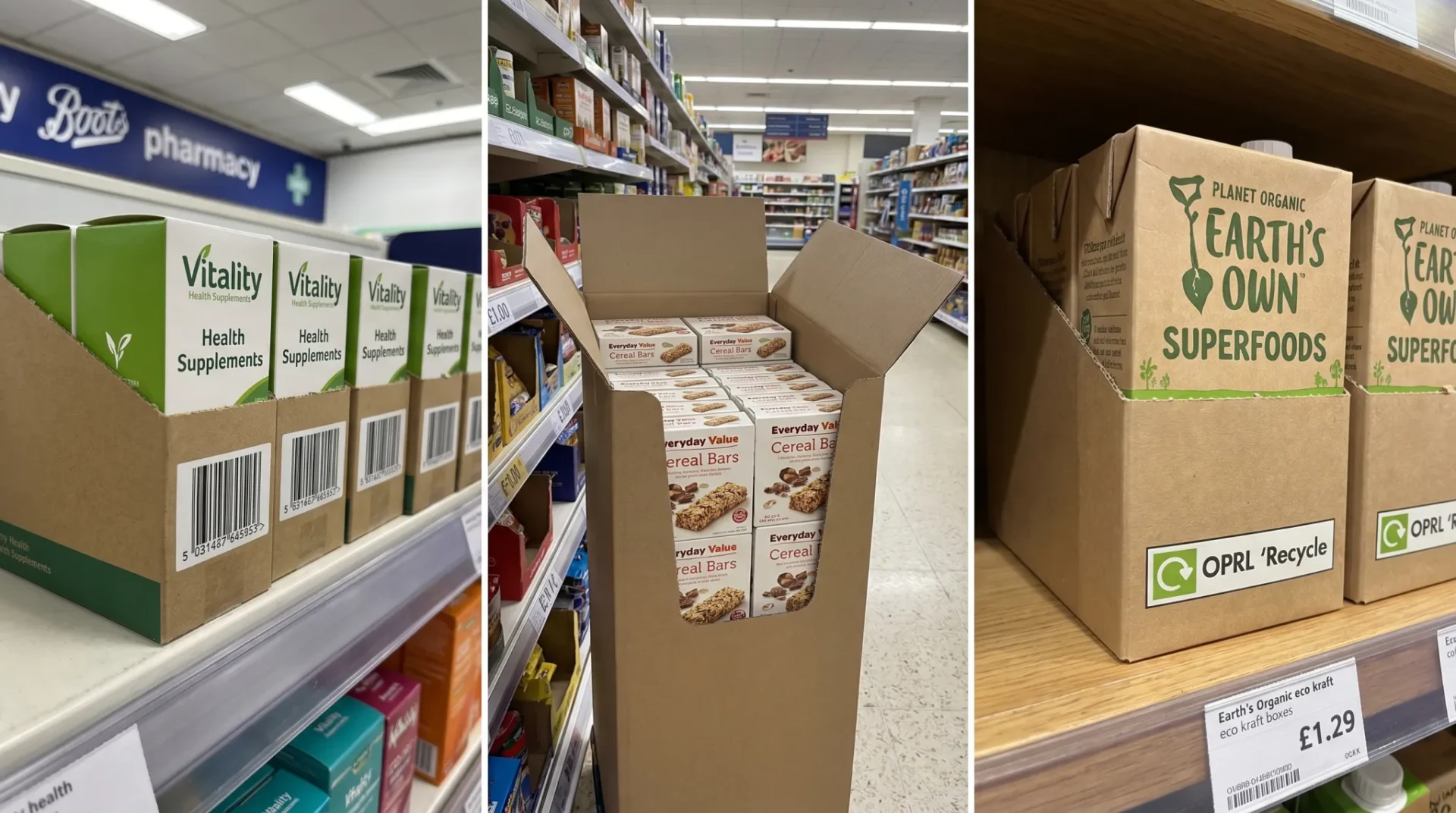
UK brand retail packaging success stories — health supplements on Boots shelf, food brand SRP on Tesco gondola, beauty brand Planet Organic shelf

Our Numbers — Every Retail Box, Every Order

98.7%
on-time in-spec delivery
±0.5mm
dimensional tolerance
Delta-E <3
colour accuracy guaranteed
0
GS1 failures after proof review
24hr
digital proof turnaround
8,500+
UK businesses since 2008
Get Started Today

Get Your Retail Box Quote Free. Within 2 Hours.

After 15 years and 8,500+ UK businesses, the pattern we see most often is this: a brand approaches a retailer with a great product and a box they're proud of. The box fails compliance review. Not because it's unattractive because the GS1 barcode is in the wrong position, or the facing width doesn't match the planogram, or the OPRL label is incorrect for the finish, or the SRP perforation isn't where Sainsbury's or Tesco requires it. These are specification failures, not design failures. And they cost listings, delay launches, and waste print runs.

We ask about your product dimensions, target retailer, planogram slot width if you have it, box format, finish, and quantity at quote stage. We confirm GS1 barcode zone position, OPRL label, RAM rating, planogram compliance, and exact price within 2 hours. The conversation costs nothing. The compliance failure it prevents can cost everything.

⚡ Seasonal deadline? Standard is 7–10 working days. Contact us immediately — honest answer within the hour. Christmas retail boxes: order by mid-October. Valentine's Day: late December. Easter: early February.

No Minimum
Every type
GS1 Reviewed
Every proof
SRP Compliant
Retailer spec checked
Free Shipping
Every order, all UK
FSC Certified
Full CoC documentation
Since 2008
8,500+ businesses

📞 0773 506 8080  ·  📧 sales@wabsprint.co.uk  ·  Mon–Fri 9:00am–5:00pm

Wabs Print & Packaging · ISO 9001:2015 · FSC Certified · OPRL Compliant · Since 2008

Corrugated Boxes · Custom Boxes · Sleeve Boxes · Kraft Boxes · Cosmetic Boxes · Perfume Boxes ·