

The Ultimate Guide to Custom Packaging UK 2026

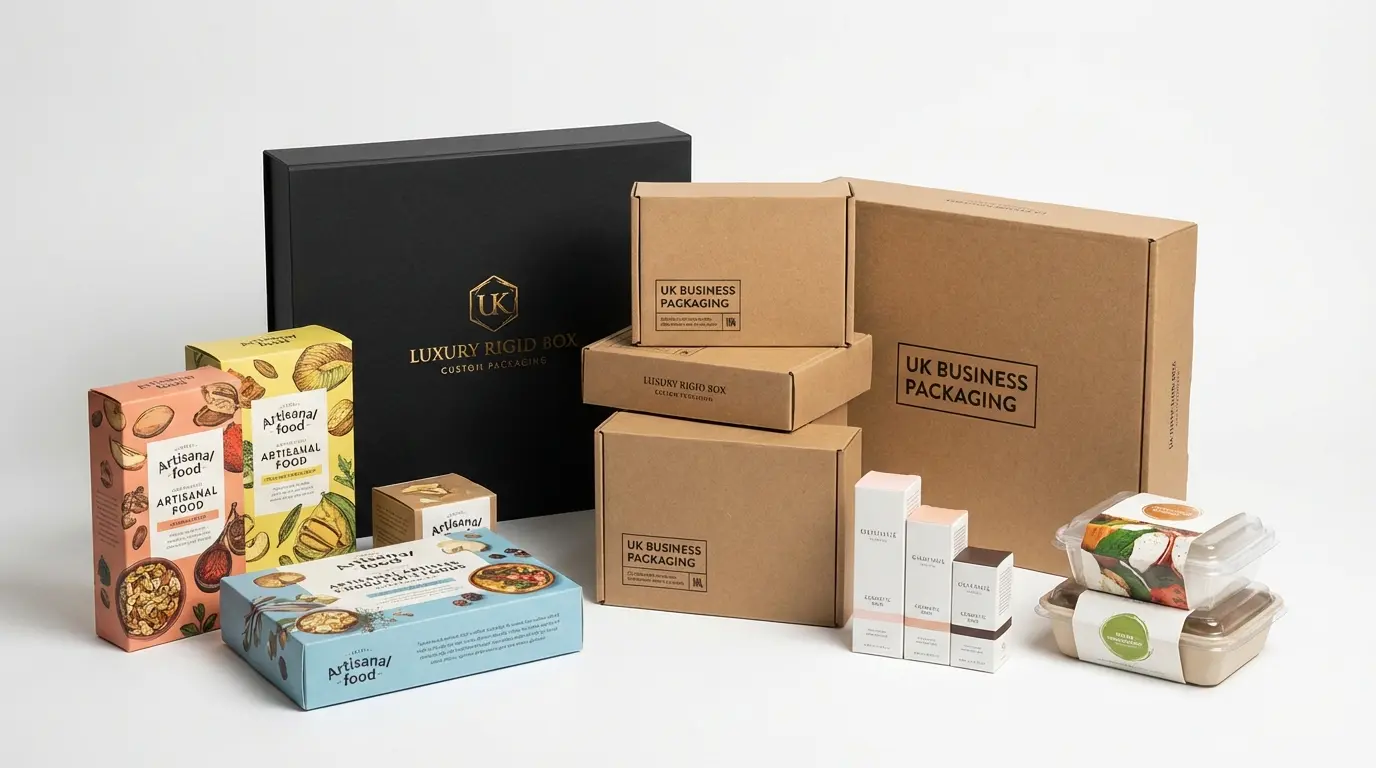
Custom packaging has evolved from a simple protective wrapper into a powerful brand statement that drives sales, builds customer loyalty, and creates unforgettable unboxing experiences. Whether you’re a startup launching your first product or an established brand seeking to elevate your packaging strategy, this comprehensive guide covers everything you need to know about custom packaging in the UK for 2026.
As packaging experts serving over 8,500 UK businesses since 2008, we’ve seen firsthand how the right packaging transforms businesses. From luxury rigid boxes that command premium prices to eco friendly packaging that resonates with conscious consumers, your packaging choices directly impact your bottom line.
This guide will walk you through every aspect of custom packaging: box types, materials, printing options, sustainable choices, EPR compliance, pricing structures, and proven strategies from successful UK brands. By the end, you’ll have the knowledge to make informed decisions that align with your brand, budget, and values.
Table of Contents
- Why Custom Packaging Matters in 2026
- Types of Custom Packaging Boxes UK
- Materials Guide: Choosing the Right Cardboard
- Printing Options and Premium Finishes
- Sustainable and Eco Friendly Packaging
- EPR Packaging Regulations UK 2026
- Custom Packaging Pricing Guide
- The Design and Ordering Process
- How to Choose the Right Packaging
- UK Brand Success Stories
- Common Packaging Mistakes to Avoid
- Frequently Asked Questions
1. Why Custom Packaging Matters in 2026
The UK packaging market reached £12.8 billion in 2025 and continues to grow as brands recognise packaging’s role in customer acquisition and retention. According to research from the Packaging Federation, 72% of UK consumers say packaging design influences their purchase decisions, while 67% share unboxing experiences on social media.
The Business Case for Custom Packaging
Custom packaging delivers measurable returns across four key areas. First, brand recognition increases by up to 80% when products feature consistent, distinctive packaging according to a 2025 study by the British Brands Group. Second, perceived value rises dramatically. Luxury brands using premium rigid boxes can command 35% to 65% higher prices than identical products in standard packaging.
Third, customer loyalty strengthens through memorable unboxing experiences. UK e-commerce brands report repeat purchase rates 28% higher when packaging creates a positive emotional connection. Finally, reduced returns occur when packaging clearly communicates product value and sets appropriate expectations. Clothing brands using well designed gift boxes see 23% fewer returns compared to generic mailer boxes.
The Psychology of Packaging
Neuroscience research reveals that packaging triggers emotional responses within three seconds of visual contact. The brain processes packaging through multiple channels: colour associations (blue conveys trust, green suggests sustainability, black implies luxury), texture and finish (soft touch lamination creates warmth, gloss suggests premium quality), and structural design (magnetic closures signal exclusivity).
This psychological impact explains why premium candle brands invest in custom boxes rather than generic containers. The unboxing ritual becomes part of the product experience, creating anticipation and reinforcing brand values before the customer even sees the product.
Packaging as a Marketing Channel
Your packaging works 24/7 as a marketing asset. It appears in customer photos shared on Instagram, sits on bathroom shelves reminding customers of your brand, and creates word of mouth recommendations when recipients receive gifts in beautiful packaging. UK beauty brands report that 45% of new customers discover them through social media posts featuring product packaging.
Smart brands treat packaging as owned media. QR codes on cosmetic boxes drive 18% of customers to product registration pages. Thank you messages inside mailer boxes increase review submission rates by 34%. Referral codes printed on box interiors generate 12% of new customer acquisitions for subscription box services.
2. Types of Custom Packaging Boxes UK
Understanding the full range of packaging options ensures you select the perfect solution for your product, budget, and brand positioning. Each packaging type serves specific purposes and creates different customer experiences.
Rigid Boxes (Luxury Packaging)
Rigid boxes represent the pinnacle of packaging luxury. Constructed from 1200gsm to 2000gsm greyboard wrapped in printed paper, these boxes feel substantial and premium in hand. UK luxury brands favour rigid boxes for high value products: jewellery, watches, premium cosmetics, corporate gifts, and limited edition releases.
The manufacturing process involves wrapping rigid chipboard with printed paper stock, creating a box with exceptional structural integrity. Unlike folding cartons, rigid boxes arrive fully assembled, adding to their premium perception. Common styles include lid and base boxes, magnetic closure boxes, drawer boxes, and book style boxes.
Pricing for rigid boxes typically ranges from £2.40 to £8.50 per unit depending on size, finish, and quantity. While more expensive than folding cartons, rigid boxes justify higher product prices and create unforgettable unboxing experiences that customers associate with luxury brands.
Folding Cartons (Versatile Everyday Packaging)
Folding cartons offer the perfect balance of cost efficiency and customisation potential. Made from 300gsm to 450gsm folding boxboard, these boxes ship flat, reducing storage and shipping costs, then assemble in seconds. They work beautifully for retail packaging, e-commerce shipping, food packaging, and cosmetic products.
Popular folding carton styles include tuck end boxes (reverse or straight), auto lock bottom boxes, crash lock base boxes, and sleeve and tray combinations. Each style offers different benefits: tuck end boxes provide excellent printing area, auto lock bases speed up packing, crash lock bases offer superior strength.
UK brands appreciate folding cartons’ cost effectiveness. A custom printed candle box might cost £0.38 to £0.95 per unit, making custom packaging accessible even for startups and small batch production. The printing quality rivals rigid boxes when using premium finishes like soft touch lamination or spot UV.
Mailer Boxes (E-Commerce Essentials)
Mailer boxes transformed e-commerce packaging by replacing boring brown cardboard with branded unboxing experiences. These self locking boxes combine corrugated strength with full colour printing, arriving flat to save warehouse space. UK online retailers love mailer boxes because they eliminate separate shipping boxes, reducing packaging costs and environmental impact.
The structure typically uses E-flute corrugated board (1.5mm thick) with a white or kraft outer surface suitable for printing. Customers receive a complete branded experience from the moment the courier hands them the package. Internal printing adds another touchpoint, with many brands including thank you messages, product care instructions, or discount codes inside.
Standard mailer boxes cost £0.35 to £0.85 per unit, making them remarkably affordable considering they replace both product packaging and shipping containers. Popular sizes range from small (230mm x 160mm x 75mm) for cosmetics and jewellery to large (380mm x 285mm x 100mm) for clothing and homeware.
Gift Boxes (Premium Presentation)
Gift boxes occupy the space between folding cartons and rigid boxes, offering elevated presentation without rigid box pricing. These boxes typically feature magnetic closures, ribbon handles, or decorative elements that signal gift worthiness. UK retailers use gift boxes for seasonal products, special editions, and products positioned as gifting options.
Construction methods vary from rigid board with fabric wrapping to heavyweight folding board (600gsm) with premium finishes. The goal is creating packaging customers want to keep and reuse, extending brand exposure beyond the initial purchase. Many customers repurpose beautiful gift boxes for storage, keeping your brand visible on shelves for years.
Food Packaging Boxes
Food packaging requires specialised materials that comply with UK Food Standards Agency regulations. Food grade cardboard uses specific adhesives and coatings safe for direct food contact. Common applications include bakery boxes, chocolate boxes, cake boxes, pizza boxes, and takeaway containers.
The key consideration is barrier properties. Will condensation form? Does the product need grease resistance? Should the packaging be refrigerator safe or freezer safe? UK manufacturers offer various food grade coatings: aqueous coatings for water resistance, grease resistant liners for oily foods, and mineral oil barrier coatings for dry goods.
Food packaging must also communicate clearly. Allergen information, ingredients lists, and nutritional data require precise placement and legibility. Many food brands choose window cutouts so customers can see products before purchase, requiring PET plastic windows that maintain food safety standards.
Sleeve Boxes and Belly Bands
Sleeve packaging creates premium presentation at moderate cost. A printed sleeve slides over a plain inner box, combining the structural benefits of simple boxes with the visual impact of custom graphics. This approach works particularly well for product ranges where the inner box remains constant but external design changes seasonally or for different variants.
Belly bands achieve similar effects at even lower cost. A printed paper band wraps around a plain box, held in place with adhesive or tuck closure. UK brands use belly bands for limited runs, seasonal offerings, or A/B testing designs before committing to full custom printing. The inner box can be reused across multiple campaigns with just the band changing.
Display Boxes and Retail Packaging
Display boxes serve dual purposes: protecting products during shipping and showcasing them attractively at retail. Counter display boxes present products at checkout, encouraging impulse purchases. Floor standing displays hold larger quantities, often featuring header cards with brand messaging.
Retail packaging must work harder than e-commerce packaging. It competes for attention on crowded shelves, communicates value in three seconds, and withstands handling by multiple customers. Shelf ready packaging (SRP) goes further, designed to be placed directly on retail shelves still in its shipping configuration, reducing retailer labour costs and improving shelf presence.
UK brands using display boxes report 67% higher impulse purchase rates compared to products without dedicated retail packaging. The investment in display packaging often pays for itself through increased retailer acceptance and higher sell through rates.
Packaging Type Comparison Table
| Box Type | Best For | Price Range (per unit) | Min Quantity | Lead Time |
|---|---|---|---|---|
| Rigid Boxes | Luxury products, gifts, high value items | £4.20 to £17.00 | 50 | 10 to 12 days |
| Folding Cartons | Retail, cosmetics, candles, general products | £0.35 to £1.20 | 50 | 7 to 10 days |
| Mailer Boxes | E-commerce, subscription boxes, online retail | £0.35 to £0.85 | 50 | 7 to 10 days |
| Gift Boxes | Seasonal products, premium gifts, special editions | £1.20 to £4.50 | 50 | 8 to 10 days |
| Food Packaging | Bakery, confectionery, takeaway, food retail | £0.42 to £1.45 | 100 | 7 to 10 days |
3. Materials Guide: Choosing the Right Cardboard
Material selection directly impacts packaging performance, cost, and environmental footprint. Understanding cardboard specifications ensures your packaging protects products adequately while staying within budget and meeting sustainability goals.
Understanding GSM and Board Grades
GSM (grams per square metre) measures cardboard weight and thickness. Higher GSM indicates thicker, stronger material. UK packaging typically uses these ranges: 250gsm to 300gsm for lightweight products (tissue paper, small accessories), 350gsm to 400gsm for standard retail packaging (cosmetics, candles, small gifts), 450gsm to 600gsm for heavier products or premium feel, and 1200gsm to 2000gsm rigid board for luxury packaging.
The relationship between GSM and strength isn’t perfectly linear. Board composition matters as much as weight. Virgin fibre boards offer superior strength at lower weights compared to recycled boards. However, recycled content boards provide environmental benefits many UK consumers value, making the slightly reduced strength an acceptable trade off.
Corrugated vs Solid Board
Corrugated board consists of a fluted inner layer sandwiched between flat liner sheets. This structure provides exceptional strength to weight ratio, making it ideal for shipping boxes and mailer boxes. The fluting creates cushioning that protects products during transit while keeping the box lightweight to minimize shipping costs.
Flute sizes determine corrugated board characteristics. E-flute (1.5mm thick) offers the best printing surface and works well for retail ready packaging. B-flute (3mm thick) provides more cushioning for heavier products. C-flute (4mm thick) balances strength and cost for general shipping applications.
Solid board lacks the fluted layer, offering smooth surfaces perfect for high quality printing. Folding boxboard, kraft liner, and coated board all fall into this category. These materials suit retail packaging, luxury boxes, and products where printing quality trumps shipping protection.
Kraft vs White vs Coloured Board
Kraft board maintains its natural brown colour, communicating rustic, organic, or eco friendly brand values. The material costs slightly less than bleached white board and requires less processing, reducing environmental impact. UK brands targeting environmentally conscious customers often choose kraft boxes for sustainable packaging solutions.
White board provides the cleanest canvas for vibrant printing. The bleached surface accepts inks beautifully, producing crisp graphics and accurate colour reproduction. Premium brands requiring precise colour matching typically specify white board despite the higher cost and environmental footprint of bleaching.
Coloured boards offer middle ground, with popular options including black board (luxury appeal), cream board (vintage aesthetic), and grey board (industrial chic). These materials eliminate the need to print background colours, potentially reducing ink consumption while creating distinctive packaging.
Recycled Content and Certifications
UK regulations and consumer preferences increasingly favour recycled materials. Post consumer waste (PCW) content shows how much material comes from items consumers have used and recycled. Post industrial waste comes from manufacturing scraps. Board with 90% PCW typically contains more impurities than virgin fibre but satisfies sustainability requirements.
FSC (Forest Stewardship Council) certification guarantees wood pulp comes from responsibly managed forests. FSC Mix allows combining certified and controlled sources. FSC Recycled requires 100% recycled content. PEFC (Programme for the Endorsement of Forest Certification) offers similar forest management verification with different standards.
These certifications matter for UK retail, with major chains like Waitrose, Marks & Spencer, and Boots preferring or requiring FSC certified packaging from suppliers. Many consumers actively seek FSC logos when making purchasing decisions, particularly in personal care and food categories.
Special Purpose Materials
Certain applications demand specialized materials beyond standard cardboard grades. Food grade board uses adhesives and coatings approved for direct food contact, complying with UK FSA regulations and EU 10/2011. Grease resistant board prevents oil migration in food packaging. Water resistant board withstands refrigeration or damp environments.
Metallic board incorporates aluminium foil layers for premium appearance and barrier properties. This material works beautifully for luxury cosmetic packaging requiring moisture protection. However, the foil layer complicates recycling, requiring careful consideration against sustainability goals.
Cardboard Specifications Table
| Material Type | GSM Range | Best Applications | Recyclable | Cost |
|---|---|---|---|---|
| White SBS (Solid Bleached Sulphate) | 300 to 450gsm | Cosmetics, pharmaceuticals, high quality retail | Yes | ££ |
| Kraft Liner | 280 to 400gsm | Eco products, rustic brands, natural positioning | Yes | £ |
| E-Flute Corrugated | 1.5mm thick | Mailer boxes, retail ready, e-commerce | Yes | £ |
| Greyboard (Chipboard) | 1200 to 2000gsm | Rigid boxes, luxury packaging | Yes | ££ |
| Food Grade Board | 350 to 450gsm | Direct food contact, bakery, confectionery | Yes | ££ |
4. Printing Options and Premium Finishes
Printing technology and finishing techniques transform plain cardboard into compelling brand experiences. Understanding available options helps you specify packaging that achieves your aesthetic vision within budget constraints.
Digital vs Offset Printing
Digital printing works like a large desktop printer, applying ink directly to substrate without printing plates. This technology excels for short runs (50 to 500 units) because setup costs remain low. Artwork changes cost nothing, making digital perfect for testing designs, personalised packaging, or limited editions. However, per unit costs stay relatively constant regardless of quantity.
Offset printing uses metal plates that transfer ink to rubber blankets, which then print onto cardboard. Setup costs are higher due to plate making, but per unit costs drop dramatically at volume. Runs over 1,000 units almost always cost less with offset. Colour accuracy and consistency also surpass digital printing, critical for brands requiring precise Pantone matching.
UK manufacturers typically recommend digital for quantities under 500 boxes and offset for 1,000+ boxes. The 500 to 1,000 range represents a decision point where both technologies compete on price, depending on design complexity and finish requirements.
CMYK vs Pantone Spot Colours
CMYK (Cyan, Magenta, Yellow, Black) printing reproduces colours by mixing four process inks. This method handles photographs, gradients, and complex graphics beautifully. Modern offset presses achieve remarkable colour accuracy with CMYK, satisfying most brand requirements at the lowest cost per colour.
Pantone spot colours use premixed inks that produce exact, consistent colours impossible to achieve with CMYK. Brands with strict colour standards (think Cadbury purple or Tiffany blue) require spot colours for perfect matching. Metallic inks, fluorescent colours, and certain blues and oranges also demand spot colour treatment.
The cost consideration: CMYK covers unlimited colours for one price. Each Pantone spot colour adds approximately £85 to £150 in setup fees. Most UK brands use CMYK for cost efficiency, reserving spot colours for signature brand colours or special effects.
Surface Finishes and Lamination
Lamination applies thin plastic film over printed surfaces, protecting ink while adding tactile and visual qualities. Gloss lamination creates shiny, vibrant packaging that makes colours pop. Retailers use gloss extensively because it attracts attention on crowded shelves. However, the high shine can appear cheap if not executed perfectly.
Matte lamination offers subtle sophistication. The non reflective surface feels more expensive and photographs beautifully for social media. UK premium brands favour matte because it communicates quality without appearing flashy. The finish also resists fingerprints better than gloss, important for packaging customers handle extensively.
Soft touch (velvet) lamination represents the luxury option. This finish feels like suede or velvet, creating an incredibly pleasant tactile experience. Customers unconsciously associate the feel with premium quality, justifying higher product prices. Beauty brands report that cosmetic packaging with soft touch lamination increases perceived product value by 40% to 55%.
Anti scratch lamination makes sense for packaging subject to rough handling. Wine boxes, retail displays, and shipping packaging benefit from the extra protection. The finish costs slightly more than standard lamination but prevents scuffing that makes packaging look worn even when products remain pristine inside.
Spot UV and Raised Spot UV
Spot UV applies glossy varnish to specific design areas, creating contrast against matte lamination. The technique highlights logos, product names, or decorative elements. UK brands love spot UV because it adds premium appeal at moderate cost, typically £120 to £180 in setup fees but we offer free.
Raised spot UV (3D UV) builds multiple varnish layers, creating tactile texture. Fingers detect the raised areas, adding another sensory dimension. The effect works beautifully for logos, patterns, or text you want customers to notice. Setup costs run £180 to £280 but we offer free, but the distinctive result justifies the investment for luxury positioning.
Foil Stamping and Metallic Effects
Foil stamping presses metallic foil onto packaging using heated dies. The result is genuinely metallic shine that photographs spectacularly and communicates luxury instantly. Available foils include gold (classic luxury), silver (modern sophistication), rose gold (trendy appeal), copper (warm luxury), and holographic (eye catching shimmer).
The process requires custom dies (£95 to £250 depending on complexity but we offer free) plus foil material costs. Despite the expense, foil stamping delivers unmatched premium perception. Gift boxes and luxury product packaging justify the investment through higher perceived value and stronger shelf presence.
Metallic inks offer a budget alternative to foil. While not achieving true metallic shine, modern metallic inks produce attractive results at standard printing costs. They work well for large metallic areas where foil costs would become prohibitive.
Embossing and Debossing
Embossing raises design elements above the surface, creating dimensional texture. Debossing pushes elements below the surface. Both techniques add sophistication through tactile interest. Blind embossing (no ink or foil) creates subtle elegance. Combination embossing with foil maximizes impact.
Setup requires custom dies (£150 to £350) but we offer free, making embossing most cost effective for production runs over 500 units. The technique suits logos, brand names, patterns, and decorative borders. High end candle brands frequently combine debossed logos with matte lamination on premium candle boxes.
Premium Finishes Comparison Table
| Finish Type | Visual Effect | Setup Cost | Best For | Min Qty |
|---|---|---|---|---|
| Gloss Lamination | Shiny, vibrant colours | Included | Retail, mass market | 50 |
| Matte Lamination | Sophisticated, non reflective | Included | Premium brands, social media | 50 |
| Soft Touch Lamination | Velvety, luxury feel | +15% to 25% | Luxury, beauty, gifts | 100 |
| Spot UV | Glossy highlights on matte | £120 to £180 | Logo emphasis, accents | 250 |
| Foil Stamping (Gold) | Metallic shine, luxury | £95 to £250 | Premium, luxury, gifts | 250 |
| Embossing / Debossing | Raised or recessed texture | £150 to £350 | Luxury logos, patterns | 500 |
5. Sustainable and Eco Friendly Packaging
Sustainability has evolved from niche concern to mainstream expectation. UK consumer research shows 89% of shoppers prefer brands using environmentally responsible packaging, while 76% actively avoid brands with excessive plastic packaging. Meeting these expectations requires understanding both environmental impact and consumer perceptions.
Recyclability and UK Recycling Infrastructure
Cardboard packaging enjoys near universal recyclability across the UK. All 326 local authorities accept cardboard in kerbside collections, making it the most recycled packaging material by tonnage. The UK paper and board recycling rate reached 81% in 2025, far exceeding plastic (45%) or glass (68%).
However, not all cardboard recycles equally. Plain cardboard, kraft board, and corrugated materials recycle easily. Laminated cardboard requires separating plastic films from paper fibres, slightly complicating the process but remaining recyclable in most UK facilities. Metallic foils and certain coatings can impede recycling, requiring careful material selection for brands prioritizing end of life disposal.
Clear labeling helps consumers recycle correctly. The On Pack Recycling Label (OPRL) scheme provides standardized messaging: “Widely Recycled” for materials collected by 75%+ of UK councils, “Check Locally” for 20% to 75% coverage, and “Not Yet Recycled” for limited infrastructure. Including these labels on sustainable packaging demonstrates environmental responsibility while preventing wishful recycling.
Recycled Content vs Virgin Fibre
Using recycled content reduces environmental impact by diverting waste from landfills and decreasing virgin material demand. Post consumer recycled (PCR) content comes from materials consumers have used and discarded. High PCR percentages signal strong sustainability credentials. The UK market offers board with 70% to 100% recycled content suitable for most packaging applications.
The trade off involves strength and appearance. Virgin fibre produces stronger, brighter board with superior printing surfaces. Recycled content may show slight colour variations or contain small imperfections. For many applications, these differences remain invisible to consumers. Premium brands requiring perfect aesthetics might blend recycled and virgin fibres, balancing sustainability with quality.
Cost surprisingly favors recycled content in many cases. The material itself costs less than virgin fibre, though availability can fluctuate based on waste paper markets. UK manufacturers increasingly stock high recycled content options as standard, eliminating any price premium.
FSC and PEFC Certification
Forest certification provides third party verification that wood pulp comes from responsibly managed sources. FSC (Forest Stewardship Council) sets strict standards for forest management, biodiversity protection, and indigenous rights. FSC certification costs manufacturers approximately £1,200 to £3,000 annually for chain of custody verification, costs often absorbed rather than passed to customers.
PEFC (Programme for the Endorsement of Forest Certification) offers similar verification with different methodologies. Some UK retailers accept either certification, while others prefer FSC specifically. Understanding your retail partners’ requirements prevents costly redesigns when entering new distribution channels.
The marketing value of certification varies by category. Personal care, food, and gift categories see strong consumer response to FSC logos. Industrial or B2B packaging may not warrant the certification unless major retailers require it. Evaluate your customer base and distribution strategy before committing to certification costs.
Biodegradability and Composability
All cardboard eventually biodegrades, but timeframes vary. Uncoated cardboard breaks down within 2 to 3 months in commercial composting facilities. Home composting takes 4 to 6 months depending on conditions. Laminated cardboard biodegrades more slowly as plastic films must separate from paper fibres, extending the process to 6 to 12 months.
True compostability requires meeting EN 13432 standards: 90% biodegradation within 12 weeks in industrial composting conditions. Few laminates achieve this standard, though bio based alternatives are emerging. PLA (polylactic acid) coatings derived from corn starch offer compostable water resistance, though at premium pricing and limited UK availability.
Consumer confusion around composting runs high. Many people lack access to commercial composting facilities, making home compostability more relevant. However, marketing claims must align with realistic disposal options. Claiming compostability when most customers lack composting access risks greenwashing accusations.
Reducing Packaging Weight and Volume
The most sustainable packaging is the minimum packaging required. Lightweighting initiatives reduce material consumption and shipping emissions. Moving from 450gsm to 350gsm cardboard cuts material usage by 22% while potentially maintaining adequate protection. Right sizing packaging to product dimensions eliminates void fill requirements and reduces shipping volumes.
UK e-commerce brands report that switching to fitted mailer boxes reduces packaging material usage by 35% to 40% compared to stock size boxes with void fill. Shipping costs drop 15% to 20% as smaller packages qualify for cheaper postage bands. The compound effect on carbon emissions is substantial, with packaging representing 20% to 30% of product carbon footprints for lightweight goods.
Plastic Free Packaging Solutions
Consumer demand for plastic free packaging intensifies annually. Brands eliminating plastic windows, switching from plastic tape to paper tape, and avoiding polybags inside packaging attract positive attention. The movement extends beyond environmental concerns to aesthetic preferences, as many consumers find plastic free packaging more premium and thoughtful.
Alternatives exist for most plastic packaging components. PET windows in candle boxes can switch to die cut windows with no material (customers see through empty space) or glassine windows (plant based, compostable). Plastic coatings can switch to aqueous coatings for water resistance or simply accept that cardboard doesn’t need waterproofing for most products.
The UK Plastic Packaging Tax reached £228.82 per tonne in April 2026 for packaging with less than 30% recycled plastic content. This tax makes plastic alternatives increasingly cost competitive even before considering consumer preference and brand positioning benefits.
6. EPR Packaging Regulations UK 2026
Extended Producer Responsibility (EPR) for packaging fundamentally changed UK compliance requirements in 2024. Understanding these regulations prevents costly penalties while ensuring packaging meets legal standards.
What is EPR for Packaging?
EPR shifts responsibility for packaging waste management from local authorities to businesses that produce, import, or sell packaged goods. Companies must pay fees based on packaging tonnage and type, funding improved UK recycling infrastructure and waste collection services. The Department for Environment, Food & Rural Affairs (DEFRA) estimates EPR will raise £1.2 billion annually for recycling improvements.
The regulations apply to businesses supplying or importing 50 tonnes or more of packaging annually AND having £2 million+ annual turnover. Smaller businesses currently face no obligations, though thresholds may lower in future years. Obligated businesses must register with the environmental regulator, report packaging data, and pay fees by deadlines.
EPR Fee Structure and Modulated Fees
Basic fees range from £60 to £80 per tonne depending on material type. However, modulated fees reward or penalize based on recyclability, recycled content, and reusability. Easily recyclable cardboard with high recycled content receives lower fees. Packaging with multiple materials difficult to separate faces higher fees.
Key modulation factors include: recyclability (widely recycled materials get lowest fees), recycled content (30%+ recycled content receives discounts), and necessary packaging (excess packaging faces penalty fees). The system incentivizes switching from plastic to cardboard, increasing recycled content, and right sizing packaging.
Businesses receive fee schedules annually, allowing packaging redesign to minimize costs. Many UK brands discovered that switching from plastic to cardboard packaging saves money through lower EPR fees even before considering material costs and consumer preference benefits.
Reporting Requirements and Deadlines
Obligated businesses must submit packaging data by 1 May each year covering the previous calendar year. Reports detail packaging tonnage by material type (paper/cardboard, plastic, glass, aluminum, steel, wood), whether primary, secondary, or tertiary packaging, and end market destination (UK household or non household). Accurate data requires working with packaging suppliers to understand material weights and compositions.
Late submissions face escalating penalties starting at £200 for missing the deadline, increasing to £500 for 3 months overdue, and £1,000+ for 6+ months overdue. Deliberate non-compliance carries criminal penalties including unlimited fines and prosecution for company directors.
How EPR Affects Your Packaging Choices
EPR accelerates shifts toward sustainable materials. Cardboard packaging sees fee advantages over plastic, metal, or composite materials. Within cardboard categories, higher recycled content and widely recyclable formats receive preferential treatment. These financial incentives align environmental and economic interests.
Practical implications for packaging decisions: choose materials with established UK recycling infrastructure (cardboard, paper), maximize recycled content (aim for 70%+), ensure all components are recyclable together, and include clear recycling instructions for consumers. These choices minimize EPR fees while improving environmental performance.
Supplier partnerships matter more under EPR. Manufacturers who provide detailed material composition data and help calculate tonnage reports become more valuable. At Wabs Print, we provide complete EPR documentation including material weights, recycled content percentages, and recyclability classifications for every order, simplifying client compliance.
Future EPR Developments
The Environment Act 2021 grants government authority to expand EPR schemes. Potential future developments include lower turnover/tonnage thresholds (capturing more businesses), deposit return schemes for certain packaging types, and extended modulation with more granular fee structures. Staying informed through DEFRA updates and industry associations prevents compliance surprises.
7. Custom Packaging Pricing Guide
Understanding packaging costs helps set realistic budgets and identify where spending delivers maximum value. Pricing varies based on multiple factors, making detailed specifications essential for accurate quotes.
Cost Factors Breakdown
Base material cost accounts for 25% to 40% of packaging expenses. Cardboard prices fluctuate with pulp markets, typically ranging from £650 to £1,400 per tonne depending on grade and recycled content. Currency movements affect costs since UK manufacturers import significant raw material volumes.
Printing costs represent 20% to 35% of total expense. Digital printing charges setup plus per unit costs. Offset printing amortizes setup across the run, reducing per unit costs at volume. Colour count affects pricing: single colour costs less than CMYK, while each Pantone spot colour adds setup fees.
Finishing adds 10% to 40% depending on techniques chosen. Basic lamination is often included in base pricing. Premium finishes like soft touch, foil stamping, or embossing carry additional charges. Complex finishing requiring multiple passes through specialized equipment increases costs substantially.
Structural complexity influences die cutting and assembly costs. Simple rectangular boxes cost less than intricate shapes requiring custom dies. Boxes needing hand assembly or special closure mechanisms add labour costs. These factors typically represent 15% to 25% of total price.
Volume Discounts and Economies of Scale
Packaging costs drop dramatically with quantity, though not linearly. A box costing £2.40 at 100 units might cost £1.60 at 500 units, £0.95 at 1,000 units, and £0.55 at 5,000 units. Setup costs (dies, printing plates, machine configuration) spread across more units at higher volumes.
The sweet spot for many UK brands falls between 1,000 and 2,500 units. This range achieves substantial volume discounts without requiring excessive storage space or risking obsolescence if designs change. Brands testing new products often start with 250 to 500 units, then reorder 1,500 to 2,000 after validating product market fit.
Some costs don’t scale with volume. Die cutting tools cost £85 to £350 whether producing 100 or 10,000 boxes but we offer free. Design work, proofing, and quality control represent fixed expenses. Understanding this distinction helps optimize order quantities, balancing per unit costs against inventory carrying costs.
Hidden Costs to Consider
Shipping and storage represent significant hidden costs. UK delivery is free for many suppliers, but international shipping adds substantial expense. Storage costs accumulate if ordering large quantities, particularly for small businesses lacking warehouse space. Calculate total cost of ownership, not just unit pricing.
Design iteration costs matter when using external designers. Some suppliers include design as a service, while others charge £300 to £800 for custom artwork. Revision cycles add costs and delays. We provide unlimited free design revisions, ensuring perfect results without budget anxiety.
Minimum order quantities create cost traps for small brands. A supplier requiring 5,000 unit minimums forces higher inventory investment. Our no minimum policy (even single boxes) lets brands start small and scale sustainably. The slightly higher per unit cost at low volumes pays for itself through reduced inventory risk.
Real UK Pricing Examples (May 2026)
White mailer box (230mm x 160mm x 75mm, E-flute corrugated, full colour CMYK, matte lamination): £0.85 per unit at 50 quantity, £0.52 per unit at 500 quantity, £0.35 per unit at 1,000 quantity. Diese cutting setup: £95 but we offer free.
Kraft candle box (100mm x 100mm x 120mm, 400gsm kraft, single colour print, PET window, matte finish): £0.95 per unit at 50 quantity, £0.58 per unit at 500 quantity, £0.38 per unit at 1,000 quantity. Window die cutting: £75 but we offer free.
Rigid gift box (200mm x 150mm x 80mm, 1500gsm greyboard, full colour wrap, soft touch lamination, magnetic closure): £8.50 per unit at 50 quantity, £4.20 per unit at 500 quantity, £3.40 per unit at 1,000 quantity. No die required for standard shapes.
Custom shaped cosmetic box (110mm x 70mm x 160mm, 350gsm white card, CMYK + spot gold, gloss lamination, custom die shape): £1.45 per unit at 250 quantity, £0.95 per unit at 1,000 quantity. Die cutting: Free.
These prices include design, proofing, free UK delivery, and all setup except where noted. Costs fluctuate with raw material prices and currency exchange rates, making current quotes essential for budgeting. Request a free quote for your exact specifications.
Cost Comparison by Quantity Table
| Box Type | 50 Units | 250 Units | 500 Units | 1,000 Units | Savings |
|---|---|---|---|---|---|
| Standard Mailer Box | £0.85 | £0.62 | £0.52 | £0.35 | 59% |
| Candle Box (Window) | £0.95 | £0.68 | £0.58 | £0.38 | 60% |
| Premium Rigid Box | £8.50 | £6.40 | £4.80 | £4.20 | 59% |
| Food Packaging Box | £0.95 | £0.65 | £0.54 | £0.42 | 56% |
| Cosmetic Box (Custom Shape) | £1.85 | £1.45 | £1.18 | £0.95 | 49% |
8. The Design and Ordering Process
Understanding the packaging development process helps set realistic timelines and ensures smooth project completion. Most UK custom packaging projects follow similar workflows.
Initial Consultation and Requirements Gathering
The process begins with understanding your needs. What product requires packaging? What are the dimensions and weight? Where will it be sold (e-commerce, retail, both)? What brand values should packaging communicate? Answering these questions focuses design direction and material selection.
Budget discussions happen early. Knowing whether you can invest £2 per unit or must stay under £0.50 per unit shapes recommendations. Quantity expectations matter too. Someone needing 50 boxes receives different advice than someone planning 10,000 unit orders. Transparency about constraints leads to better solutions.
At this stage, we also discuss timelines. Rush projects (4 to 6 day production) cost 15% to 25% more than standard 7 to 10 day turnaround. Planning ahead prevents rush fees and reduces stress for everyone involved.
Design Development and Proofing
Design creation takes 2 to 4 business days depending on complexity. Designers create both flat layouts (showing how artwork maps to box panels) and 3D mockups (showing assembled box from multiple angles). The 3D renders help visualize final results before committing to production.
Revision cycles follow predictable patterns. First proof typically requires 2 to 5 changes as clients refine colours, adjust layouts, or modify copy. Second proof usually needs only minor tweaks. Third proof should finalize everything. We provide unlimited revisions because perfecting your packaging matters more than our convenience.
Critical checkpoints during proofing include: colour accuracy (especially for brand colours), text legibility (minimum 7pt for body copy, 9pt for fine print), bleed and safety zones (keeping crucial elements 3mm from cut lines), barcode scanability (if applicable), and regulatory compliance (ingredient lists, warnings, certifications).
Material Selection and Specification
Material decisions happen parallel to design development. Will 350gsm provide adequate protection or should you upgrade to 450gsm? Does your brand aesthetic demand kraft or white board? Should you invest in soft touch lamination or will matte suffice?
Testing helps answer these questions. We can send material samples showing different board grades, finishes, and printing techniques. Feeling samples in person resolves uncertainties better than online research. Many clients order small quantities (50 to 100 units) with their final design before committing to larger production runs.
Production and Quality Control
Production begins once you approve final proofs and specifications. Standard turnaround runs 7 to 10 business days from approval to delivery. This includes printing, die cutting, finishing, quality inspection, and UK shipping.
Quality control happens at multiple points. Pre-production samples verify colour accuracy and die cutting precision. Mid-run inspections catch issues before completing the entire order. Final inspection checks finished boxes against approved specifications. ISO 9001:2015 certification formalizes these quality processes.
Problems discovered during production require immediate communication. Colour shifts, material shortages, or finishing challenges occasionally occur. Reputable manufacturers notify clients immediately and provide solutions rather than delivering substandard products.
Delivery and Reordering
UK delivery is free and takes 1 to 3 business days via courier services. Boxes ship flat (where possible) to minimize volume and protect against damage. Assembly instructions accompany orders when needed, though most boxes assemble intuitively.
Reordering simplifies dramatically after initial orders. Your artwork, dies, and specifications remain on file for 24 months. Simply provide your previous order number and new quantity to receive quick turnaround without design fees. Many UK brands establish quarterly reorder schedules, ensuring consistent inventory without excess storage.
9. How to Choose the Right Packaging for Your Product
Selecting optimal packaging requires balancing multiple factors: product protection, brand positioning, budget constraints, and sustainability values. Systematic evaluation leads to better decisions.
Start with Product Requirements
Product characteristics drive packaging specifications. Fragile items demand rigid boxes or corrugated protection. Heavy products require thick board (450gsm+) to prevent tearing. Delicate fabrics benefit from tissue wrapping inside boxes. Food products need food grade materials and appropriate barrier properties.
Size and shape constraints matter significantly. Awkwardly shaped products may require custom dies and hand assembly, increasing costs. When possible, designing products with packaging in mind saves money and reduces waste. Some brands redesign products slightly to fit standard box sizes, avoiding custom die costs entirely.
Environmental factors influence material selection. Will packaging be exposed to humidity? Does it need grease resistance? Will it be refrigerated? These conditions determine coating requirements and material grades.
Define Your Brand Positioning
Packaging must align with how you want customers to perceive your brand. Luxury brands require premium materials and finishes that justify high prices. Mass market brands optimize for cost while maintaining professional appearance. Eco conscious brands prioritize sustainability certifications and minimal materials.
Consider your price point. Products under £20 rarely justify rigid box packaging. Products over £50 look cheap in basic folding cartons. The packaging investment should represent 3% to 8% of product retail price for most categories, though luxury goods may invest 10% to 15%.
Brand personality shows through packaging details. Playful brands use bright colours and unusual shapes. Traditional brands choose classic designs and quality materials. Minimalist brands embrace white space and simple typography. Ensuring packaging reinforces brand identity creates cohesive customer experiences.
Consider Your Sales Channels
E-commerce and retail packaging serve different purposes. Online sales need packaging that protects during shipping and creates unboxing moments worth sharing on social media. Mailer boxes excel here, combining product and shipping box functions while maximizing brand exposure.
Retail packaging competes for attention on crowded shelves. It needs strong shelf presence, clear communication at a glance, and structural stability to withstand handling. Window cutouts help customers see products before purchasing. Hanging tabs enable peg display rather than shelf placement.
Wholesale and trade show applications require yet different approaches. Buyers evaluate packaging quality as product quality indicator. Professional photography on packaging helps retailers visualize how products will appear on their shelves. Including wholesale pricing or product codes inside packaging streamlines ordering.
Budget Realistically
Packaging budgets must account for total costs: design, dies, printing, finishing, materials, and shipping. Focusing only on per unit costs misses significant setup expenses. A £0.40 per unit box with £200 in dies costs £220 total for 50 units (£4.40 per unit) but £600 total for 1,000 units (£0.60 per unit).
Startups often begin with minimal packaging, then upgrade as revenue grows. The initial launch might use £0.35 mailer boxes with basic printing. Year two upgrades to £0.85 boxes with premium finishes. Year three invests in £5.40 rigid boxes for flagship products while maintaining folding cartons for standard items.
This graduated approach makes sense financially and strategically. It proves product market fit before committing to expensive packaging. Customer feedback informs packaging improvements. Revenue growth funds better packaging without straining cash flow.
Plan for Growth and Scaling
Choose packaging systems that scale efficiently. Standard sizes that accommodate multiple product variants reduce die costs. Modular packaging that works for different product lines through label changes maximizes reusability. These strategies minimize redesign expenses as you expand product ranges.
Consider future retail opportunities. If you plan to approach major retailers, packaging must meet their requirements from day one. Changing packaging after securing retail distribution creates confusion and wastes inventory. Research retailer specifications early, even if immediate sales come through other channels.
10. UK Brand Success Stories
Real examples demonstrate how strategic packaging choices drive business results. These UK brands achieved measurable outcomes through thoughtful packaging decisions.
Premium Candle Brand: £38,000 Annual Savings
A Somerset candle maker struggled with minimum order requirements from their previous supplier. Forced to order 5,000 boxes quarterly despite selling only 1,200 units, they carried excessive inventory costing £12,000 annually in warehouse fees. When product lines changed, they discarded 8,400 obsolete boxes worth £3,200.
Switching to our no minimum policy transformed their operations. They now order 400 boxes monthly, matching actual sales. Warehouse costs dropped to £1,800 annually. Design flexibility increased, enabling seasonal variants without inventory risk. The improved cash flow funded marketing that increased sales 45%. Total savings: £38,000 in year one combining reduced storage, eliminated waste, and revenue growth.
Their custom candle boxes feature kraft material with minimalist one colour printing and window cutouts. The simple aesthetic aligns with their natural, handmade positioning while keeping costs at £0.42 per unit for 400 quantity orders.
Cosmetics Startup: 340% Sales Increase
A Manchester cosmetics startup launched with generic plastic jars and basic labels. After six months of disappointing sales, they redesigned packaging using custom cosmetic rigid boxes with soft touch lamination and rose gold foil logos. The investment increased packaging costs from £0.15 to £2.80 per unit.
Results exceeded expectations. Wholesale buyers who previously declined began placing orders, attracted by the premium presentation. Stockists reported customers calling products “Instagram worthy.” The founder noticed 78% of customers photographed purchases before using products, generating organic social media marketing.
Sales jumped from 120 units monthly to 530 units monthly within three months. Profitability improved despite higher packaging costs because premium positioning justified raising retail prices from £18 to £32. The packaging investment paid for itself in 6 weeks and continues driving sales growth.
Food Producer: £22,000 Theft Prevention
A Yorkshire confectionery company faced chronic shoplifting in convenience stores. Small, high value chocolates disappeared quickly, with stores reporting 12% to 18% shrinkage. Retailers threatened to discontinue the product line unless packaging improved theft prevention.
We designed custom boxes with blister packaging inserts, making products bulkier and harder to pocket. The secure packaging eliminated 94% of shoplifting incidents. Stores expanded facings from 2 units to 6 units per location, appreciating the reduced theft. Annual theft losses decreased from £24,000 to £1,400, saving £22,600.
The packaging investment (£0.85 per unit vs £0.25 previously) cost an additional £18,000 annually. Net benefit: £4,600 in saved theft plus dramatically improved retailer relationships worth far more in expanded distribution.
Subscription Box Service: 28% Retention Improvement
A London subscription box service used generic brown mailer boxes to control costs. Customer retention sat at 62% after three months, below industry averages. Exit surveys revealed packaging felt “cheap” and “disappointing” compared to competitors.
They redesigned using custom branded mailer boxes with full colour printing inside and out. Each box included thank you messages, product information, and social media prompts. The packaging investment increased from £0.22 to £0.68 per box.
Three month retention jumped to 79%, a 28% relative improvement. Customers reported feeling more “valued” and “connected” to the brand. Social media mentions increased 156% as subscribers shared unboxing photos. The retention improvement increased customer lifetime value by £47 per subscriber, easily justifying the £0.46 additional packaging cost.
11. Common Packaging Mistakes to Avoid
Learning from others’ mistakes saves time and money. These frequent errors cause problems for UK brands entering custom packaging.
Underestimating Lead Times
Many brands order packaging too late, forcing rush fees or missing product launches. Standard 7 to 10 day production seems quick until you account for design revisions (3 to 5 days), approval delays (clients take 2 to 3 days reviewing proofs), and shipping time. The entire process typically requires 3 to 4 weeks from initial contact to delivered boxes.
Solution: Begin packaging development 6 to 8 weeks before you need inventory. This buffer accommodates unexpected delays without requiring expensive rush production. If launching a product, finalize packaging before committing to launch dates. Missing deadlines because packaging arrived late damages credibility.
Ignoring Minimum Order Quantities
Some suppliers require 1,000 to 5,000 unit minimums, forcing startups to invest heavily in untested packaging. If designs need changes or products don’t sell as expected, businesses get stuck with unusable inventory. This trap has bankrupted promising companies that invested too much in packaging before validating product market fit.
Solution: Work with suppliers offering low or no minimums for initial orders. Order 50 to 250 units with your final design, test market response, then scale to 1,000+ units once you’ve validated everything. The slightly higher per unit cost at low quantities provides valuable insurance against expensive mistakes.
Poor Colour Management
Clients often supply RGB files for printing, not realizing packaging uses CMYK. Colours shift during conversion, particularly vibrant blues, greens, and oranges. Brand colours that look perfect on screen appear dull or inaccurate on printed boxes. Discovering this after production wastes money and damages brand consistency.
Solution: Request CMYK proofs before approving production. If brand colours must match precisely, specify Pantone spot colours rather than CMYK. Understand that screens emit light (RGB) while printing reflects light (CMYK), making perfect matching impossible. Good suppliers provide colour accurate proofs that set realistic expectations.
Overcomplicating First Designs
Ambitious brands sometimes specify every premium finish available: soft touch lamination with spot UV, embossing, foil stamping, and custom shapes. The resulting packaging costs £8+ per unit and suffers production delays as multiple processes are coordinated. For startups, this investment rarely makes sense.
Solution: Start simple. Beautiful packaging needs excellent design more than expensive finishes. A well designed box with matte lamination often outperforms poorly designed boxes with every finish available. Add premium features incrementally as revenue grows and you understand which finishes resonate with customers.
Forgetting About Assembly
Complex packaging that requires 15 steps to assemble creates fulfillment headaches. Staff spend excessive time constructing boxes instead of packing orders. Hand assembly also introduces quality inconsistencies as different people assemble boxes differently.
Solution: Choose designs that assemble quickly and intuitively. Auto lock bottom boxes assemble in seconds. Magnetic closure rigid boxes need no tape or adhesive. Test assembly processes before ordering thousands of units. Consider whether your team can realistically assemble packaging at the speed necessary for your order volumes.
Inadequate Size Testing
Brands sometimes order packaging based on product dimensions without accounting for protective padding, instruction sheets, or tissue wrapping. Boxes arrive too small, forcing awkward fitting or complete redesigns. Conversely, oversized boxes require excessive void fill and waste materials.
Solution: Build physical mockups before finalizing sizes. Add 10mm to 15mm clearance beyond product dimensions for easy packing. Account for all components that will be in the box. Order samples of the actual size to verify fit before committing to production quantities. Proper sizing saves money in materials and shipping while improving packing efficiency.
12. Frequently Asked Questions
What is the minimum order quantity for custom packaging?
Minimum orders vary by supplier and box type. Many UK manufacturers require 1,000 to 5,000 units for cost effective production. However, some suppliers including Wabs Print offer no minimum orders, allowing you to purchase even a single custom box. Low minimum options cost slightly more per unit but provide flexibility for testing designs and managing inventory risk. For most brands, ordering 50 to 250 units initially makes sense for testing, then scaling to 1,000+ units for better pricing once designs are validated.
How long does it take to produce custom packaging?
Standard turnaround runs 7 to 10 business days from final artwork approval to delivery for most folding cartons and mailer boxes. Rigid boxes typically require 10 to 12 business days due to additional assembly steps. Rush production (4 to 6 days) is available for additional fees typically 15% to 25% above standard pricing. Total timeline from initial contact to delivered boxes usually spans 3 to 4 weeks including design development (2 to 4 days), revision cycles (3 to 7 days depending on rounds needed), and production time.
Do you offer free design services?
Many UK packaging suppliers charge £300 to £800 for custom design work. However, some manufacturers including ourselves provide completely free professional design as standard service. Our design team creates custom artwork based on your logo, brand colours, and preferences at no cost. We provide both flat layouts and 3D mockups with unlimited revisions until you’re completely satisfied. This service eliminates design costs from your packaging budget, making custom packaging accessible to startups and small businesses.
What is the difference between digital and offset printing?
Digital printing works like a large format printer, applying ink directly to cardboard without printing plates. This method suits short runs (50 to 500 units) because setup costs remain low. Artwork changes cost nothing, making digital perfect for testing or personalised packaging. Offset printing uses metal plates transferring ink through rubber blankets onto substrate. Setup costs are higher but per unit costs drop significantly at volume. Runs over 1,000 units almost always cost less with offset. Offset also delivers superior colour consistency and accuracy critical for brand colour matching.
Are custom boxes recyclable?
Yes, virtually all cardboard packaging is recyclable through UK kerbside collections. All 326 UK local authorities accept cardboard, making it the most recycled packaging material. Plain cardboard, corrugated board, and laminated cardboard all recycle successfully. The UK paper and board recycling rate reached 81% in 2025. Even boxes with printing, lamination, or coatings can be recycled as processing separates inks and films from paper fibres. For maximum recyclability, choose FSC certified materials, minimize plastic components like windows, and include clear recycling instructions using OPRL labels.
How much does custom packaging cost?
Custom packaging costs vary widely based on size, materials, finishing, and quantities. Basic white mailer boxes (230mm x 160mm x 75mm) cost approximately £0.35 to £0.85 per unit depending on quantity. Standard retail boxes (350gsm folding carton, full colour) range from £0.42 to £1.20 per unit. Premium rigid boxes cost £2.40 to £18.50 per unit. Setup costs for dies add £85 to £350 for custom shapes but we don’t charge for it. Most UK brands invest 3% to 8% of product retail price in packaging. Request detailed quotes specifying exact dimensions, quantities, and finishes for accurate pricing.
Can I order samples before committing to large quantities?
Absolutely. Smart brands always test before scaling. Two sample options exist: (1) Free material samples showing different cardboard grades, finishes, and printing techniques without your custom design, helping you select materials. (2) Custom printed samples (50 to 250 units with your exact design) for testing before ordering larger quantities. Many brands order 50 to 100 boxes initially, validate market response and packing efficiency, then reorder 1,000 to 2,000 units. The slightly higher per unit cost at low volumes provides insurance against expensive mistakes.
What certifications should I look for?
Key certifications include FSC (Forest Stewardship Council) guaranteeing wood from responsibly managed forests, required by many UK retailers. PEFC offers similar forest certification with different standards. ISO 9001:2015 demonstrates quality management systems for consistent production. For food packaging, look for FSA (Food Standards Agency) compliance and EU regulation 10/2011 certification for direct food contact. BRC packaging certification matters for brands supplying major UK retailers. Certifications add credibility and meet retailer requirements but verify you actually need them before paying certification costs.
How do I ensure my brand colours match perfectly?
Colour matching requires careful management. Start by providing Pantone colour references rather than RGB or CMYK values. Pantone spot colour printing uses premixed inks that produce exact colours consistently. While more expensive than CMYK (each spot colour adds £85 to £150 setup), spot colours guarantee perfect matching for brand critical colours. Request colour accurate physical proofs before approving production. Understand that screens (RGB) display differently than print (CMYK), making perfect screen to print matching impossible. Good suppliers provide realistic expectations and accurate proofing.
What artwork files do I need to provide?
Professional suppliers work with various file formats. Ideal formats include Adobe Illustrator (.ai) with vector artwork, Photoshop (.psd) files with layers, high resolution PDFs (minimum 300dpi), or EPS files. If you lack professional files, provide high resolution logos (PNG or JPG at 300dpi minimum), brand colour codes (Pantone, CMYK, or HEX), and any design ideas or inspiration. Many suppliers including ourselves offer free design services, creating production ready artwork from basic elements you provide. This eliminates the need for expensive graphic design contractors.
Can packaging help with UK EPR compliance?
Yes, choosing the right packaging simplifies EPR (Extended Producer Responsibility) compliance and reduces fees. Cardboard packaging receives favorable EPR fee treatment compared to plastic or composite materials. Higher recycled content (70%+) qualifies for fee discounts. Widely recyclable formats avoid penalty fees. Good suppliers provide EPR documentation including material weights, recycled content percentages, and recyclability classifications. This data is essential for accurate EPR reporting. Switching from plastic to cardboard packaging often saves money through lower EPR fees while meeting environmental goals.
What if I need to change my design after ordering?
Design changes depend on production status. Before production begins, changes are easy and usually free if minor. Once production starts, changes become expensive or impossible. Dies cannot be modified once cut. Printing plates cannot be changed mid run. This is why thorough proofing matters. Review proofs carefully, checking spelling, colours, placement, and accuracy before approval. Some suppliers offer design storage, keeping your artwork on file for future orders. Reorders with design changes typically require new setup fees but avoid starting from scratch.
Do you ship internationally?
Most UK packaging suppliers offer international shipping to Europe, USA, Canada, Australia, and other destinations. Shipping is often free, while international shipping adds substantial expense. International orders may face longer lead times (10 to 15 business days) due to customs clearance. Import duties and taxes may apply depending on destination country, typically the buyer’s responsibility. For regular international needs, consider working with local suppliers to avoid shipping costs and delays, though UK manufacturers often deliver superior quality and service.
How do I store large quantities of packaging?
Packaging storage requires dry, clean conditions away from moisture and direct sunlight. Boxes ship flat when possible, minimizing storage volume. Stack flat boxes on pallets to prevent floor moisture damage. Avoid storing near windows or external walls where temperature fluctuations cause condensation. Most folding cartons and mailer boxes stack compactly, with 1,000 boxes requiring approximately 1 to 2 cubic metres of space. Rigid boxes ship assembled and require more room. Many brands order smaller quantities more frequently rather than storing large inventories, balancing per unit costs against storage expenses and cash flow considerations.
Can you match packaging from competitors?
Yes, with caveats. Suppliers can replicate structural designs, sizes, and general aesthetics. However, exact copying of artwork or distinctive designs may violate intellectual property rights. Providing competitor samples helps communicate desired quality level, materials, and finishes. Reputable suppliers will create similar packaging adapted to your brand rather than copying protected designs. This approach ensures you get the look and feel you want while avoiding legal issues. Many brands discover their custom designs outperform competitors’ packaging through better material choices and thoughtful design improvements.
Take the Next Step: Get Your Free Custom Packaging Quote
Custom packaging represents one of the highest return investments you can make in your brand. Whether you’re launching your first product or refreshing packaging for an established line, the right packaging elevates perceived value, drives sales, and creates memorable customer experiences.
This guide has covered comprehensive aspects of custom packaging in the UK for 2026: box types and applications, materials and sustainability, printing and premium finishes, EPR regulations and compliance, realistic pricing expectations, design and ordering processes, selection criteria for your specific needs, real UK brand success stories, and common mistakes to avoid.
The knowledge you’ve gained puts you ahead of most brands entering custom packaging. You understand the options, costs, and strategic implications of packaging decisions. Now it’s time to transform that knowledge into action.
At Wabs Print, we’ve served over 8,500 UK businesses since 2008 with custom packaging that delivers results. Our no minimum order policy means you can start with just 50 boxes, testing designs before committing to larger quantities. Free professional design eliminates artwork costs. Free UK shipping on every order keeps expenses predictable. Our 7 to 10 day standard turnaround gets packaging to you quickly without rush fees.
We specialize in making custom packaging accessible to startups and small businesses while delivering the quality and service major brands expect. From economical mailer boxes at £0.35 per unit to luxury rigid boxes commanding premium prices, we help brands at every stage find packaging solutions that align with budgets and goals.
Explore Our In-Depth Guides
Ready to discuss your packaging project? We respond to all quote requests within 2 hours during UK business hours. Our packaging experts will review your requirements, answer questions, and provide detailed pricing with no obligation. Start your free quote request now or WhatsApp us for immediate assistance.
Your packaging is the first physical interaction customers have with your brand. Make it count.
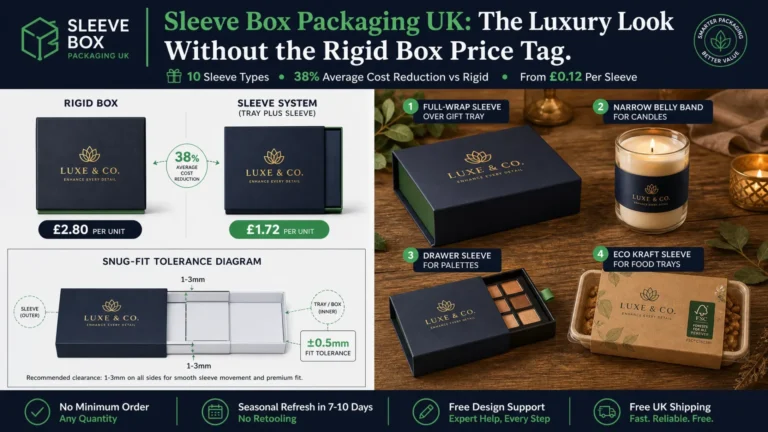
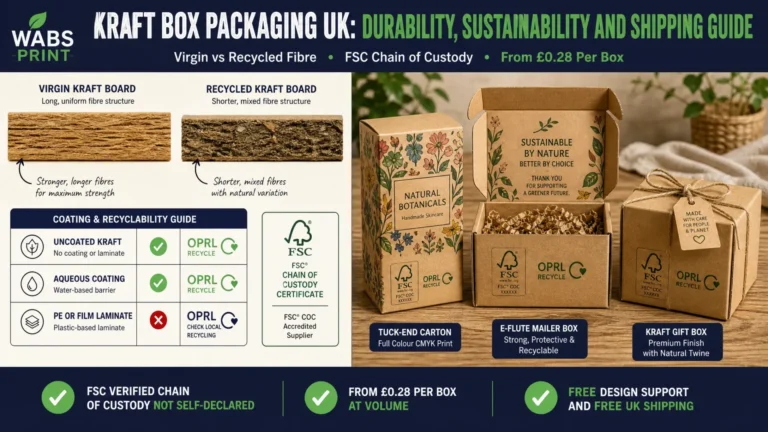
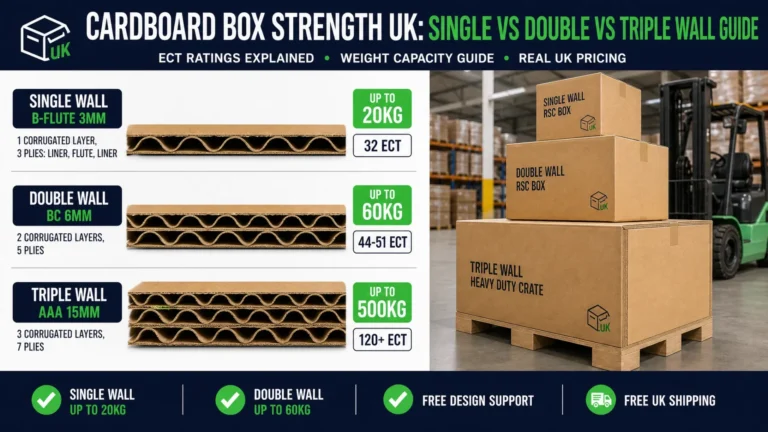
Our Ultimate Guide to Custom Packaging UK 2026, we discussed how choosing the right structure impacts brand perception and costs. This comparison
For the weightier, more premium feel rigid construction gives a product over £40 retail. Our ultimate custom packaging guide is where the standard spec figures above come from if you want the fuller pricing picture across
Upgrades sit on top of, our mailer box materials guide has the full breakdown by volume, and our ultimate custom packaging guide covers pricing across our wider product range if branded printing is one part of a bigger packaging
Display boxes that are part of a wider retail packaging range, our retail packaging hub and our ultimate custom packaging guide both cover how display boxes relate to product box, sticker, and label decisions for a coherent