

Extended Producer Responsibility (EPR) 2026: The Defra Guide for UK Brands

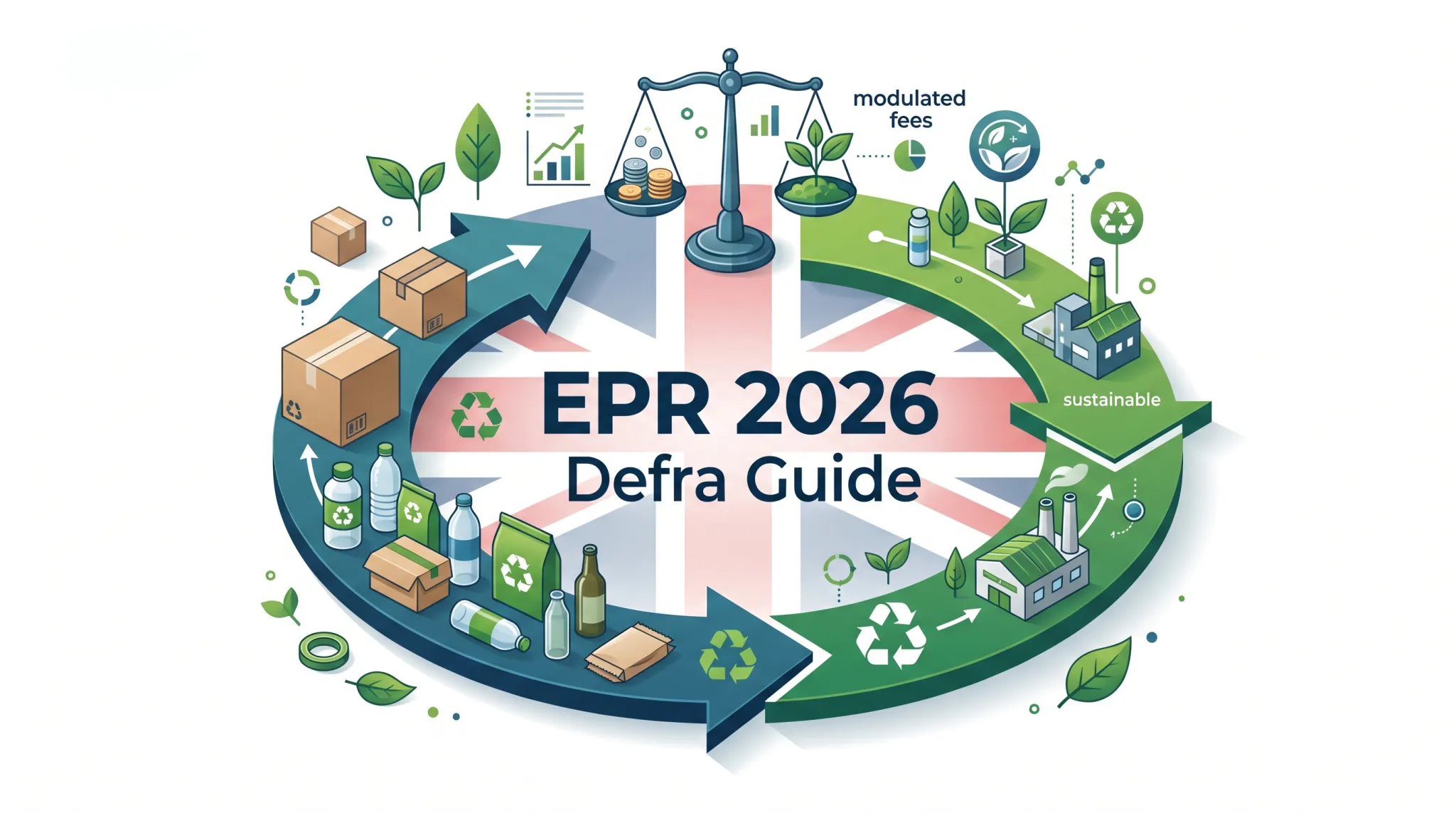
Extended Producer Responsibility for packaging fundamentally transformed UK business obligations in 2024, creating the most significant regulatory shift in packaging management since the original Producer Responsibility Obligations regulations of 1997. For brand owners, importers, and packaging producers across the United Kingdom, understanding EPR packaging UK requirements is no longer optional but essential for legal compliance and financial planning.
This comprehensive guide clarifies the complex regulatory landscape established by the Department for Environment, Food & Rural Affairs (Defra) and administered through the environmental regulators. Whether you operate as a brand owner selling products in packaging, a manufacturer producing packaging materials, or an importer bringing packaged goods into the UK market, this guide provides the definitive framework for meeting your Extended Producer Responsibility obligations.
The PPT cost impact has accelerated brands toward unbleached kraft with PFAS-free greaseproof coatings delivering food safety compliance, grease resistance, and 45-50% lower environmental impact. Our comprehensive guide to sustainable food packaging covers material selection, coating technologies, and implementation across all food service sectors.
We examine Defra packaging reporting regulations in practical detail, explain Extended Producer Responsibility thresholds that determine who must comply, outline packaging waste data collection requirements, provide UK brand owner compliance checklists, clarify distinctions between obligated packaging producers and exempt businesses, and detail the environmental packaging fees structure that funds the UK’s improved recycling infrastructure.
Table of Contents
- What is Extended Producer Responsibility?
- Who Must Comply: Thresholds and Definitions
- Brand Owner vs Manufacturer: Understanding Your Role
- Registration Process and Deadlines
- Packaging Waste Data Collection Requirements
- Annual Reporting Obligations
- Environmental Packaging Fees and Payment
- Modulated Fees: Incentives and Penalties
- Complete Compliance Checklist
- Non-Compliance Penalties and Enforcement
- Making Your Packaging EPR Compliant
- Future EPR Developments
1. What is Extended Producer Responsibility?
Extended Producer Responsibility shifts the financial and operational responsibility for managing packaging waste from local authorities and taxpayers to the businesses that place packaged products on the UK market. This policy instrument follows the “polluter pays” principle, where those profiting from packaging bear costs for its end-of-life management.
The Policy Foundation and Objectives
The UK government introduced EPR packaging UK regulations through the Environment Act 2021, implementing provisions that took effect from 1 January 2024. The policy aims to raise approximately £1.2 billion annually from obligated packaging producers, funding improvements to UK recycling infrastructure, collection systems, and waste management facilities that currently receive inadequate investment.
Previous packaging regulations under the Producer Responsibility Obligations (Packaging Waste) Regulations 1997 to 2007 created a compliance system where businesses purchased Packaging Recovery Notes (PRNs) from waste reprocessors. This market-based mechanism proved inadequate, generating only £73 million annually while local authorities spent £800 million collecting and sorting packaging waste. The dramatic funding shortfall left UK recycling infrastructure chronically underfunded.
EPR corrects this imbalance by requiring businesses to pay fees covering the full net costs of collecting, sorting, and recycling packaging they place on the market. Defra packaging reporting regulations now mandate detailed data submission enabling accurate cost allocation across materials, formats, and recyclability characteristics. This transparency ensures businesses creating harder-to-recycle packaging pay proportionally more than those using easily recyclable materials.
How EPR Differs from Previous Regulations
The shift from PRN trading to EPR fee payments represents fundamental change. Under previous systems, businesses could meet obligations by purchasing PRNs on open markets, creating financial incentives divorced from actual recycling outcomes. Large businesses often appointed compliance schemes to manage obligations, further distancing decision makers from environmental consequences.
EPR introduces modulated fees where packaging characteristics directly determine costs. Easily recyclable materials incur lower fees. Difficult to recycle packaging faces penalty fees. Packaging containing recycled content receives discounts. This fee structure creates direct financial incentives for businesses to improve packaging sustainability, aligning environmental and economic interests.
The packaging waste data collection requirements also intensify dramatically under EPR. Previous regulations required annual tonnage reporting across broad categories. EPR demands granular data including material types, packaging formats, recyclability classifications, recycled content percentages, and end markets. This detailed information enables precise fee calculation while providing government visibility into packaging flows across the UK economy.
The Environmental and Economic Rationale
UK packaging waste generation reached 11.7 million tonnes in 2023, with only 64% collected for recycling despite higher theoretical recycling rates. The gap between collected and generated waste represents packaging escaping formal waste management, ending in landfills, incineration, or worse, environmental contamination. EPR funding aims to improve collection rates to 75% by 2030 through infrastructure investment.
The economic logic supporting EPR recognizes that businesses designing and selecting packaging can influence recyclability, material choices, and end-of-life outcomes more effectively than local authorities managing waste collection. By placing financial responsibility on packaging decision-makers, EPR creates incentives for lightweighting, material substitution, and design for recyclability that previous regulations failed to generate.
2. Who Must Comply: Thresholds and Definitions
Understanding whether your business meets Extended Producer Responsibility thresholds determines your compliance obligations. The regulations establish clear criteria based on business activity, packaging tonnage, and annual turnover.
The Dual Threshold System
Businesses must meet both thresholds to become obligated packaging producers under EPR regulations. The first threshold examines packaging volume: businesses supplying, importing, or handling 50 tonnes or more of packaging in a calendar year fall within scope. The second threshold considers business size: annual turnover must exceed £2 million to trigger obligations.
Both thresholds must be met simultaneously. A business handling 80 tonnes of packaging annually with £1.8 million turnover remains exempt. Similarly, a £5 million turnover business handling only 35 tonnes of packaging has no EPR obligations. This dual structure focuses compliance requirements on businesses with sufficient scale to manage administrative burdens while excluding very small enterprises.
The 50 tonne packaging threshold encompasses all packaging the business handles across its operations. For brand owners, this includes primary packaging (touching products), secondary packaging (grouping multiple primary packages), transit packaging (protecting goods during shipping), and any other packaging formats. The threshold applies to combined packaging weight across all materials rather than individual material categories.
Calculating the 50 tonne threshold requires precision. Businesses must aggregate packaging weights across all products, SKUs, and formats. A manufacturer producing 20 different products each using 2.8 tonnes of packaging annually exceeds the 50 tonne threshold despite no single product generating significant packaging volume. This cumulative calculation often surprises businesses assuming their modest packaging usage exempts them.
What Constitutes “Packaging” Under EPR
The Defra packaging reporting regulations define packaging broadly as any material designed to contain, protect, handle, deliver, or present goods. This encompasses obvious formats like boxes, bottles, jars, and bags, plus less apparent items like labels, tape, protective sleeves, and void fill materials. The definition intentionally captures the full range of materials businesses use regardless of format or nomenclature.
Primary packaging directly contains products. Examples include bottles holding beverages, jars containing cosmetics, boxes housing electronics, and pouches packaging food. Brand owners typically control primary packaging specifications, making them responsible parties under EPR regardless of who manufactures the packaging.
Secondary packaging groups multiple primary packages together. Cardboard cases holding multiple beverage bottles, shrink wrap bundling product multipacks, and outer boxes containing individually packaged items all qualify as secondary packaging. Distribution centers and retailers often introduce secondary packaging, creating shared obligations between brand owners and sellers.
Transit packaging protects goods during transport and handling. Corrugated shipping boxes, protective padding, pallets, shrink wrap securing pallet loads, and strapping all fall within scope. The responsibility for transit packaging typically falls on the business arranging transportation, which varies based on shipping terms and commercial arrangements.
Exemptions and Special Cases
Businesses falling below either threshold remain exempt from EPR obligations. A startup with £1.5 million annual turnover handling 75 tonnes of packaging needs not comply. However, businesses should monitor growth carefully as exceeding thresholds mid-year can create compliance challenges requiring urgent registration and data gathering.
Small producers exemption applies to businesses meeting both thresholds but operating at scale where compliance burdens would be disproportionate. Currently, no formal small producer exemption exists, though Defra continues evaluating whether additional provisions might reduce burdens on businesses just exceeding thresholds. This remains an area of active policy development.
Certain packaging formats receive special treatment. Reusable packaging circulating in closed-loop systems may qualify for exemptions or reduced fees provided businesses demonstrate effective collection and reuse. However, the regulatory framework around reusable packaging remains complex, requiring careful legal analysis for businesses pursuing exemption claims.
3. Brand Owner vs Manufacturer: Understanding Your Role
EPR regulations distinguish carefully between brand owners placing packaged products on markets and packaging manufacturers producing packaging materials. Understanding which role applies to your business determines your specific obligations and fee responsibilities.
Defining Brand Owners
Brand owners under EPR include any business selling or supplying products under its own brand name or trademark, regardless of who manufactures products or packaging. A UK company designing candle products, contracting manufacturing to third parties, then selling candles under its brand qualifies as a brand owner responsible for all packaging associated with those products.
The brand owner designation extends to businesses importing packaged goods from outside the UK for resale. An electronics retailer importing smartphones manufactured overseas becomes the brand owner for EPR purposes, bearing responsibility for all packaging associated with imported devices. This import provision ensures EPR captures packaging regardless of where products originate.
Private label arrangements create brand owner obligations for retailers. When supermarkets or other retailers commission products manufactured to their specifications and branded with their own labels, they assume brand owner responsibilities for that packaging. This shifts obligations from manufacturers to retailers for private label ranges, aligning responsibility with commercial control.
The UK brand owner compliance checklist for these businesses includes documenting all packaging specifications across product ranges, gathering weight data for every packaging component, classifying materials and recyclability, calculating total annual packaging tonnage, and maintaining records supporting fee calculations. Brand owners often discover their packaging obligations extend far beyond anticipated scope once detailed cataloguing begins.
Understanding Packaging Producers
Packaging manufacturers producing packaging materials for sale to other businesses also face EPR obligations, though typically different from brand owner responsibilities. A company manufacturing cardboard boxes supplied to various customers qualifies as a packaging producer obligated to report and potentially pay fees on produced packaging.
However, the regulations include important provisions preventing double payment. When packaging manufacturers sell materials to UK brand owners who themselves meet EPR thresholds, the brand owner typically assumes primary responsibility. The manufacturer may need to report production volumes for data collection purposes but avoids duplicative fee payments that would occur if both parties paid on the same packaging.
This allocation prevents the packaging waste data collection system from inflating apparent packaging volumes through multiple counting. Without these provisions, a box manufacturer reporting production, the brand owner reporting the same boxes as primary packaging, and potentially retailers reporting boxes as secondary packaging would suggest three times actual packaging volumes entered the market.
Shared Responsibilities in Distribution Chains
Complex supply chains create situations where multiple parties handle packaging, requiring careful allocation of EPR responsibilities. Consider an e-commerce scenario: a brand owner manufactures products in primary packaging, ships to a fulfillment center that adds outer shipping boxes, which then ships to consumers. Both primary and shipping packaging require EPR compliance, but different parties bear responsibility.
The brand owner remains responsible for primary packaging regardless of subsequent handling or distribution arrangements. They supplied products in that packaging to UK markets, triggering obligation. The fulfillment center or retailer adding shipping boxes assumes responsibility for that transit packaging as the party introducing it into the supply chain.
Contractual arrangements between parties often attempt to allocate EPR obligations through commercial terms. However, regulatory obligations supersede contracts. While parties can agree who manages compliance administratively or bears costs commercially, legal obligations rest with the entities meeting regulatory definitions regardless of private agreements.
Determining Your Classification
Businesses uncertain about their classification should evaluate several factors systematically. First, do you sell products under your own brand or trademark? If yes, you operate as a brand owner for those products. Second, do you import packaged goods from outside the UK? If yes, you assume brand owner status regardless of overseas brand ownership. Third, do you manufacture packaging materials sold to other businesses? If yes, you qualify as a packaging producer.
Many businesses occupy multiple roles simultaneously. A company manufacturing beauty products in-house and selling them under its brand operates as both packaging producer (for in-house production) and brand owner (for branded sales). Such businesses must track obligations across both roles, potentially splitting reporting between produced and supplied packaging.
The classification determines which sections of Defra packaging reporting regulations apply and which fees apply to packaging tonnages. Brand owners pay fees covering full packaging waste management costs for products they place on markets. Packaging producers may face different fee structures based on produced volumes and customer relationships. Understanding your classification prevents compliance errors and inappropriate fee payments.
4. Registration Process and Deadlines
Businesses meeting Extended Producer Responsibility thresholds must register with environmental regulators and establish systems for ongoing compliance. The registration process varies slightly across UK nations but follows common principles established through Defra coordination.
Initial Registration Requirements
Businesses operating in England must register with the Environment Agency through the online EPR for packaging portal. Scottish businesses register with the Scottish Environment Protection Agency (SEPA), Welsh businesses with Natural Resources Wales (NRW), and Northern Irish businesses with the Northern Ireland Environment Agency (NIEA). While registration systems differ technically across regulators, the information requirements remain consistent.
The registration portal requires comprehensive business information including legal entity name and company registration number, primary business address and all operational sites, annual turnover for the most recent financial year, estimated annual packaging tonnage, and contact details for compliance officers. This initial registration creates the account through which all future reporting occurs.
Businesses must also declare their role classification during registration. The portal requires selection between brand owner, importer, seller, packer/filler, or packaging manufacturer. Many businesses select multiple categories reflecting their actual operations. The selected roles determine which subsequent data collection forms apply and how fees calculate.
Company group structures require special attention during registration. Parent companies with multiple subsidiaries must determine whether to register each legal entity separately or consolidate reporting at group level. The regulations permit group registration where one entity reports for all group members, but this requires clear documentation of group structures and agency agreements authorizing consolidated reporting.
Critical Dates and Deadlines
The compliance calendar establishes firm deadlines that businesses must meet to avoid penalties. Registration deadlines depend on when businesses first exceed thresholds. Businesses exceeding thresholds during a calendar year must register within 28 days of the quarter-end in which thresholds were met. A business crossing the 50 tonne threshold in July 2026 must register by 28 October 2026 (28 days after the September quarter-end).
Annual data submission deadlines fall on 1 May each year for the previous calendar year’s packaging data. All obligated packaging producers must submit complete packaging data by this date regardless of when registration occurred. Businesses registering mid-year still face the 1 May deadline for that full calendar year’s packaging, creating compressed timelines for new registrants.
Fee payment deadlines depend on fee notices issued by regulators. Upon receiving fee invoices (typically issued in June or July), businesses must pay within 28 days. Failure to pay by deadlines triggers penalty interest charges accruing daily on outstanding balances. The regulations permit instalment payment plans for businesses demonstrating financial hardship, though application and approval processes take several weeks.
Appointing Compliance Schemes
Businesses may appoint approved compliance schemes to manage EPR obligations on their behalf. These schemes, operated by specialized companies, handle data collection, submission, fee calculation, and payment in exchange for service fees. For businesses lacking internal expertise or resources for compliance management, schemes provide valuable services.
However, appointing a scheme does not eliminate business obligations. The business remains legally responsible for compliance even when schemes manage administrative processes. If schemes submit inaccurate data or miss deadlines, regulators hold businesses accountable. This means businesses must select reputable schemes and maintain oversight of scheme activities.
Scheme fees vary based on packaging volumes and service levels. Basic data submission services might cost £800 to £2,000 annually for straightforward portfolios. Complex businesses with hundreds of SKUs across multiple materials might pay £5,000 to £15,000 annually for comprehensive scheme management. These costs come additional to regulatory fees paid to government, creating total compliance cost packages businesses must budget.
5. Packaging Waste Data Collection Requirements
Accurate packaging waste data collection underpins the entire EPR system. Businesses must establish robust processes for gathering, validating, and maintaining packaging data across their operations. The granularity required often exceeds businesses’ existing data systems, necessitating new procedures and controls.
Required Data Categories
The environmental regulators require obligated packaging producers to report detailed information across multiple dimensions. Material composition represents the foundational data category, requiring businesses to classify every packaging component into regulatory material categories: paper and cardboard, plastic (with polymer sub-types), glass, aluminum, steel, wood, and other materials.
Within these broad categories, businesses must specify exact materials. Plastic packaging requires polymer identification: PET, HDPE, PVC, LDPE, PP, PS, or other plastics. This specificity matters because recycling infrastructure and modulated fees vary dramatically across polymer types. PET bottles face different fees than PVC clamshells despite both qualifying as plastic packaging.
Packaging format classifications determine fee calculations and recyclability assessments. The regulations distinguish between bottles, pots tubs and trays, films, flexible packaging, rigid packaging, and numerous other format categories. A plastic container might qualify as either a bottle or a pot depending on neck dimensions, with different recyclability implications affecting fees.
Packaging weight data must be reported to the nearest kilogram for annual totals, requiring businesses to determine unit weights for every packaging component. A business selling products in boxes weighing 87g each must calculate total annual box weight by multiplying unit weight by units sold. With components including boxes, labels, tape, inserts, and protective materials, the calculation complexity compounds rapidly.
Recyclability and Recovery Classifications
Beyond material and weight data, businesses must classify packaging recyclability using regulatory definitions. The classifications include recyclable packaging (materials collected by 75%+ of UK local authorities through kerbside systems), theoretically recyclable (materials technically recyclable but collected by fewer than 75% of authorities), and not recyclable (materials lacking effective recycling routes in the UK).
These classifications determine modulated fee levels, with recyclable packaging receiving standard fees while not recyclable packaging faces penalty multipliers. The regulatory guidance provides lookup tables for common materials and formats, but unusual or novel packaging requires businesses to research local authority collection capabilities and classify accordingly.
Recycled content reporting creates additional data requirements. Businesses must determine and report the percentage of recycled material in packaging, distinguishing between post-consumer recycled content and post-industrial recycled content. Packaging with 30% or more recycled content qualifies for fee discounts, creating financial incentives for procurement changes.
However, determining recycled content percentages often proves challenging. Packaging suppliers may not routinely track or disclose this information. Businesses must request certifications from suppliers, potentially changing procurement specifications to source packaging with documented recycled content. This supply chain engagement represents significant operational work beyond simple data collection.
End Market and Distribution Data
The packaging waste data collection extends to distribution information. Businesses must report the percentage of packaging entering household waste streams versus commercial and industrial waste. This distinction matters because household collection systems cost more than commercial waste management, affecting fee allocations.
For most consumer brands, determining household versus commercial percentages seems straightforward, with nearly all packaging reaching consumers and thus household waste. However, businesses selling to both consumer and commercial markets must apportion packaging between streams. A food manufacturer selling 60% to retail and 40% to foodservice must split packaging reporting accordingly.
Online sales create additional complexity. The regulations require separate reporting for products sold through e-commerce versus traditional retail, as distribution channels affect packaging formats and waste management pathways. A brand selling 45% through owned e-commerce, 35% through Amazon, and 20% through physical retail must track these channels separately.
Data Validation and Quality Assurance
Given the penalties for inaccurate reporting and the basis for fee calculations, businesses must implement quality assurance processes ensuring data accuracy. This typically involves multiple validation steps. First, specification sheets from packaging suppliers provide source data for weights and materials. Second, sample weighing programs verify supplier specifications match actual packaging. Third, reconciliation checks compare packaging procurement volumes against reported data ensuring completeness.
Many businesses discover discrepancies during validation. Supplier specifications may reflect design intentions rather than manufactured realities. Production variations might create actual weights differing from nominal specifications. These discrepancies require investigation and reconciliation before submission.
Documentation retention requirements mandate businesses maintain all source data, calculations, and supporting evidence for six years following submission. Regulators may audit submissions, requesting evidence substantiating reported figures. Businesses unable to produce supporting documentation face penalties and fee reassessments with interest charges on underpayments.
6. Annual Reporting Obligations
Annual reporting represents the formal submission of packaging waste data to environmental regulators. The reporting process follows standardized formats through online portals, though the underlying data compilation requires substantial internal work as outlined in the previous section.
The Reporting Portal and Submission Process
The Environment Agency operates the central EPR for packaging portal where English businesses submit data. The portal requires login credentials established during initial registration. Upon logging in during the reporting period (opening 1 January each year), businesses access forms corresponding to their declared roles and previous submissions.
The forms request data organized by material category. Separate sections cover paper and cardboard packaging, plastic packaging, glass packaging, aluminum packaging, steel packaging, wood packaging, and other materials. Within each section, businesses report total annual tonnage, format breakdowns, recyclability classifications, recycled content percentages, and distribution between household and commercial waste streams.
The portal performs automatic validation checks during data entry. It flags obvious errors like negative tonnages, percentages exceeding 100%, or format weights not summing to material totals. However, portal validation cannot detect substantive errors like wrong material classifications or inaccurate weight data. These require business-level quality assurance before submission.
Submissions remain editable until the 1 May deadline, enabling businesses to refine data as additional information becomes available or errors are discovered. However, after the deadline passes, amendments require formal resubmission requests explaining reasons for changes. Regulators scrutinize late amendments, particularly when they reduce reported tonnages and fees due.
Supporting Documentation Requirements
While the portal accepts numeric data entries, regulations require businesses to maintain comprehensive supporting documentation. This includes packaging specifications from suppliers detailing weights and materials, procurement records showing quantities purchased, sales data linking packaging to product volumes, and recycled content certifications from suppliers.
For businesses using kraft packaging or other sustainable materials, maintaining clear documentation of recycled content percentages proves particularly valuable. Kraft packaging often contains 70% to 95% recycled content, qualifying for fee discounts provided businesses can substantiate claims through supplier certifications.
Calculation worksheets showing how businesses derived reported figures should be preserved. These worksheets demonstrate the path from source data to submitted totals, enabling auditors to trace figures and verify accuracy. Many businesses create standardized templates used annually, updating only the underlying data while maintaining consistent calculation methodologies.
Revisions and Amendments
Businesses discovering errors in submitted data must submit amendments promptly. The regulations require notification within 28 days of discovering inaccuracies materially affecting fees. Voluntarily disclosed errors receive more lenient treatment than those discovered during audits, creating incentives for proactive compliance.
The amendment process requires submission through the portal with accompanying explanation letters detailing errors discovered, corrected figures, fee implications, and steps taken to prevent recurrence. For errors increasing fees owed, businesses must pay additional amounts plus penalty interest from original due dates. For errors decreasing fees, regulators issue refunds, though processing times often extend several months.
7. Environmental Packaging Fees and Payment
The environmental packaging fees businesses pay under EPR fund UK waste management infrastructure improvements. Understanding fee structures, calculations, and payment processes enables accurate budgeting and financial planning around this new cost category.
Base Fee Rates by Material
Fee rates vary by packaging material, reflecting different management costs across waste streams. The 2026 fee schedule establishes rates per tonne of packaging placed on markets. Paper and cardboard packaging incurs fees of £68 per tonne for widely recyclable formats. Plastic packaging faces £120 per tonne base rate, though this varies substantially based on polymer type and recyclability. Glass packaging costs £48 per tonne reflecting established recycling infrastructure. Aluminum incurs £95 per tonne, while steel packaging faces £72 per tonne.
These base rates represent starting points before modulation factors apply. The actual fees businesses pay depend on packaging characteristics affecting recyclability, recycled content, and necessity. The base rates alone already create significant costs. A business placing 100 tonnes of cardboard packaging annually faces £6,800 base fees. With 50 tonnes of plastic packaging, another £6,000 accrues.
The rates increase annually through indexation linked to waste management cost inflation. Defra publishes updated fee schedules each December for the following calendar year, providing businesses advance notice for budgeting. However, initial fee levels already substantially exceed previous PRN costs many businesses paid, creating financial shocks for some sectors.
How Fees Are Calculated
Fee calculation begins with material tonnages reported through the annual data submission. The portal multiplies reported tonnages by applicable base rates, generating preliminary fees. These preliminary figures then undergo modulation adjustments increasing or decreasing fees based on packaging characteristics.
The system applies multipliers and discounts sequentially. Recyclability classifications modify base fees first. Widely recyclable packaging maintains standard rates. Packaging collected by 20% to 75% of local authorities faces 10% fee increases. Not recyclable packaging receives 50% penalty multipliers. These adjustments create strong incentives for using recyclable materials and formats.
Recycled content discounts apply next. Packaging containing 30% to 50% recycled content receives 10% discounts. Packaging with 50% to 70% recycled content gets 15% discounts. Content exceeding 70% qualifies for 20% discounts. These graduated discounts reward increasing recycled content usage while maintaining incentives for continuous improvement.
Necessary versus unnecessary packaging classifications impose final adjustments. Packaging deemed unnecessary for product protection, presentation, or information faces 20% penalty fees. However, defining unnecessary packaging remains contentious, with most standard packaging qualifying as necessary. The provision targets egregious examples of over-packaging rather than routine commercial packaging.
Fee Payment Process
Following annual data submission deadlines, regulators calculate fees and issue invoices typically in June or July. Fee notices detail tonnages by material, applicable rates, modulation adjustments, and total fees due. Businesses have 28 days from invoice date to remit payment electronically through the portal or via bank transfer.
Payment plans enable businesses experiencing financial hardship to spread costs across several months. Applications require financial information demonstrating inability to pay full amounts immediately. Approved payment plans typically extend across 6 to 12 months with monthly instalments. However, penalty interest accrues on outstanding balances even under approved plans, increasing total costs.
Late payment triggers escalating consequences. Initial late fees of £200 apply automatically for payments received after the 28-day window. If fees remain unpaid 30 days after due dates, penalty interest begins accruing at 8% annually. After 60 days, regulators may initiate formal enforcement proceedings including court action to recover debts.
| Material Type | Base Fee (per tonne) | Recyclability Impact | Recycled Content Discount |
|---|---|---|---|
| Paper & Cardboard | £68/tonne | Widely recyclable (standard rate) | Up to 20% discount |
| Plastic (PET, HDPE) | £95/tonne | Format dependent (varies) | Up to 20% discount |
| Plastic (Other polymers) | £145/tonne | Often limited recyclability | Up to 20% discount |
| Glass | £48/tonne | Widely recyclable (standard rate) | Up to 20% discount |
| Aluminum | £95/tonne | Widely recyclable (standard rate) | Up to 20% discount |
| Steel | £72/tonne | Widely recyclable (standard rate) | Up to 20% discount |
8. Modulated Fees: Incentives and Penalties
The modulated fee structure represents EPR’s primary mechanism for incentivizing sustainable packaging choices. By varying fees based on environmental characteristics, the system aligns financial incentives with environmental objectives.
Recyclability Modulation Explained
Recyclability classifications create the foundation for fee modulation. The system defines widely recyclable packaging as materials collected for recycling by 75% or more of UK local authorities through kerbside schemes. This threshold ensures packaging designated recyclable actually reaches recycling infrastructure rather than languishing in contaminated waste streams.
Materials meeting this threshold include corrugated cardboard, paper, glass bottles and jars, steel cans, aluminum cans and foil, PET plastic bottles, and HDPE plastic bottles. These materials enjoy established collection infrastructure, creating standard fee treatment. Businesses using these materials face no recyclability penalties provided formats align with collection capabilities.
Materials collected by 20% to 75% of authorities occupy middle ground. They possess recycling routes but lack universal access. Examples include certain plastic films, composite materials with separable components, and specialist formats like flexible pouches. These materials incur 10% fee increases reflecting higher management complexity and limited infrastructure.
Not recyclable packaging faces 50% fee penalties. This category includes materials lacking effective UK recycling routes such as most black plastic (undetectable by sorting equipment), PVC packaging (limited reprocessing capacity), heavily contaminated materials, and composite materials with inseparable components. The severe penalties create strong incentives to eliminate or substitute these problematic materials.
Recycled Content Incentives
The recycled content discount structure rewards businesses sourcing packaging with post-consumer recycled material. The graduated discounts recognize that increasing recycled content percentages requires progressively more supply chain effort, with each tier creating stepping stones toward higher sustainability.
Packaging containing 30% to 50% recycled content receives 10% fee discounts. This entry level discount makes recycled content financially attractive for businesses beginning sustainability journeys. Many cardboard and paper products naturally fall into this category, providing immediate benefits for businesses already using recycled materials without recognizing the content percentages.
The 50% to 70% recycled content band receives 15% discounts. Achieving this level typically requires intentional procurement specifying recycled content minimums. Suppliers must source heavily recycled feedstocks and provide certifications documenting compliance. The enhanced discount rewards this additional procurement rigor.
Packaging exceeding 70% recycled content qualifies for maximum 20% discounts. Very few packaging materials reach this threshold without deliberate design. However, certain kraft papers and cardboard formats regularly achieve 75% to 95% recycled content, making these discounts accessible for businesses prioritizing sustainability through material selection.
Necessary Packaging Assessments
The necessary versus unnecessary packaging distinction attempts to discourage over-packaging while recognizing legitimate packaging functions. Necessary packaging serves one or more of: containing and protecting products during distribution, providing handling capability, delivering products hygienically to end users, communicating required product information, or enabling product use.
Most standard commercial packaging qualifies as necessary under these broad criteria. Product packaging preventing damage during shipping clearly serves protective functions. Retail packaging enabling shelf display and theft prevention serves legitimate commercial purposes. Even elaborate gift packaging arguably enables product use by providing appropriate presentation for gifting occasions.
The unnecessary packaging designation targets egregious examples: excessive void space with no protective benefit, multiple layers of packaging where fewer would suffice, decorative packaging serving no functional purpose, and packaging substantially exceeding product dimensions without justification. However, defining unnecessarily excessive packaging remains subjective, with few businesses receiving penalty designations beyond extreme cases.
Strategic Implications for Businesses
The modulated fee structure creates clear financial pathways toward sustainability. Businesses can reduce EPR costs by switching to widely recyclable materials, increasing recycled content in packaging specifications, optimizing packaging to eliminate unnecessary components, and designing packaging formats compatible with existing collection infrastructure.
These changes often align with broader sustainability commitments while delivering tangible cost savings. A business switching from mixed material packaging to mono-material recyclable alternatives might reduce fees 30% to 40% through recyclability improvements alone. Adding 60% recycled content specifications saves another 15%, compounding to significant annual savings across large packaging volumes.
9. Complete Compliance Checklist
This comprehensive UK brand owner compliance checklist provides a structured approach to EPR obligations, ensuring businesses address all requirements systematically.
Initial Assessment and Registration
☐ Calculate total annual packaging tonnage across all products and formats to determine if the 50 tonne threshold is exceeded
☐ Verify annual turnover exceeds £2 million using the most recent financial year figures
☐ If both thresholds are met, register with the appropriate environmental regulator within 28 days of the quarter-end when thresholds were exceeded
☐ Determine business classification as brand owner, importer, seller, packer/filler, or packaging manufacturer based on actual operations
☐ Compile business information required for registration: legal entity details, company registration numbers, turnover figures, operational addresses, and compliance officer contacts
☐ Decide whether to manage compliance internally or appoint an approved compliance scheme to handle obligations
☐ If appointing a scheme, research providers, compare services and costs, and establish formal appointment agreements
Data Collection Infrastructure
☐ Establish packaging data collection systems capable of tracking required information across all products
☐ Create packaging component inventories cataloguing every packaging element used: boxes, labels, tape, inserts, protective materials, shipping containers
☐ Obtain packaging specifications from all suppliers detailing weights, materials, dimensions, and recycled content percentages
☐ Implement weighing programs to verify actual packaging weights match supplier specifications
☐ Classify all packaging by material type using regulatory categories: paper/cardboard, plastic (with polymer sub-types), glass, aluminum, steel, wood
☐ Classify packaging formats using regulatory definitions: bottles, pots/tubs/trays, flexible films, rigid containers, transit packaging
☐ Determine recyclability classifications for all packaging based on local authority collection data
☐ Request recycled content certifications from suppliers for all packaging components
☐ Calculate household versus commercial waste stream percentages based on sales channel distribution
☐ Implement sales tracking enabling correlation between product volumes sold and packaging consumed
Annual Reporting Preparation
☐ Aggregate packaging data quarterly throughout the year to identify issues before annual reporting deadlines
☐ Conduct mid-year reviews comparing packaging procurement volumes against reported data ensuring completeness
☐ Reconcile packaging inventory changes, accounting for stock held at year-end versus consumed during the reporting year
☐ Prepare calculation worksheets documenting how reported figures derive from source data
☐ Compile supporting documentation: supplier specifications, procurement records, sales data, recycled content certificates
☐ Conduct internal quality assurance reviews before submission, checking data accuracy and completeness
☐ Submit annual packaging data through the environmental regulator portal by 1 May deadline
☐ Retain all source data, calculations, and supporting documentation for six years following submission
Fee Management
☐ Review fee invoices upon receipt, verifying calculated fees match submitted data and current rate schedules
☐ Query any discrepancies with regulators promptly, providing supporting evidence for disputed calculations
☐ Arrange payment within 28 days of invoice date through approved electronic methods
☐ If unable to pay full amounts immediately, apply for payment plans within 14 days of invoice receipt
☐ Maintain records of fee payments for seven years for financial audit and tax purposes
☐ Budget for future fee increases through annual indexation and potential regulatory rate changes
Ongoing Compliance
☐ Monitor packaging procurement throughout the year, flagging approaching threshold limits for businesses near obligations
☐ Review packaging specifications whenever product changes occur, updating data systems with new components
☐ Conduct supplier reviews annually, requesting updated specifications and recycled content certificates
☐ Evaluate packaging optimization opportunities reducing tonnage and improving sustainability metrics
☐ Stay informed about regulatory developments through Defra updates, industry associations, and compliance advisors
☐ Maintain internal compliance procedures and assign responsibilities to specific personnel
☐ Conduct internal audits annually, testing data collection processes and calculation accuracy
10. Non-Compliance Penalties and Enforcement
Understanding enforcement mechanisms and penalty structures helps businesses appreciate the importance of rigorous compliance. The regulatory regime employs escalating consequences designed to encourage voluntary compliance while punishing deliberate non-compliance severely.
Administrative Penalties
Late registration triggers fixed penalties starting at £200 for the first offense. Businesses failing to register within required timelines receive penalty notices demanding payment within 28 days. Repeated late registration across multiple years or deliberate avoidance can increase penalties to £500 or £1,000 depending on circumstances and compliance history.
Missed data submission deadlines incur separate penalties. Failing to submit annual packaging data by 1 May deadlines results in £500 fixed penalties for first occurrences. Late submissions continuing more than 30 days beyond deadlines escalate to £1,000 penalties. Businesses with histories of late submissions face higher initial penalties, potentially reaching £2,000 for chronic lateness.
Late fee payment generates penalty interest charges rather than fixed penalties. Outstanding fee balances accrue interest at 8% annually from due dates. A business owing £10,000 in fees and paying 90 days late accumulates approximately £197 in penalty interest. These charges apply automatically without discretion, creating consistent consequences for payment delays.
Enforcement Investigations
Environmental regulators maintain investigation powers enabling verification of reported data accuracy. Investigations typically follow several triggers. Outlier data suggesting reported figures deviate substantially from expected patterns for businesses of similar sizes and sectors prompts review. Whistleblower reports from employees, competitors, or former staff trigger investigations. Random audit programs select businesses statistically for compliance verification regardless of suspicion.
During investigations, regulators may request access to business premises to inspect packaging and operational processes, demand production of records including procurement documents and calculation worksheets, interview staff responsible for data compilation and submission, and engage independent auditors to review financial records and packaging inventories.
Businesses must cooperate with investigations, providing requested information within specified timelines. Failure to cooperate constitutes separate offenses carrying £500 to £5,000 penalties depending on severity and whether obstruction appears deliberate. Providing false or misleading information during investigations creates criminal liability potentially resulting in prosecution.
Financial Penalties for Inaccurate Reporting
Inaccurate reporting discovered through investigations results in fee reassessments charging businesses for actual packaging tonnages rather than reported figures. The reassessments include penalty interest from original due dates to payment dates, calculating compounding interest charges potentially doubling or tripling fee obligations for multi-year inaccuracies.
Deliberate underreporting or fraudulent data submission elevates penalties dramatically. Beyond fee reassessments and interest, regulators may impose civil penalties up to £50,000 for serious or repeated violations. The penalty amounts depend on several factors: degree of inaccuracy or underreporting, financial benefit obtained through non-compliance, compliance history and previous violations, cooperation during investigations, and steps taken to prevent recurrence.
Criminal prosecution remains available for the most severe cases. Deliberately providing false information, destroying records to avoid detection, or systematically evading obligations can result in criminal charges. Convictions carry unlimited fines at court discretion plus potential imprisonment for company officers demonstrating willful misconduct.
Reputational and Commercial Consequences
Beyond formal penalties, non-compliance creates reputational damage. Regulatory enforcement actions become public record, accessible to customers, competitors, and media. Retailers increasingly require supplier compliance certifications as procurement conditions, meaning non-compliant businesses may lose major accounts.
Investor scrutiny of environmental compliance grows annually. Listed companies face shareholder questions about EPR compliance. Private equity and venture capital investors conduct environmental due diligence, with compliance failures creating deal risks. These commercial consequences often exceed direct penalty costs, particularly for brands emphasizing sustainability positioning.
11. Making Your Packaging EPR Compliant
Beyond meeting reporting obligations, businesses should optimize packaging to minimize fees while improving sustainability. Strategic packaging decisions can substantially reduce EPR costs while supporting environmental objectives.
Material Substitution Strategies
Switching from problematic materials to widely recyclable alternatives represents the most direct path to fee reduction. Businesses using PVC, black plastic, or mixed material packaging should evaluate alternatives. Often, cardboard packaging provides superior recyclability at similar or lower cost even before accounting for EPR savings.
A beauty brand switching from black plastic jars to natural kraft cardboard tubes might reduce EPR fees 60% to 70% on that packaging component. The material substitution improves recyclability (from not recyclable to widely recyclable), switches material categories (from high-fee plastic to lower-fee cardboard), and potentially increases recycled content if sourcing cardboard with 70%+ recycled material.
The financial benefits compound across large packaging volumes. A business using 30 tonnes of black plastic packaging annually pays approximately £10,900 in EPR fees (£145 per tonne plastic base rate plus 50% not recyclable penalty). Switching to kraft cardboard with 75% recycled content reduces fees to approximately £4,350 (£68 per tonne base rate minus 20% recycled content discount), saving £6,550 annually.
Increasing Recycled Content
Even without material substitution, increasing recycled content in existing packaging specifications delivers fee savings. Procurement teams should request recycled content specifications when sourcing packaging, with 30% thresholds as minimums and 70%+ as aspirational targets.
Many packaging suppliers offer options with varying recycled content at minimal price differences. The EPR fee savings often justify modest material cost increases. If 70% recycled content cardboard costs £40 per tonne more than virgin material but saves £13.60 per tonne in EPR fees (20% of £68), the net cost increase drops to £26.40 per tonne while delivering sustainability credentials.
Format Optimization
Packaging format choices within materials affect recyclability classifications. Mono-material packaging (single plastic polymer or pure cardboard) achieves better recyclability than multi-material constructions requiring separation. Formats compatible with existing collection and sorting infrastructure avoid penalty fees.
For plastic packaging specifically, PET and HDPE bottles enjoy superior recyclability versus other formats. Businesses able to package products in PET bottles rather than polypropylene pots may substantially reduce fees through format changes. The shift from 100 tonnes of polypropylene pots (limited recyclability, £145 per tonne plus 10% penalty) to PET bottles (widely recyclable, £95 per tonne standard rate) saves approximately £6,950 annually.
Working with Packaging Suppliers
Suppliers play crucial roles in EPR compliance and optimization. Businesses should engage suppliers on several fronts. Request detailed specifications documenting weights, materials, and recycled content percentages for all supplied packaging. Demand sustainability roadmaps outlining how suppliers plan to increase recycled content and improve recyclability over time. Explore innovative materials and formats emerging in the market offering enhanced sustainability profiles.
Many packaging manufacturers now market EPR-optimized solutions specifically designed to minimize fees. These products maximize recycled content, use widely recyclable materials, and design formats compatible with UK collection infrastructure. While sometimes carrying modest premiums, the integrated EPR savings and sustainability benefits often create favorable total cost of ownership.
12. Future EPR Developments
The EPR framework continues evolving as Defra and environmental regulators refine regulations based on implementation experience. Understanding likely future developments helps businesses prepare for upcoming changes.
Threshold Changes and Expanded Scope
Government consultations explore lowering the current thresholds to capture more businesses within EPR obligations. Potential changes might reduce the packaging tonnage threshold from 50 tonnes to 25 tonnes annually, decrease the turnover threshold from £2 million to £1 million, or introduce alternative criteria based on packaging units rather than weight.
These changes would substantially expand the number of obligated businesses. Estimates suggest lowering thresholds to 25 tonnes and £1 million would double or triple businesses with EPR obligations, extending regulations to many small and medium enterprises currently exempt. Businesses approaching thresholds should monitor consultations and prepare for potential future obligations.
Deposit Return Schemes
The UK government continues developing deposit return schemes (DRS) for drinks containers, planned for implementation in 2027. Under DRS, consumers pay deposits when purchasing drinks in bottles and cans, reclaiming deposits when returning containers for recycling. This system operates separately from but alongside EPR.
Businesses producing or selling drinks in scope for DRS face additional compliance requirements including container labeling, deposit collection mechanisms, return point arrangements, and DRS reporting separate from EPR. The interaction between EPR fees and DRS deposits requires careful management to avoid double-charging consumers.
Enhanced Modulation and Penalties
The modulated fee structure will likely intensify over time. Consultations discuss increasing penalty multipliers for not recyclable packaging from current 50% to potentially 100% or 150%. Enhanced discounts for very high recycled content (80%+ thresholds) may create stronger incentives for circular economy materials.
New modulation factors might emerge. Possibilities include penalties for packaging with excessive carbon footprints, fees varying by transportation distances for packaging materials, surcharges for packaging lacking clear disposal labeling, and penalties for packaging causing litter or marine pollution.
Preparing for Change
Businesses should build flexibility into packaging strategies anticipating regulatory evolution. Avoid long-term commitments to packaging formats vulnerable to future penalties. Develop relationships with innovative suppliers offering sustainable alternatives. Monitor Defra consultations and industry association guidance tracking developments. Participate in consultation responses shaping regulations.
The businesses thriving under EPR view regulations not as compliance burdens but as catalysts for packaging innovation and sustainability leadership. By proactively optimizing packaging ahead of regulatory requirements, forward-thinking businesses reduce compliance costs while building brand value through environmental responsibility.
Navigating EPR Successfully
Extended Producer Responsibility represents a fundamental shift in UK packaging regulation, creating obligations, costs, and strategic imperatives businesses must manage effectively. The complex requirements spanning registration, data collection, reporting, and fee payment demand systematic approaches and ongoing attention.
However, EPR also creates opportunities. The modulated fee structure rewards businesses making sustainable packaging choices through material selection, recycled content procurement, and format optimization. These fee savings often justify packaging changes that also deliver brand benefits through enhanced environmental credentials appealing to increasingly conscious consumers.
Success requires viewing EPR holistically. Compliance prevents penalties and legal risks. Strategic optimization reduces ongoing costs and improves sustainability positioning. Innovation in packaging design and materials creates competitive advantages in markets where environmental performance increasingly influences customer choices.
At Wabs Print, we help UK businesses navigate EPR obligations through packaging solutions designed for compliance and sustainability. Our expertise in sustainable materials, recycled content sourcing, and recyclability optimization ensures your packaging minimizes EPR fees while meeting quality and aesthetic requirements. We provide complete EPR documentation including material specifications, weight data, and recycled content certifications supporting your reporting obligations.
Ready to optimize your packaging for EPR compliance? Our team provides complimentary consultations analyzing your current packaging, identifying optimization opportunities, and recommending solutions reducing EPR costs. Contact us for free packaging analysis or WhatsApp us for immediate guidance.
EPR compliance is complex, but you don’t face it alone. Let us help you navigate regulations while building sustainable packaging programs that reduce costs and strengthen your brand.



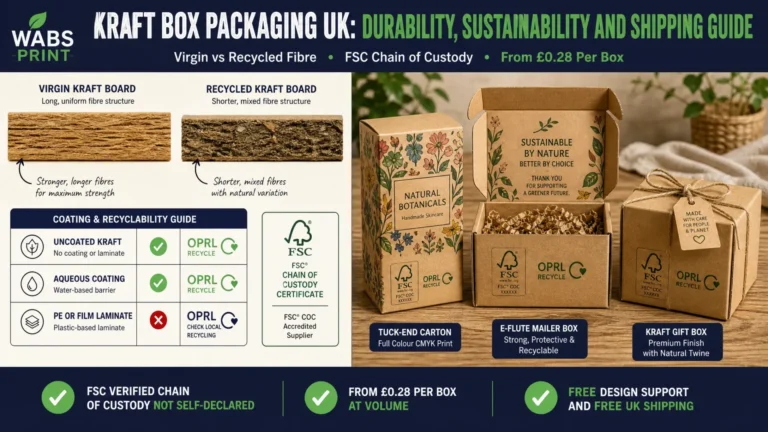
Against the commercial and compliance value of a credible, unchallenged plastic-free claim. Our EPR Packaging UK guide covers how the elimination of plastic components from retail packaging affects EPR reporting and
Food packaging guide covers the food-safe kraft specification requirements in more depth. Our EPR Packaging UK guide covers how kraft Green RAM rating affects your annual reporting obligation. And our no