
Cereal Box Packaging UK: Shelf Appeal, Durability and Retail Compliance Guide

Your cereal product is ready for retail. Then your buyer comes back from the range meeting with three structural comments, a barcode positioning correction, and a note that your OPRL label is on the wrong panel. None of those are design problems. All of them are specification problems that come from not knowing what a UK retail cereal box actually needs to do before a buyer will say yes to it.
This guide comes from the team at Wabs Print, a UK-wide packaging supplier that has produced custom cereal boxes for UK food businesses since 2008. We supply 8,500 plus UK food businesses across FMCG cereal brands, artisan granola producers, independent muesli makers, and health food start-ups, and the compliance and structural questions we field most often are about board weight for shelf performance, allergen labelling positioning, and what specific retailers actually require structurally before they will list a product. Wabs Print supplies custom cereal boxes to food businesses across the UK, from independent granola brands in Chester and Derby to health food producers in Reading and Coventry. By the end of this guide you will know which board grade prevents on-shelf bowing, where every mandatory label must sit, and what it costs per box at your volume. If you want a price now, custom cereal boxes UK will get you a quote within 24 hours. Free design support including nutritional table layout, allergen callouts, and barcode positioning is included on every order, and delivery is free to any UK address.
What Is Cereal Box Packaging UK?
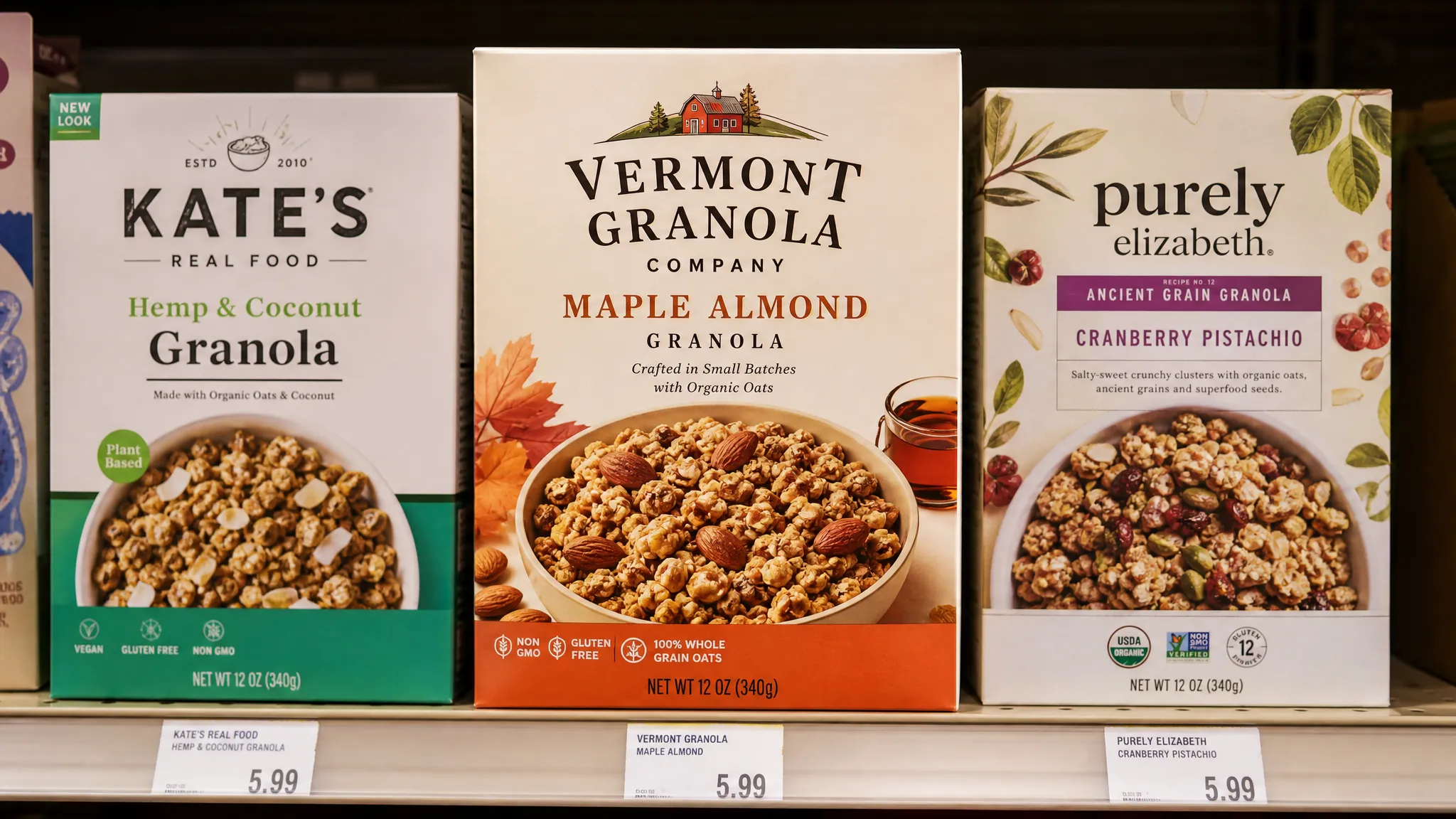
A cereal box is a folding carton, typically a tuck-end or seal-end construction in 350 to 400gsm SBS board, that carries a breakfast food product from production through retail distribution to the consumer’s kitchen table. Unlike most food packaging categories, a cereal box has to simultaneously satisfy the structural requirements of retail shelf display, the compliance requirements of UK food labelling law, the specific structural specifications of the retailer who is stocking the product, and the visual requirements of competing for attention on a shelf alongside products that may have spent considerably more on branding than an independent brand can.
Getting any one of these four requirements wrong creates a problem at a different stage of the supply chain. A board that bows creates a problem at the retailer’s range meeting. A mispositioned allergen declaration creates a problem at Trading Standards. A barcode outside the GS1 quiet zone creates a problem at the supermarket scanner. Incorrect OPRL labelling creates a CMA enforcement risk from April 2025. All four are specification decisions, not design decisions, and all four can be resolved at the quote stage rather than the reprint stage if the right questions are asked.
Board Weight: The Decision That Determines On-Shelf Performance
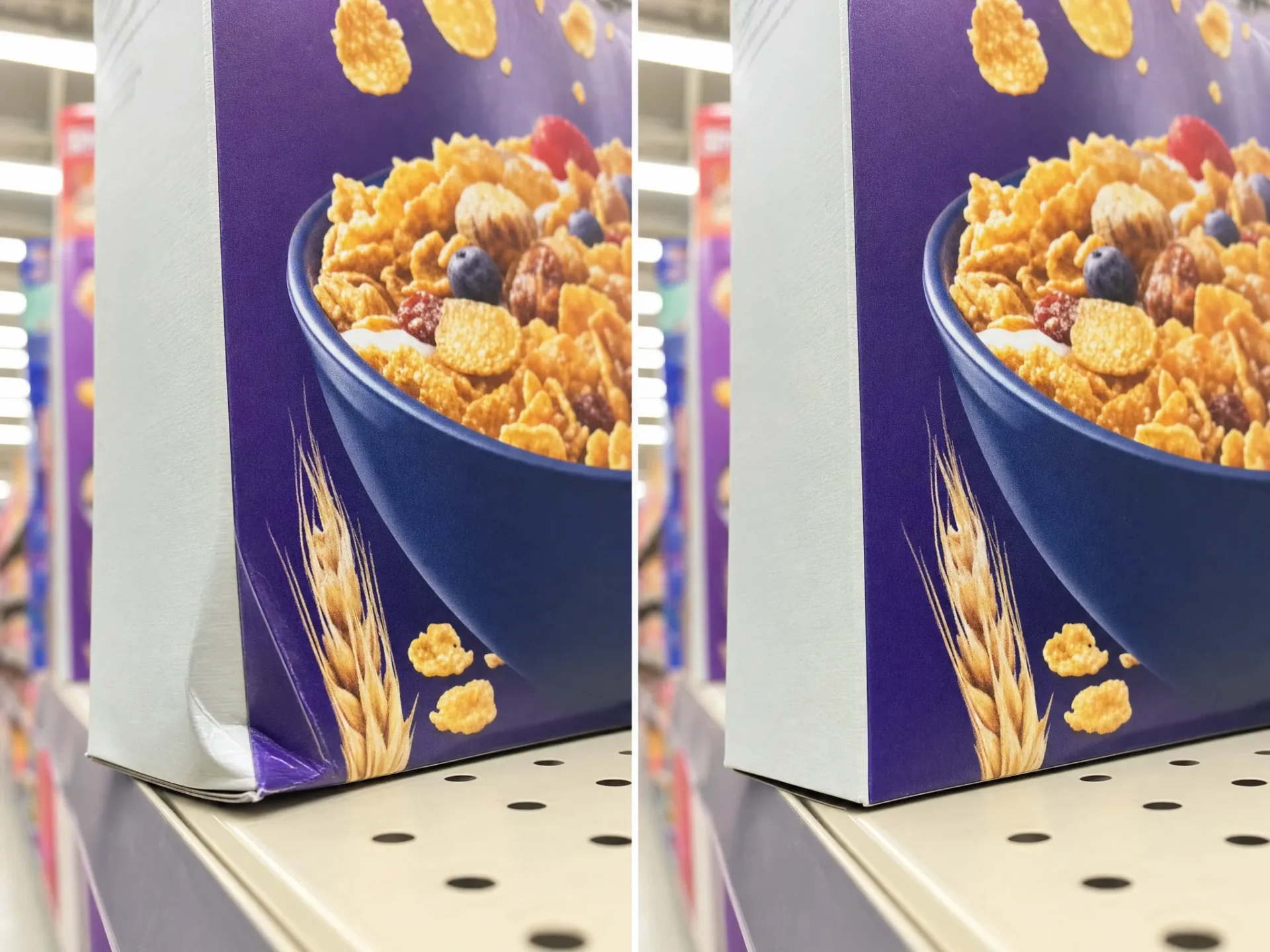
The board weight decision for cereal boxes is set by the filled product weight and the shelf orientation before anything else. A cereal box on a retail shelf stands on its base panel and leans against the products beside it. The combined weight of the product inside and the compression from adjacent products creates a sustained compressive load on the base panel. Board that is too light for the product weight bows at the base corners within weeks of going on-shelf, which reads as poor product quality to a buyer and is one of the most common reasons a first listing does not lead to a reorder.
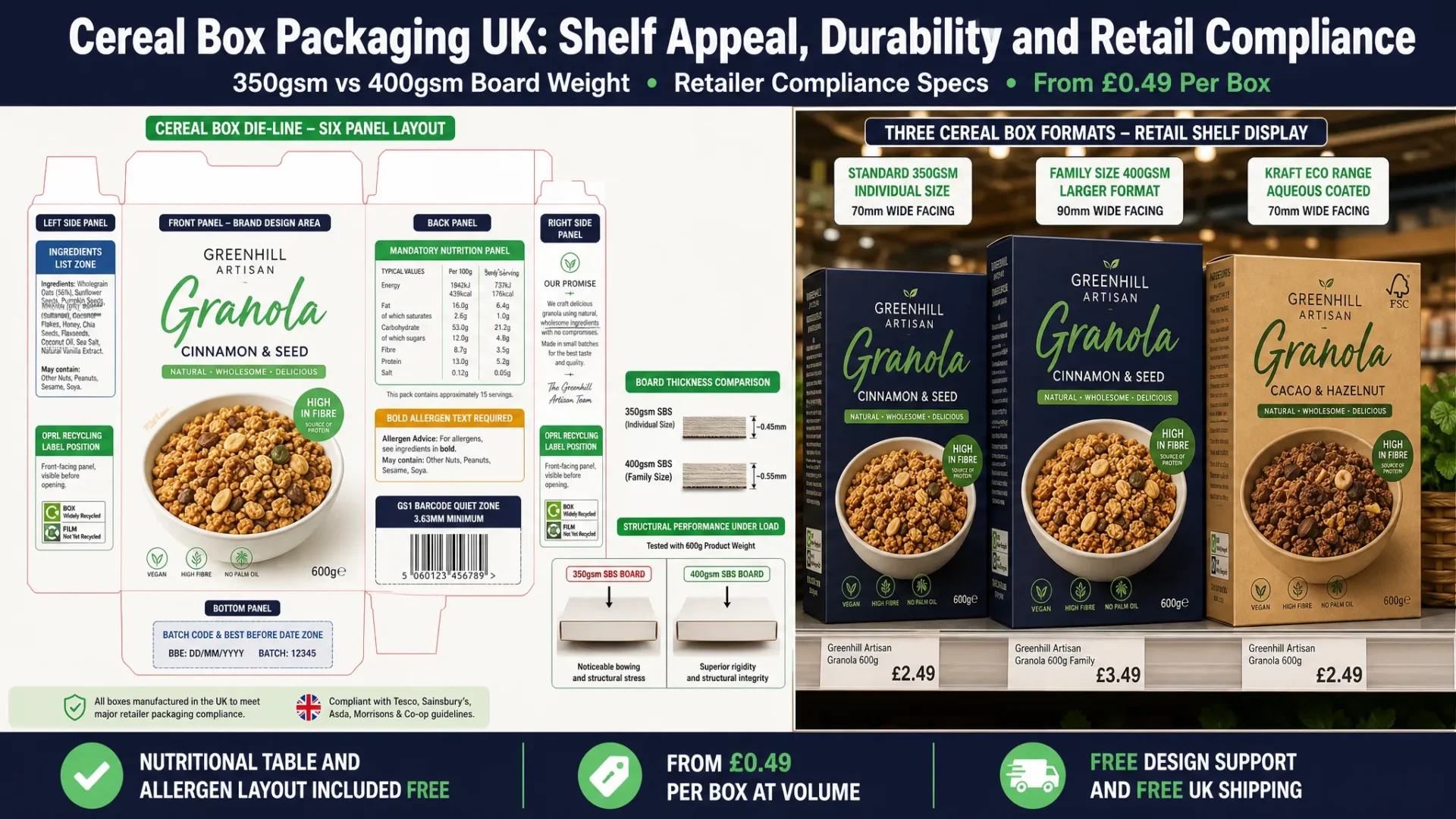
Standard SBS board at 350gsm handles most individual serving and small family size cereal boxes up to approximately 400 to 500g product weight. For family size boxes carrying 600g and above, 400gsm SBS is the minimum specification that maintains structural integrity under sustained shelf load. A Midlands cereal brand ordered 350gsm family-size boxes for a 680g product before they came to us. The boxes bowed on-shelf at Sainsbury’s within two weeks. The 400gsm board that would have prevented this costs £0.11 more per box. That is the most common and most avoidable cereal packaging failure mode we see.
| Board Grade | Product Weight Capacity | Price Premium | Best For |
|---|---|---|---|
| 350gsm SBS white | Up to 500g product | Base price | Individual, standard and small family size cereal boxes |
| 400gsm SBS white | 500g to 1kg | Plus £0.11 per box | Family size, large granola bags, heavier muesli |
| 350gsm FSC kraft | Up to 400g product | Plus 10 percent | Artisan, organic, eco-conscious cereal brands |
| 400gsm SBS with moisture barrier lining | Any weight, extended shelf life | Plus £0.15 per box | Products in ambient humidity environments, long-shelf-life cereals |
The moisture barrier lining is worth calling out specifically for UK cereal brands selling into grocery retail with long distribution chains. Standard SBS board absorbs ambient humidity over time, which softens the board structure and can allow moisture transfer to the cereal product through the inner surface. A moisture barrier lining, a thin coating applied to the inner panel surface, prevents both effects at a modest cost premium. For a product with a 12-month shelf life target in a standard ambient UK grocery environment, the moisture barrier is worth specifying.
UK Retail Cereal Box Compliance: What Every Panel Must Carry
A UK retail cereal box must carry specific information on specific panels under UK retained food law, and the positioning of that information is not a design choice, it is a legal requirement. Getting this right at the artwork stage is the most consistent differentiator between a brand that passes a buyer’s packaging review on the first submission and one that is sent back with a corrections list.
The mandatory elements and their panel requirements:
Nutritional information panel: Must appear as a specific table format covering energy (kJ and kcal), fat, saturates, carbohydrate, sugars, fibre, protein, and salt per 100g and per recommended portion. For most cereals, this occupies a significant portion of one full panel. We allocate the back panel as the standard nutritional table location and build this into the artwork layout at quote stage as a free service.
Allergen declaration: The 14 major allergens specified under UK retained Regulation EU No 1169/2011 must be declared and must appear in bold, contrasting type in the ingredients list. For a cereal product containing wheat, milk, or nuts, this is not optional or stylistic. The allergen text must be visually differentiated from the surrounding ingredients list.
Barcode positioning and quiet zone: The GS1 barcode must be positioned on a flat panel surface, not across a fold line, with a minimum quiet zone of 3.63mm clear of any print on both sides. A barcode that scans incorrectly at a supermarket till because the quiet zone is too small is one of the most immediate ways a new retail listing becomes a problem within the first week of ranging.
OPRL recycling label: Under OPRL guidance, the recycling label must appear on a front-facing panel visible before the box is opened, not on the base or inside the box. For a cereal box with SBS board and no plastic liner, the correct label is “Recycle.” We include the OPRL-correct label on every cereal box based on its actual specification at no extra cost, and will not print an inaccurate claim regardless of what a brief requests. Our OPRL labels guide covers the full positioning and label selection requirements in more depth.
Best before date and batch code: Must be clearly legible, typically printed on the base panel. Laser coding or inkjet printing on-pack is outside our scope, but we leave the correct panel area unprinted for your coding equipment.
What Retailers Actually Require: The Structural Specs Beyond the Label
Beyond the labelling requirements that apply to all UK retail cereal products, individual retailers add their own structural and specification requirements that apply as a condition of listing. These are not published in a publicly accessible format in most cases, but we have supplied cereal packaging into Waitrose, Ocado, Holland and Barrett, Whole Foods, Co-op, and Tesco, and have current specifications for each stored from previous orders.
Waitrose and Ocado both require FSC certification documentation for cereal packaging, not simply an FSC logo on the box, but the Chain of Custody certificate number confirming the board is from a certified source. Whole Foods and Holland and Barrett prioritise sustainability credentials and may ask for EPR material data. For major grocery chains including Tesco and Sainsbury’s, the barcode must function correctly at their specific scanning frequency, and the shelf-ready packaging format may require a specific perforation placement and lip height that varies between retailers.
Thornfield Granola, an independent artisan granola brand based in Coventry, came to us ahead of their first buyer meeting with Waitrose. They had existing packaging with a 350gsm board, an incorrectly positioned OPRL label on the base panel, and no FSC certification on their board. We rebuilt the box specification to 400gsm FSC certified board, repositioned all compliance labels correctly, added the FSC CoC certificate number, and supplied artwork proofs including the nutritional table layout for their buyer submission. Their first buyer meeting resulted in no structural or compliance rejections, the listing progressed, and they are now supplying 18 Waitrose stores.
Cost and Pricing Guide
All prices below are confirmed from our live cereal boxes page and include full CMYK print on all panels, nutritional table layout, allergen callout positioning, and GS1 barcode zone review. Free UK-wide shipping is included on every order.
Cereal Box Pricing by Volume
| Volume | White 350gsm SBS | White 400gsm SBS | Kraft 350gsm FSC | With Moisture Barrier |
|---|---|---|---|---|
| 100 to 249 units | £2.40 | £2.62 | £2.64 | £2.72 |
| 250 to 499 units | £1.75 | £1.92 | £1.93 | £1.98 |
| 500 to 999 units | £1.28 | £1.40 | £1.41 | £1.48 |
| 1,000 to 2,499 units | £0.95 | £1.04 | £1.05 | £1.11 |
| 2,500 to 4,999 units | £0.72 | £0.79 | £0.79 | £0.85 |
| 5,000 to 9,999 units | £0.58 | £0.64 | £0.64 | £0.70 |
| 10,000 plus units | £0.49 | £0.54 | £0.54 | £0.60 |
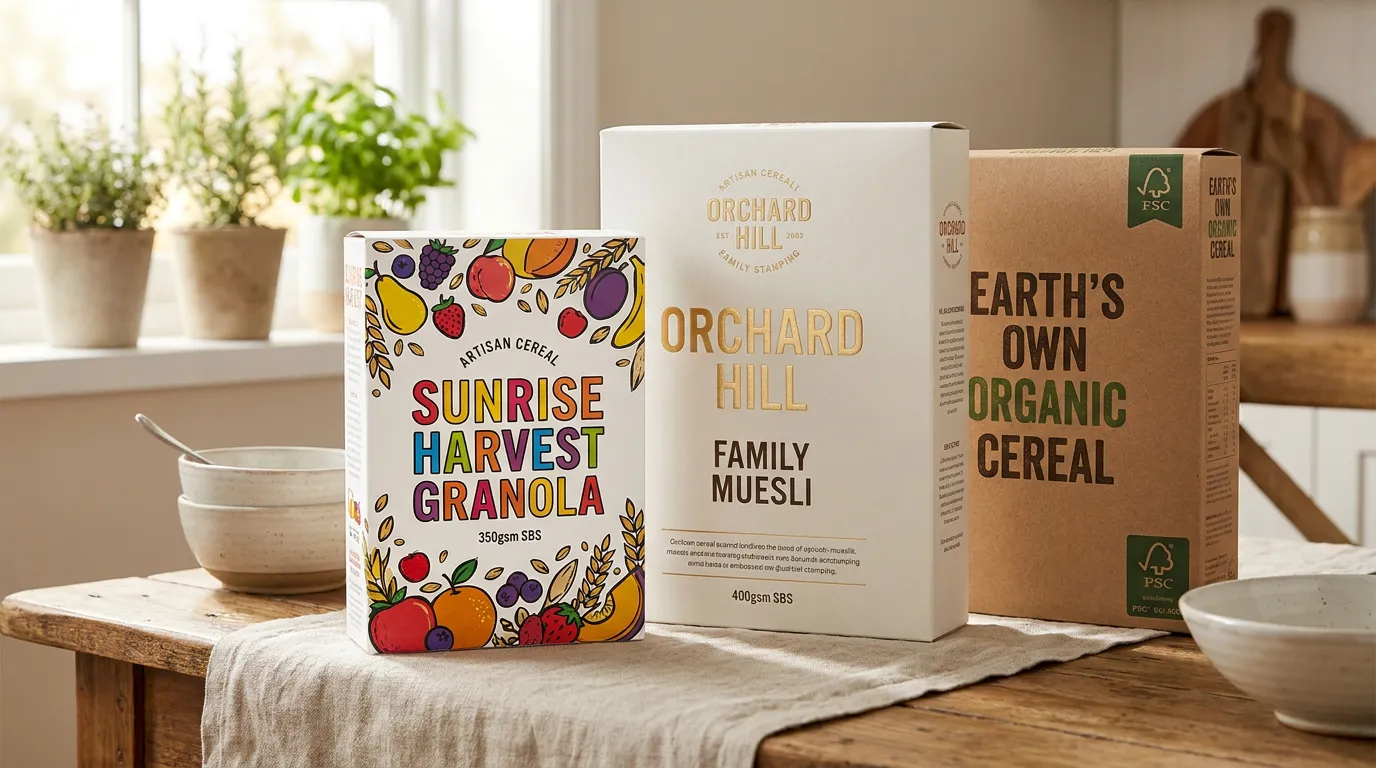
Finish upgrades: soft-touch laminate £0.09, spot Pantone £0.04, gold foil £0.18, embossing £0.12, spot UV £0.11, FSC certified board £0.03 per box additional over the standard prices above. A Cotswolds granola brand added soft-touch laminate and embossed logo to their cereal boxes. Their RRP increased by £1.50 per unit. The upgrade cost £0.14 more per box, with a break-even at 10 boxes sold. The retail packaging premium mechanism in cereal is real at the artisan end of the market, where the box communicates the product’s positioning before the customer reads a word of copy.
There is no minimum order. Most UK cereal brands start at 250 to 500 units for their first branded run, moving to 1,000 plus once a retail listing is confirmed. Our design team builds print-ready artwork including nutritional tables, allergen callouts, and barcode zone positioning as standard, at no extra cost. We supply EPR material data automatically with every order over 1,000 units. Delivery is free to any UK address on every order.
How to Choose: A Decision Framework for Your Cereal Brand
Work through these before requesting a quote.
- What does your heaviest filled box weigh? Up to 500g: 350gsm SBS is adequate. 500g to 1kg family size: 400gsm is the minimum safe specification for sustained retail shelf load. Above 1kg: 400gsm minimum plus a moisture barrier liner for extended shelf life products.
- Which retailers are you targeting? For independent retail, farm shops, and online D2C: standard SBS with OPRL-correct labelling and allergen compliance is sufficient. For Waitrose, Whole Foods, Holland and Barrett, and Ocado: FSC certification documentation is typically required, and we include the CoC certificate number in your artwork. For Tesco, Sainsbury’s, and the major grocery chains: shelf-ready packaging may be specified as a condition of listing.
- Is your product positioning artisan, organic, or eco-conscious? FSC certified kraft with aqueous matte coating supports that positioning with verifiable credentials. Under CMA enforcement guidance from April 2025, the sustainability credentials must be specific and verifiable, not general. “FSC certified board” with the CoC number is defensible. “Eco-friendly cereal box” without qualification is not. Our retail packaging design trends 2026 guide covers the wider regulatory landscape for sustainability claims on retail food packaging.
- What finish supports your retail price? Below £4 per box retail: standard CMYK on 350gsm SBS is the correct starting point. £4 to £8 retail: soft-touch laminate alone at £0.09 per box noticeably elevates the perceived quality. Above £8 retail: soft-touch plus embossing or foil is appropriate for the price point and the artisan market that supports it.
For EPR reporting, our EPR Packaging UK guide covers how cereal box volume contributes to your annual Extended Producer Responsibility obligation if your food business exceeds the relevant threshold. And our sustainable food packaging guide covers the full material choice and sustainability claims landscape for food packaging in 2026, including the specific differences between recyclable, compostable, and FSC-certified claims and what evidence each requires.
Cereal Box Compliance and Sustainability in 2026
The regulatory landscape for UK retail cereal packaging has changed more in 2025 and 2026 than in the previous decade, and the changes are consequential for brands that had existing packaging artwork produced before the new requirements took effect.
Under OPRL guidance and the mandatory labelling regime expected from March 2027, OPRL recycling labels must appear on front-facing panels of all retail food packaging. For cereal boxes, the label currently belongs on a side panel visible before the box is opened, not on the base, which is where the majority of incorrectly labelled cereal boxes currently place it.
Under CMA enforcement powers active from April 2025, vague environmental claims on retail food packaging carry a fine risk of up to 10 percent of global annual turnover. The Plastic Packaging Tax at £228.82 per tonne from 1 April 2026 applies to plastic packaging components, which affects cereal boxes with any plastic bag liner insert, since the liner is a plastic component separate from the card box itself. For cereal products using an inner bag liner, the liner’s recycled content needs to be confirmed for PPT reporting purposes. Our Plastic Packaging Tax UK guide covers how the tax applies to mixed-material food packaging specifically.
We supply all necessary compliance documentation with every cereal box order: food contact compliance certificates, EPR material data , and FSC Chain of Custody documentation for FSC-specified board. This reflects packaging compliance guidance as of June 2026. Always verify current requirements at gov.uk before making compliance decisions for your business.
Cereal Box Delivery Across the UK
Wherever your cereal business is based, lead time and pricing stay identical. An independent granola brand in Derby works to the same 7 to 10 working day production turnaround as a commercial muesli manufacturer in Reading, and delivery is free to any UK address regardless of order size.
We receive a regular flow of enquiries from artisan cereal brands in Exeter asking specifically whether short-run digital print is available for test orders before committing to a larger offset print run. The answer is yes from 10 units, with the caveat that the per-unit cost difference between 100 and 1,000 units is significant enough that most brands find 250 to 500 units a more economic starting point once they have confirmed their artwork is correct. Whether you are running a farmers’ market granola range in Chester or supplying a regional grocery chain from Plymouth, turnaround and pricing are identical, and our design team handles all compliance label layout at no extra charge.
FAQ
What board weight do I need for a family size cereal box?
For family size cereal boxes carrying 500g to 1kg of product, 400gsm SBS is the minimum safe specification for sustained retail shelf performance. A 350gsm family size box will typically begin to show base corner bowing within two to four weeks on a standard retail shelf, which affects buyer confidence in the product’s presentation and is one of the most common reasons a cereal listing does not lead to a reorder.
What compliance information does a cereal box need in the UK?
Mandatory: nutritional information table in the specific UK retained format, allergen declaration with all 14 major allergens highlighted in bold in the ingredients list, GS1 barcode with a minimum 3.63mm quiet zone on a flat panel surface, OPRL recycling label on a front-facing panel, and best before date and batch code space. We build all of these into your artwork layout as a standard part of the free design service.
How do I get my cereal box listed at Waitrose or Whole Foods?
Both retailers require FSC certification documentation, not just an FSC logo, for cereal packaging. Both also have specific structural requirements that vary between retail formats. Supply us with the specific retailer’s packaging specification if you have it, or tell us your target retailer at quote stage and we will apply the appropriate structural spec based on our existing knowledge. Our design team also handles nutritional table and allergen layout to retail standard as part of the free design service.
Do you deliver custom cereal boxes to Chester and Derby?
Yes. Wabs Print delivers custom cereal boxes to businesses across the UK, including Chester, Derby, Coventry, Reading, Exeter, Plymouth, and London, with free UK-wide shipping on every order. Standard production is 7 to 10 working days from artwork approval.
What is the minimum order for cereal boxes?
No minimum order. Most UK artisan cereal brands start at 250 to 500 units for their first branded run, where the unit pricing becomes commercially sensible relative to the print setup. Short-run is available from 10 units for test orders.
Is an artisan cereal box actually recyclable?
A 350gsm or 400gsm white SBS cereal box without plastic liner or laminate coating is kerbside recyclable in the UK under OPRL guidance, and carries the OPRL “Recycle” label. A cereal box with an inner plastic bag liner has two separate materials: the card box is recyclable when clean, and the plastic liner is a separate waste stream. Kraft cereal boxes with aqueous matte coating are also kerbside recyclable. Laminated cereal boxes carry a “Check local recycling” label.
When should I order seasonal cereal packaging?
Christmas and gift cereal ranges: order by mid-October. Dry January and new year health food promotions: order by early December. For artisan cereal brands selling primarily through farmers’ markets, seasonal artwork changes can be managed through the same structural box with a seasonal label overlay, which avoids a full box reprint for small seasonal volumes.
Making the Call
Cereal box packaging UK decisions start with the product weight, the retail channel, and the compliance requirements of the buyer you are targeting. Match the board to the filled weight. Get every mandatory label on the correct panel before you spend a penny on design. Confirm FSC certification if you are targeting premium or health food retail. And choose a finish that is coherent with your retail price and your brand positioning.
Whether you are an artisan granola brand in Chester, an independent muesli producer in Derby, or a health food start-up in Coventry, Wabs Print delivers custom cereal boxes across the UK with no minimum order, free UK-wide shipping, free design support including compliance layout on every order, and the same 7 to 10 working day turnaround regardless of volume. If you are ready to get a price, custom cereal boxes UK and you will have a quote within 24 hours.