

Retail Packaging Design Trends 2026: What Is Actually Selling on UK Shelves

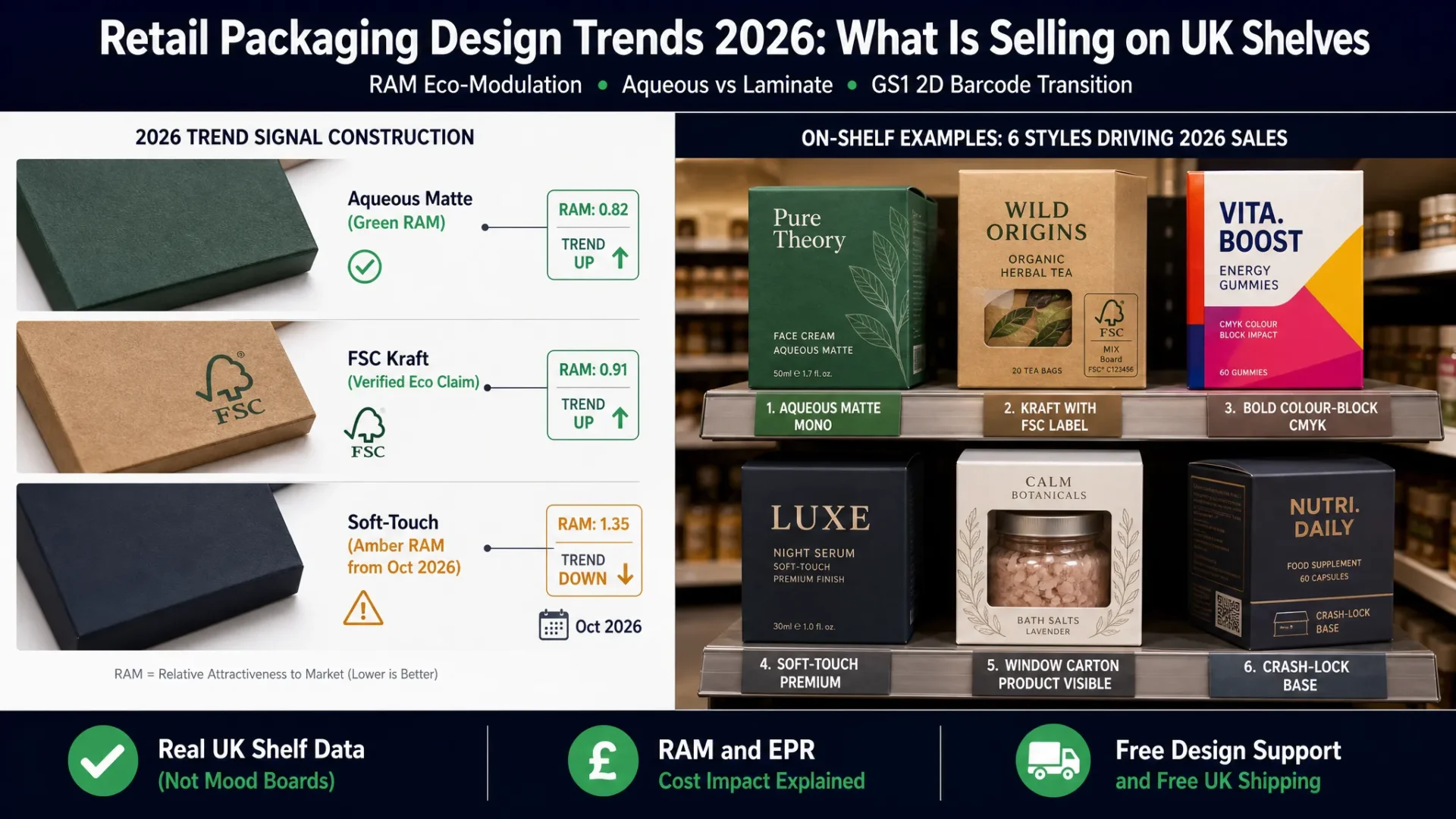
What you see on mood boards and in trend reports is not always what is actually moving product off UK retail shelves. The gap between packaging that wins design awards and packaging that earns repeat buyer orders has never been wider, partly because 2026 introduced new regulatory pressures that have quietly made several once-popular finish choices a liability rather than an asset.
This guide comes from the team at Wabs Print, a London-based packaging supplier that has produced custom retail boxes for UK businesses since 2008. We have produced retail packaging across Tesco, Boots, Sainsbury’s, Waitrose, Planet Organic, Whole Foods, and hundreds of independent stockists, and we review GS1 barcode compliance, RAM recyclability ratings, and planogram specifications on every order. Wabs Print, based in London, supplies custom retail packaging to brands across the UK, from FMCG businesses in Leicester and Southampton to indie brands in Brighton and Oxford. By the end of this guide you will know which finish and material choices are gaining ground in UK retail, which are quietly declining, and which new compliance pressures are reshaping design decisions brands had assumed were settled. If you want a price now, custom retail packaging UK will get you a quote within 24 hours. Free design support is included on every order, and delivery is free to any UK address.
What Is Driving Retail Packaging Design in 2026
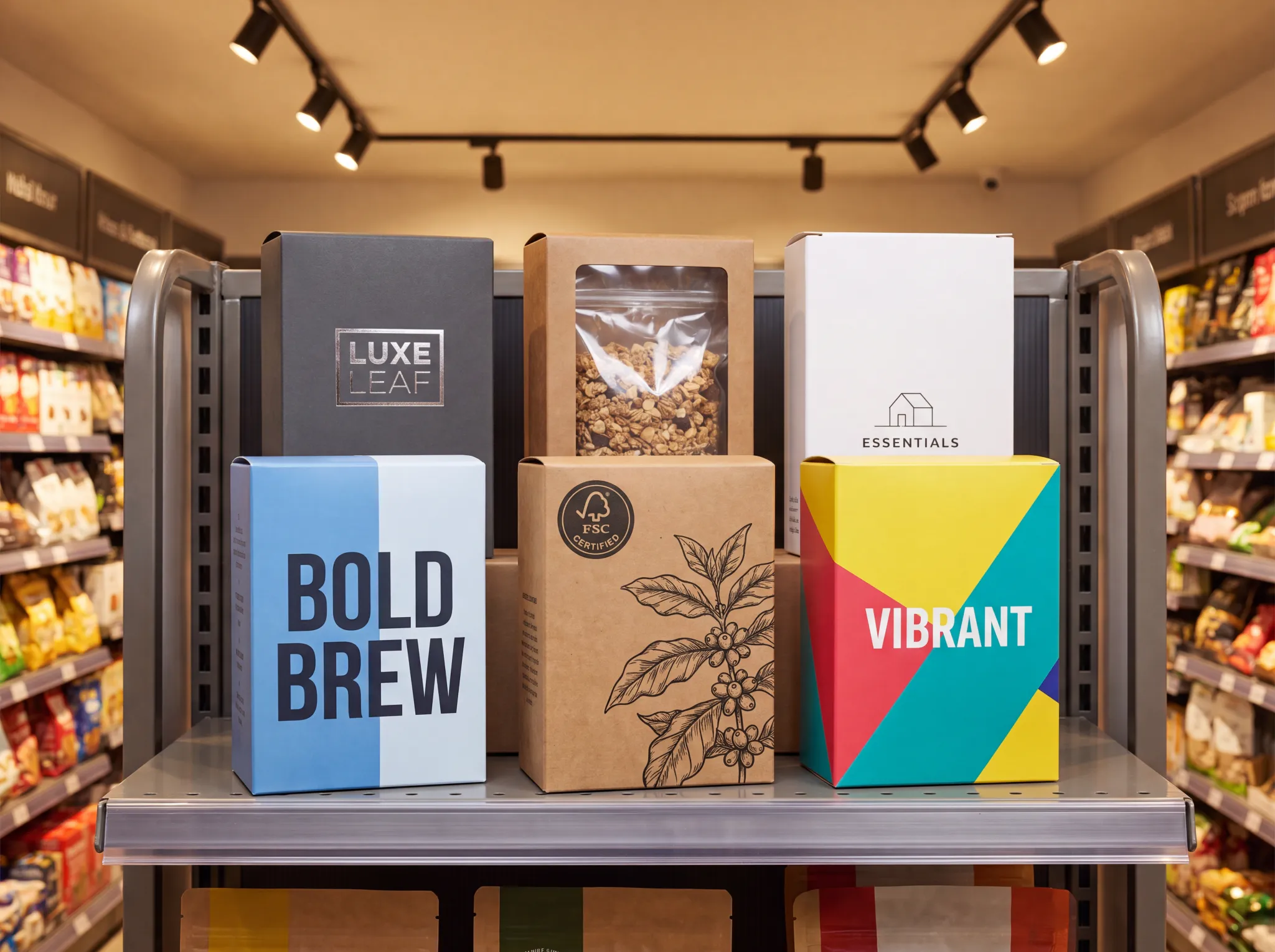
Three forces are actively reshaping what gets designed onto a retail box in 2026, and only one of them is aesthetic. The other two are regulatory, and brands that are treating them as someone else’s problem are reprinting at their own expense.
The first is the CMA’s enforcement powers under the Digital Markets, Competition and Consumer Act, which became active in April 2025. Environmental claims on retail packaging that cannot be independently verified now carry a fine risk of up to 10 percent of global annual turnover. “Eco-friendly,” “sustainable packaging,” and “100% recyclable” on a laminated box are legally exposed claims. This is not a future concern. It is live.
The second is RAM eco-modulation under UK Extended Producer Responsibility, which begins in October 2026. From that date, the recyclability rating of your box finish determines your EPR fee band. Green-rated finishes pay the lowest fees. Amber-rated finishes pay more. The finish you specify on a retail box being designed now is a cost decision that runs for the entire shelf life of that artwork, typically two to five years.
The third is genuinely aesthetic: UK shoppers in 2026 are demonstrably responding better to packaging that communicates specificity, craft, and material honesty than to packaging that tries to look premium through gloss and visual noise.
Trend 1: Aqueous Matte Coating Is Replacing Laminate in Mid-Market Retail
The dominant finish story in 2026 UK retail is the shift from film laminate, specifically matte and gloss laminate, to aqueous matte coating. Aqueous matte (a water-based varnish applied directly to printed board, with no film lamination) has existed for years as an economy finish. In 2026 it is becoming a strategic choice for reasons that have nothing to do with cost.
An aqueous matte-coated SBS board box rates Green under RAM, the lowest EPR fee band from October 2026. The same box in matte laminate rates Amber, the higher fee band. For a brand at meaningful volume, that difference accumulates across a full calendar year into a real number. A brand producing 500,000 units per year switching from matte laminate to aqueous matte coating will pay lower EPR fees from October 2026 onwards, without any reduction in the finish quality visible to the consumer on a retail shelf.
The OPRL label also changes. A matte laminated box carries “Check local recycling.” An aqueous matte box carries “Recycle,” the kerbside recyclable designation. For brands selling into Planet Organic, Whole Foods, or any retailer running a packaging sustainability audit, that label change alone has opened listings that were previously unavailable. Our OPRL labels guide covers how to apply the correct label for your specific finish combination accurately, including the cases where a single box carries two materials requiring two separate labels.
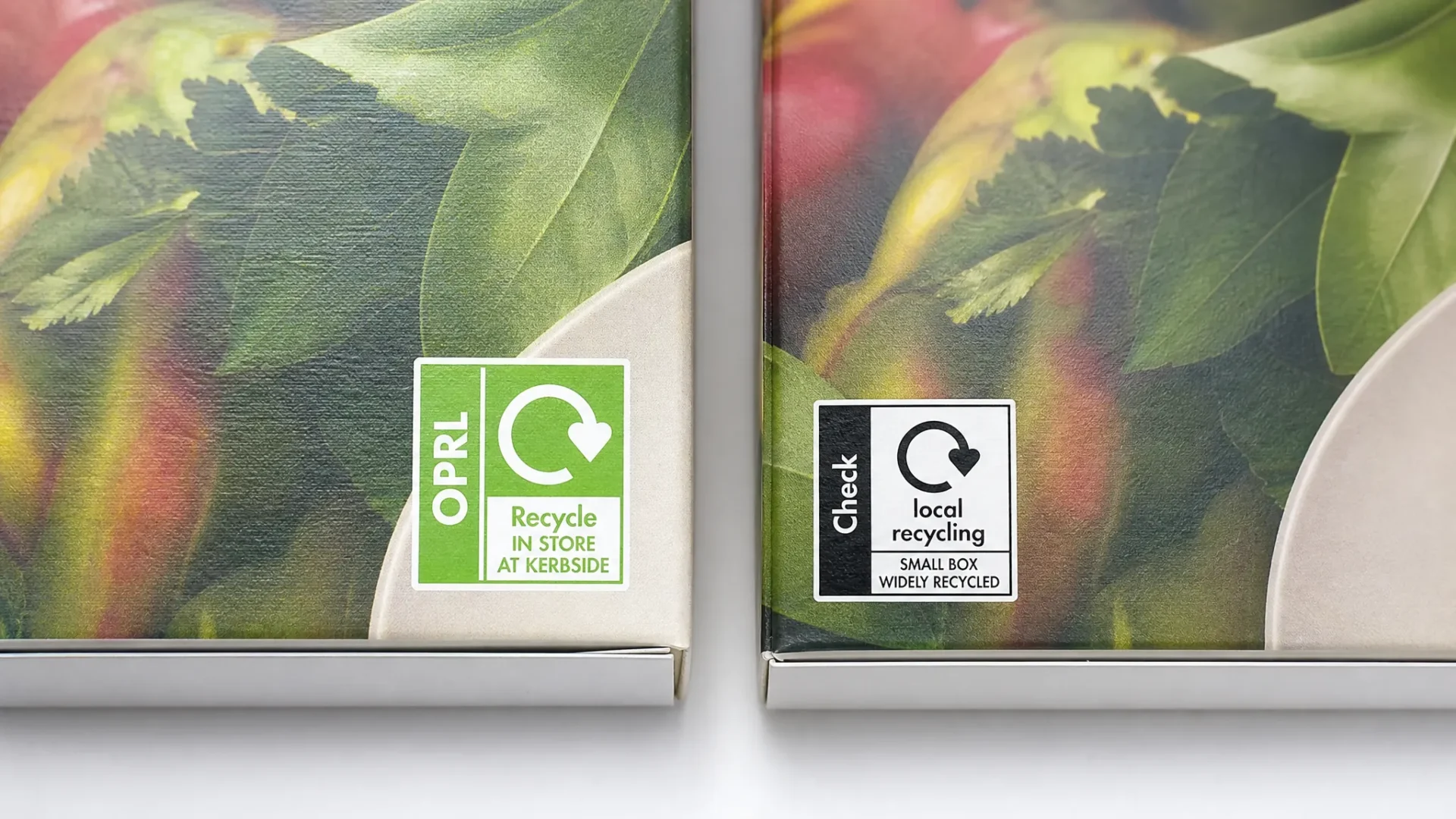
The practical design implication: aqueous matte surfaces print similarly to matte laminate for most CMYK applications, but the surface is less durable against repeated handling and moisture, which matters for ambient grocery products in a chilled environment but far less for health, beauty, gift, and stationery retail.
Trend 2: FSC Certification Is Moving From Optional to Required
Two years ago, FSC board was a premium option that eco-led brands chose for positioning reasons. In 2026 it is a prerequisite for shelf space at an increasing number of UK retailers, not an optional extra.
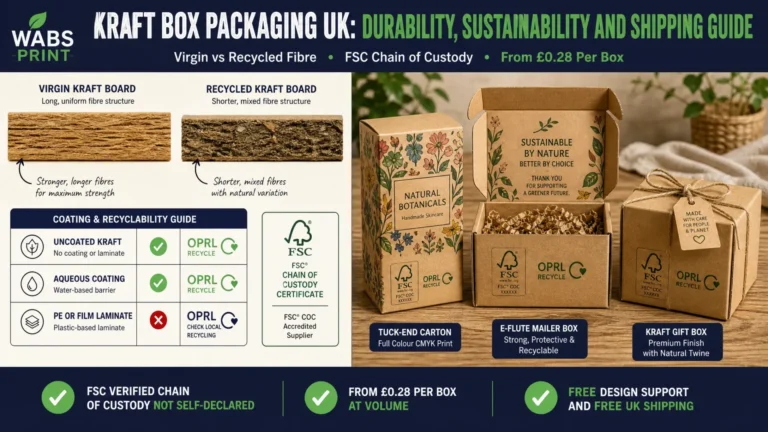
Waitrose, Planet Organic, Whole Foods, and several regional chains now include FSC certification in their supplier packaging requirements for at least some categories. The conversation has shifted from “do you offer FSC board” to “can you supply the Chain of Custody certificate for audit purposes.” Brands that cannot produce FSC CoC documentation are being asked to reprint, not just to add an FSC logo. Our FSC accreditation means your packaging can carry the FSC mark with full Chain of Custody documentation, which is the independently verified standard these retailers are actually checking.
The design implication of FSC kraft specifically is the one that has surprised some brands: unbleached kraft board combined with aqueous coating rates both Green RAM and OPRL “Recycle,” making it the cleanest dual-compliance finish available in 2026. The limitation is print quality: complex photography and fine gradients are harder to reproduce on a kraft surface, and the natural brown substrate needs white ink for legible light text. For brands where the craft, natural, or artisan positioning is authentic rather than adopted, that limitation is not a limitation at all, it is part of the visual vocabulary that earns the listing.
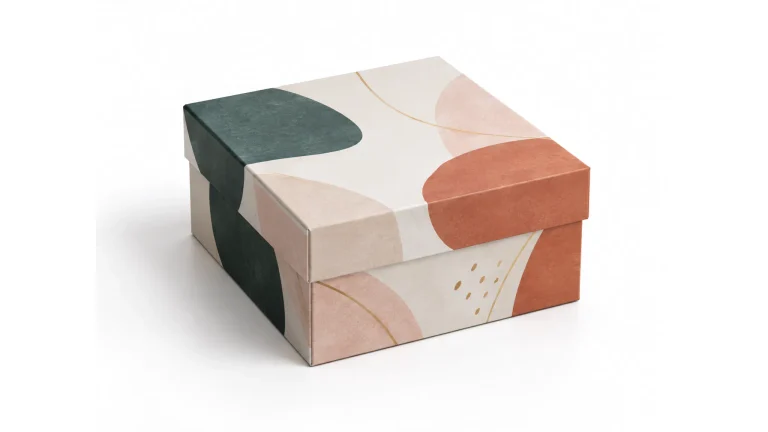
Trend 3: Bold Colour Blocking Is Outperforming Complex Visual Noise on Shelf
The most consistent creative trend visible across UK retail in 2026 is the retreat from complex pattern and texture-heavy box design toward large, bold, single-colour blocks carrying a single headline claim. This is the shelf visibility principle playing out practically: shoppers spend an average of 20 seconds per shelf section, and at two to three metres the only thing visible is colour and broad shape. An elaborate illustration that looks beautiful in a design presentation becomes visual noise at retail distance.
The brands gaining ground in 2026 on UK grocery and health shelves share a common design characteristic: a dominant colour that can be identified at distance, a single benefit claim readable from one metre, and supporting detail only at close range. This is not minimalism for aesthetic reasons. It is the physical reality of how retail environments work.
For practical design purposes, colour blocking with a hard edge between two or three strong colours performs better in a shop environment than complex illustration in the same colour palette. A 200mm x 70mm facing on a gondola shelf in a Boots aisle does not have the space or the viewing time for complexity to work.
Trend 4: Tray and Sleeve Is Growing for Brands With Compliance Update Risk
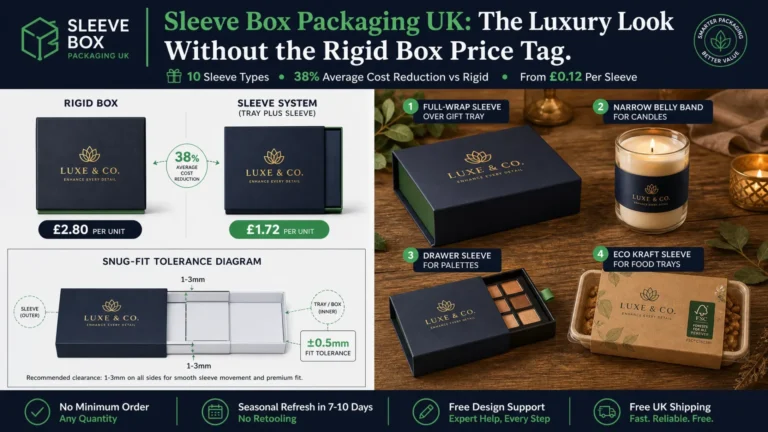
A quieter trend that has specific commercial logic: more brands in regulated categories (health, pharma, and food with mandatory labelling) are moving to tray and sleeve construction rather than a single-piece folding carton.
The reason is cost efficiency when compliance information changes. A single-piece box requires a full reprint when ingredients, dosages, regulatory information, or mandatory labelling changes. A tray and sleeve construction requires only the sleeve to be reprinted, since the inner tray carries none of the compliance information. For a brand at 500 to 999 units, a sleeve reprint at approximately £0.72 per set costs considerably less than reprinting a complete single-piece box at the equivalent tier.
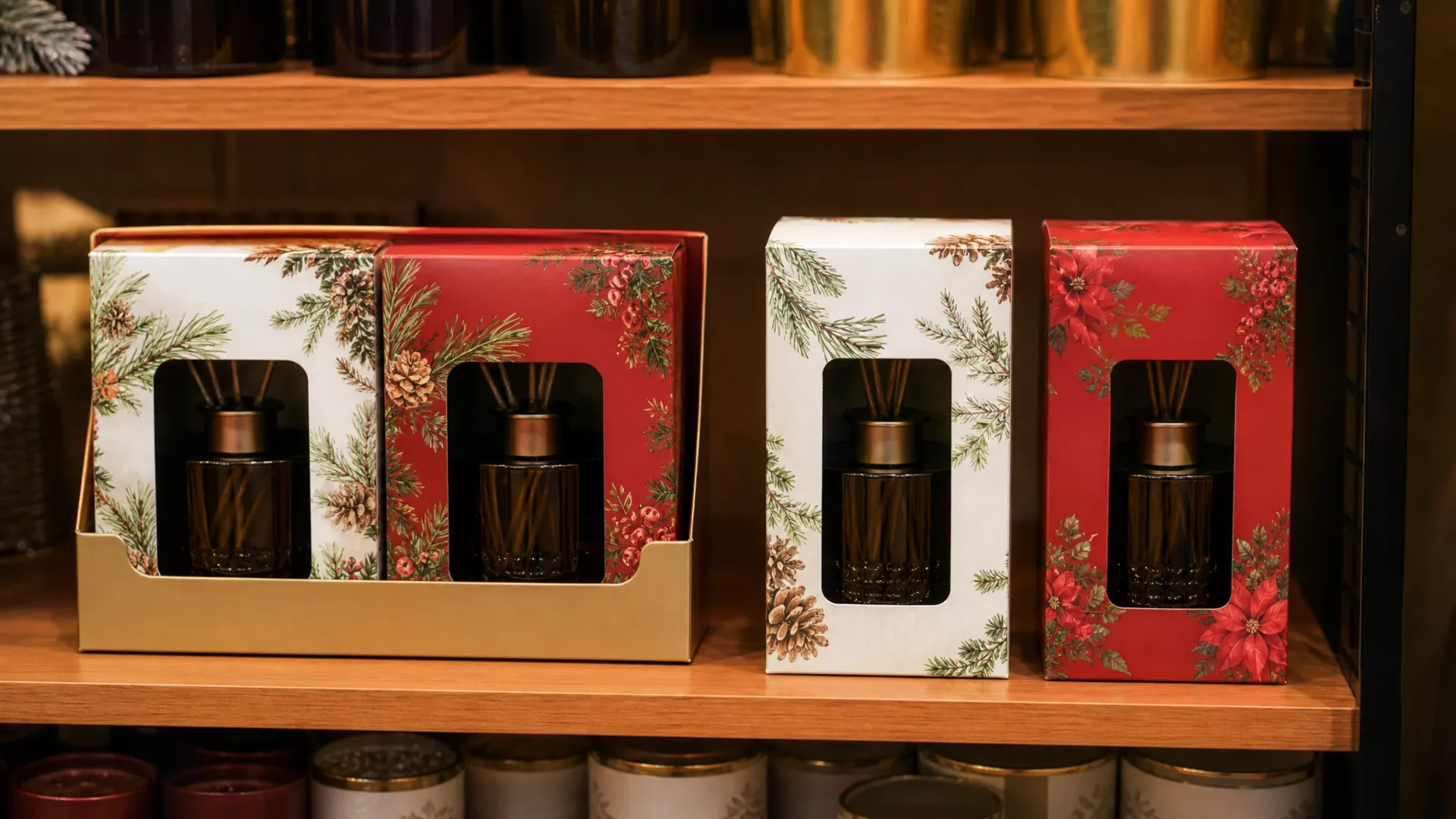
The secondary advantage is seasonal flexibility. A single-piece retail box is committed to one design for its entire shelf life. A tray and sleeve format can refresh the sleeve for Christmas, Valentine’s Day, or a limited-edition campaign without touching the tray stock, which reduces the capital tied up in seasonal inventory and makes promotional packaging cost-feasible at lower volumes. Our display box packaging guide covers complementary display decisions for brands combining retail shelf formats with counter display units, where tray and sleeve products often sit alongside a counter display for the same range.
Trend 5: The GS1 2D Barcode Transition Is Starting Now
From 2027, major UK retailers including Tesco and Sainsbury’s will begin accepting GS1 2D barcodes (QR Code or DataMatrix format) at retail point of sale, as part of the global GS1 transition away from linear EAN-13 barcodes. The 2D transition is not a design trend in the aesthetic sense. It is a specification change that will affect every retail box artwork produced between now and 2027.
During the transition period, both the traditional EAN-13 and a 2D barcode will appear on the same box. This means any retail box artwork being designed now needs to reserve panel space for a secondary 2D barcode zone, or it will require a reprint when the transition mandate reaches the brand’s retail channel. For a brand with a tightly specified box, that secondary zone needs to be designed in proactively rather than retrofitted. We reserve a 2D barcode zone on all retail box artworks we produce now at no charge, since the cost of not doing so is a reprint that could have been avoided.
Trend 6: Crash-Lock Base Is Gaining Ground as Brands Pursue Plastic-Free Claims
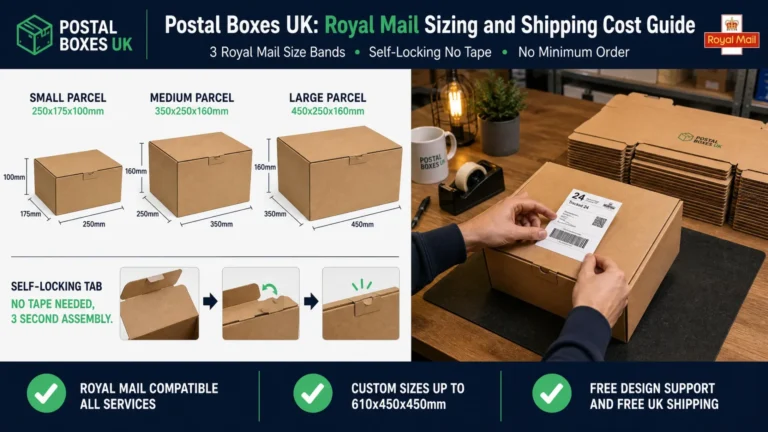
Crash-lock auto-bottom cartons are growing in adoption for a specific reason that is entirely regulatory rather than aesthetic: they eliminate the tape step from the packing process. Tape is a plastic material. A retail box that closes without tape supports a plastic-free packaging claim in a way that a standard tuck-end box, which typically requires tape on the base flap for distribution, does not.
The CMA enforcement point matters here: a brand claiming “plastic-free packaging” on a box that is shipped with tape on its base flap is making a potentially exposed claim. The crash-lock base, which locks automatically when pressed into shape without any tape, removes that exposure. The cost premium is modest at roughly £0.04 per unit over a standard tuck-end equivalent, which at most volumes is a minor increment against the commercial and compliance value of a credible, unchallenged plastic-free claim. Our EPR Packaging UK guide covers how the elimination of plastic components from retail packaging affects EPR reporting and fee obligations in the context of the wider Extended Producer Responsibility framework.
Cost and Pricing Guide
These are real published Wabs Print prices for tuck-end folding cartons, 350gsm SBS, CMYK, with common finish options, all including free UK-wide shipping.
Tuck-End Folding Carton Pricing by Volume and Finish
| Volume | CMYK Plain | Plus Aqueous Matte (Green RAM) | Plus Matte Laminate (Amber RAM) | Plus Soft-Touch Laminate (Amber RAM) |
|---|---|---|---|---|
| 50 to 99 units | £3.20 | £3.52 | £3.72 | £4.10 |
| 100 to 249 units | £1.65 | £1.82 | £2.00 | £2.28 |
| 500 to 999 units | £0.80 | £0.90 | £1.04 | £1.22 |
| 1,000 to 2,499 units | £0.62 | £0.70 | £0.82 | £0.96 |
| 5,000 to 9,999 units | £0.34 | £0.40 | £0.48 | £0.56 |
| 10,000 plus units | £0.24 | £0.28 | £0.36 | £0.42 |
Adding soft-touch laminate plus foil stamp plus embossing takes the per-unit cost to £6.30 at 50 to 99 units, dropping to £0.80 at 10,000 plus units, which is the price profile relevant to the gift and premium retail segments where those finishes are most commonly specified. There is no minimum order on any format. If your artwork is not print-ready, our design team can check your file, set it up correctly for the format you have chosen, or build the retail box design from scratch, at no extra charge. Delivery is free to any UK address on every order.
Pitfield & Grove, a botanical drinks brand based in Brighton, came to us redesigning their retail carton ahead of a Waitrose listing application. Their existing design used matte laminate and an unverified “eco-friendly” claim. Their Waitrose buyer contact had asked specifically about FSC certification and recyclability. We switched their board to FSC certified SRS with aqueous matte coating, removed the unsupported eco claim, added a verified “Made from FSC certified paper” claim with the CoC number and the OPRL “Recycle” kerbside label. The RAM rating moved from Amber to Green. Their first Waitrose buyer submission with the revised packaging passed packaging compliance and the product progressed to the buyer review stage, which had not happened on the previous two submissions with the old laminated carton.
Retail Packaging Design Delivery Across the UK
Wherever your brand is based, lead time and pricing stay identical. A FMCG brand managing a Tesco rollout from a unit in Cambridge works to the same 7 to 10 working day production turnaround as a cosmetics brand relaunching a retail box from a studio in Southampton, and delivery is free to any UK address regardless of order size or finish.
We receive a regular flow of enquiries from independent brands in Oxford asking specifically about the RAM rating of specific finish combinations before they commit to artwork, usually because a retail buyer has flagged sustainability compliance as part of their onboarding review. The answer to that question takes less than five minutes at quote stage, and we provide the RAM rating for every finish combination as standard. Whether you are briefing from York, Brighton, or Leicester, turnaround and pricing are identical, and our design team is available throughout at no extra charge.
Compliance: What Has Changed in 2026 and What Comes Next
The compliance landscape for UK retail packaging changed more fundamentally in 2025 to 2026 than it had in the previous decade. The key changes are worth stating clearly and with their effective dates rather than treating them as background context.
CMA enforcement powers under the Digital Markets, Competition and Consumer Act became active April 2025. From that date, misleading environmental claims on retail packaging carry fine risk up to 10 percent of global annual turnover. The claims that are now legally exposed are the ones that appear most frequently on UK retail packaging: “eco-friendly,” “sustainable,” “100% recyclable” on any laminated box, and “natural packaging” on synthetically coated board.
UK Extended Producer Responsibility fees went live in October 2025 with the first invoices issued. RAM eco-modulation begins October 2026, meaning the recyclability rating of your box finish becomes a direct cost variable in your packaging budget from that date.
Simpler Recycling in England came into effect March 2026, requiring all local authorities to provide weekly separate collections for paper and cardboard. From that date, the difference between a Green-rated “Recycle” label and an Amber-rated “Check local recycling” label became material to a larger share of UK households.
Mandatory OPRL labelling on all retail packaging becomes required under UK EPR from March 2027. Any box being designed now without the correct OPRL label will require a reprint by that date. We apply the correct OPRL label to every retail box we produce as standard. Our sustainable food packaging guide covers how these same regulatory changes apply in the food category specifically, and the ultimate custom packaging guide covers the broader EPR and compliance landscape across all packaging categories. This reflects packaging compliance guidance as of June 2026. Always verify current requirements at gov.uk before making compliance decisions for your business.
FAQ
What are the main retail packaging design trends in 2026 UK?
Six trends are most active on UK retail shelves in 2026: aqueous matte coating replacing film laminate due to RAM eco-modulation from October 2026; FSC certification moving from optional to required by an increasing number of retailers; bold colour blocking outperforming complex illustration for shelf visibility; tray and sleeve construction growing in regulated categories for compliance update flexibility; the GS1 2D barcode transition beginning for 2027; and crash-lock base growing as a mechanism for valid plastic-free claims.
Is matte laminate still a good choice for retail boxes in 2026?
It is still a widely used finish and it is still producing effective retail packaging, but the financial and compliance case for it is weakening. From October 2026, matte laminate rates Amber under RAM eco-modulation, meaning higher EPR fees than aqueous matte coating, which rates Green. The OPRL label on matte laminate is “Check local recycling” rather than “Recycle.” For brands with high volumes, the cumulative EPR cost difference is worth modelling before the next reprint.
What eco claims can I legally print on a retail box in 2026?
Specific, verifiable claims with evidence are defensible. Legally safe: “Made from FSC certified paper” with the CoC certificate number; “Kerbside recyclable” on uncoated or aqueous-coated board with the OPRL “Recycle” label; a specific verified recycled content percentage. Legally exposed under CMA enforcement: “eco-friendly packaging,” “100% recyclable” on any laminated box, “sustainable packaging” without certification.
Do you deliver retail packaging to Brighton and Cambridge?
Yes. Wabs Print delivers custom retail packaging to businesses across the UK, including Brighton, Cambridge, Leicester, Southampton, Oxford, York, and London, with free UK-wide shipping on every order. Standard production is 7 to 10 working days from artwork approval.
What is the minimum order for retail boxes in 2026?
No minimum order on every retail box format, from tuck-end folding cartons to rigid boxes to SRP corrugated cases. Plain tuck-end cartons start from £3.20 per box at 50 to 99 units, dropping to £0.24 per box at 10,000 plus units. There is no extra charge for custom dimensions, GS1 barcode zone review, OPRL label, or free design support.
How does the RAM eco-modulation from October 2026 affect my packaging choice now?
Any retail box artwork being designed or reprinted between now and October 2026 is making a finish choice that will determine its EPR fee band for the entire shelf life of that artwork, typically two to five years. A switch from matte laminate to aqueous matte coating now means the box will be on the lower Green fee band from October 2026 rather than the Amber band. We provide the RAM rating for every finish combination at quote stage and model the EPR cost impact for orders above 10,000 units at no charge.
What is shelf-ready packaging and which retailers require it?
Shelf-ready packaging (SRP) is a corrugated case that ships the product and becomes the shelf display when the perforated front panel is removed. Tesco, Sainsbury’s, Waitrose, Asda, Aldi, and Lidl all require SRP compliance before a product is reviewed by a category buyer. Each retailer has specific perforation placement and lip height requirements that differ between them. We review the relevant retailer’s specification on every SRP quote as a standard step, not an extra service.
Making the Call
Retail packaging design trends in 2026 UK are not just aesthetic shifts. The aqueous coating trend is driven by EPR fees. The FSC trend is driven by retailer sustainability audits. The crash-lock trend is driven by plastic-free compliance. The tray and sleeve trend is driven by the economics of regulatory reprints. Brands treating packaging as a design decision and ignoring the regulatory dimensions are building cost problems into their next artwork cycle.
Whether you are an FMCG brand in Cambridge, a health brand in Southampton, or an indie brand in Brighton, Wabs Print delivers custom retail packaging across the UK with no minimum order, free UK-wide shipping, free design support on every order, and the same 7 to 10 working day turnaround. If you are ready to get a price, custom retail packaging UK and you will have a quote within 24 hours.
CoC number is defensible. Eco-friendly cereal box without qualification is not. Our retail packaging design trends 2026 guide covers the wider regulatory landscape for sustainability claims on retail food