

Rigid Boxes UK Pricing Guide 2026

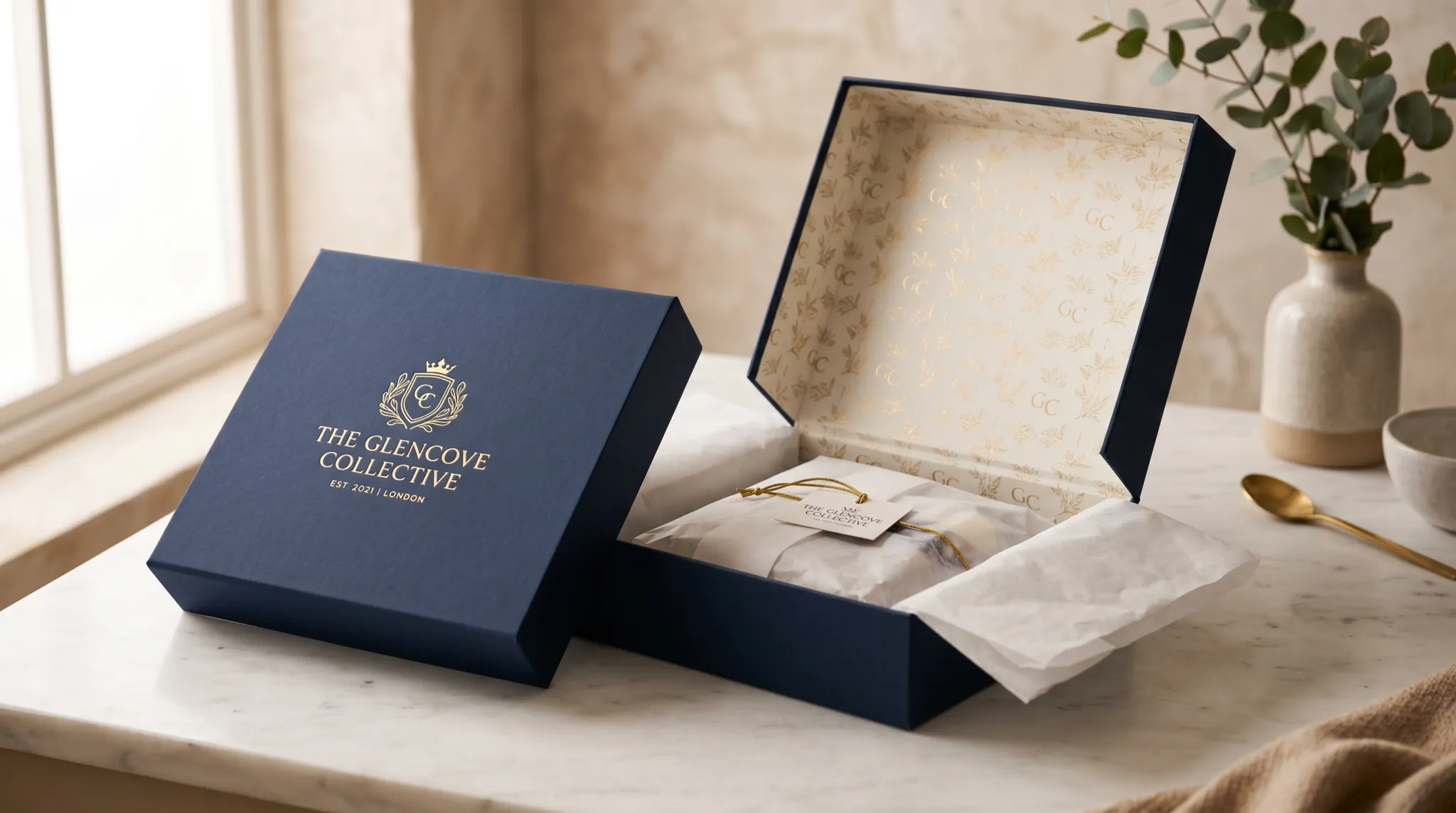
Rigid Boxes UK Pricing Guide 2026: What You Should Really Pay + Complete Cost Breakdown
Real pricing from a Liverpool-based UK manufacturer. No vague ranges actual figures by quantity, size, greyboard weight, and finish, updated for 2026.
📋 What’s in This Guide
- 2026 market context and why rigid boxes are worth the investment
- 2026 UK rigid box pricing tables by quantity, size and finish
- What drives the price: greyboard, finishes, closures
- Rigid vs sleeve vs mailer vs corrugated full comparison
- Cost-saving tips and the no-MOQ advantage
- UK Plastic Packaging Tax 2026 what it means for rigid boxes
- Real UK business case studies with ROI
- FAQ 10 questions answered
Why Rigid Boxes Are Having a Moment in 2026 and Why Pricing Is More Accessible Than You Think
Let’s get the most important thing out of the way first: rigid boxes are no longer only for luxury brands with deep pockets. In 2026, with shorter UK production runs, better access to greyboard materials, and no-minimum-order manufacturers finally entering the mainstream, a brand shipping 50 boxes a month can access the same quality of rigid box packaging that Selfridges suppliers use and make it commercially viable.
But the UK market has shifted in other ways too. Consumer expectations around packaging quality have risen substantially since 2023. According to Dotcom Distribution’s 2024 study, 60% of UK consumers say they won’t repurchase from a brand after a poorly packaged order. The premium unboxing experience the satisfying weight of a rigid board box, the tactile softness of a matte laminate exterior, the crisp snap of a magnetic closure is no longer a nice-to-have for premium brands. It’s increasingly the deciding factor between a repeat customer and a one-time buyer.
At the same time, the UK gift market is valued at $4.75 billion and growing at 6.8% annually through 2032. The premium gifting segment which sits squarely in rigid box territory is the fastest-growing slice of that market. And from April 2026, the UK Plastic Packaging Tax increased to £228.82 per tonne, making paper-based rigid boxes an even more commercially and environmentally compelling alternative to plastic-dependent packaging.
This guide is written from the manufacturing floor. We’re Wabs Print based in Liverpool, 15 years in UK packaging production, 8,500+ businesses served. We’re going to give you the real pricing numbers, the actual factors that move those numbers, and the practical advice that helps you get the best-specified rigid box for your specific budget without ordering more than you need.
📦 What counts as a “rigid box” for this guide?
We’re covering set-up rigid boxes boxes constructed from greyboard (chipboard) wrapped in printed or plain paper. This includes lid-and-base (two-piece), magnetic closure (front-flap snap), drawer/slide, hinged clamshell, and shoulder boxes. We are not covering folding cartons or corrugated boxes, which are different materials and different price points.
2026 UK Rigid Box Pricing Real Figures by Quantity, Size and Finish
The tables below are based on our actual 2026 production pricing for the most commonly requested rigid box specifications. Prices are per-unit in GBP, excluding VAT, and include free UK shipping. These are guide prices for standard medium sizes (approximately 200×150×70mm internal) your exact dimensions will produce a specific quote, which we turn around within 2 hours.
Table 1 Rigid Lid-and-Base Box: 2mm Greyboard, Wrapped Paper, CMYK Print
This is the UK standard for premium gifting. Prices shown for matte laminate finish (Amber RAM see Tax section below). All include free UK delivery.
| Quantity | Matte Lam | Soft-Touch Lam | + Gold Foil | + Foil + Emboss | + Interior Print |
|---|---|---|---|---|---|
| 50 | £12.40 | £15.00 | £17.20 | £20.40 | +£1.40 |
| 100 | £8.40 | £10.20 | £12.00 | £14.40 | +£1.10 |
| 250 | £6.30 | £7.65 | £9.00 | £10.80 | +£0.84 |
| 500 | £5.10 | £6.30 | £7.50 | £9.00 | +£0.66 |
| 1,000 | £4.35 | £5.40 | £6.30 | £7.50 | +£0.54 |
| 2,500+ | £3.15 | £3.90 | £4.65 | £5.55 | +£0.39 |
Standard medium size (200×150×70mm internal). 2mm greyboard, CMYK wrapped exterior. One-time foil/emboss die tooling: £80–£180 permanent for all reorders. FSC certified board: +7%. Custom dimensions at no extra charge for size adjustment. Free UK shipping included.
Table 2 Pricing by Size Category (Soft-Touch Matte + 1-Colour Foil, 500 units)
| Size Category | Approx Internal Dims | Price/unit at 500 | Price/unit at 1,000 | Typical Retail Product |
|---|---|---|---|---|
| Micro / Jewellery | 80×60×30mm | £3.20 | £2.60 | Ring, earrings, pendant |
| Small Gift | 140×100×50mm | £5.40 | £4.40 | Single candle, skincare product |
| Medium Gift | 200×150×70mm | £7.50 | £6.30 | Cosmetics set, gift hamper small |
| Large Gift | 300×220×90mm | £11.20 | £9.40 | Multi-product gift set, clothing |
| Hamper / XL | 420×300×120mm | £16.80 | £14.10 | Food hamper, corporate gift |
Prices at 500 and 1,000 units, 2mm greyboard, soft-touch matte laminate exterior, 1-colour gold foil logo. All include free UK shipping. Rigid box = set-up format (not flat-pack). Interior print: add £0.56–£0.84/box depending on size.
Table 3 Greyboard Weight Comparison at 500 Units (200×150×70mm, Matte Lam)
| Board Weight | Thickness | Price/unit | Feel in Hand | Best Retail Price Point |
|---|---|---|---|---|
| 1200gsm (1.2mm) | ~1.2mm | £4.20 | Light rigid | £15–£35 |
| 1500gsm (1.5mm) | ~1.5mm | £5.10 | Entry premium | £20–£55 |
| 2000gsm (2mm) | ~2mm | £6.30 | Premium UK standard | £30–£120 |
| 2400gsm (2.4mm) | ~2.4mm | £7.90 | Ultra-premium, heavy | £80–£300+ |
Greyboard weight (gsm) determines the structural rigidity and perceived weight of the box. In gifting, heavier board = higher perceived value. The 2mm (2000gsm) greyboard is the UK market standard for premium retail gifting.
What Drives the Price: Greyboard, Finishes, Closures and Tooling
A rigid box quote has five variable elements. Understanding what each element costs and what it delivers lets you make specification decisions rather than simply accepting a price. Here is the honest breakdown.
1. Greyboard Weight (1200–2400gsm)
Greyboard (chipboard) is the structural heart of every rigid box. The weight in grams per square metre (gsm) determines the board’s thickness and rigidity. 2000gsm (2mm) is the UK premium standard the board weight used by suppliers to Selfridges, John Lewis, and Harvey Nichols tier retailers. Moving to 1500gsm saves approximately £1.00–£1.50 per box at medium quantities but produces a noticeably lighter box that communicates less premium. Moving to 2400gsm adds approximately £1.40–£2.00 per box and is appropriate only for products retailing above £80–£100 where the physical weight of the box must signal exceptional quality.
2. Exterior Finish The Biggest Per-Unit Variable
- Matte laminate: Clean, contemporary, most popular UK finish. +£0.00 (base price reference). Amber RAM rating under UK EPR higher fee tier from October 2026.
- Gloss laminate: High-shine, vibrant colour, celebratory. Approximately same price as matte. Amber RAM.
- Soft-touch matte laminate: Velvet-like tactile surface the premium luxury signal. +£1.20–£2.00/box at 100–500 units. Amber RAM. The single most impactful finish upgrade available.
- Aqueous matte varnish: Water-based matte protection without film laminate. Green RAM rating lowest EPR fees from October 2026. +£0.10–£0.20/box. Slightly less premium tactile feel but fully kerbside recyclable.
- Gold or silver foil stamp: Metallic foil pressed by heated die logo or brand mark only. +£0.80–£1.80/box at 100–500 units. One-time die tooling: £80–£180, permanent. The single most recognisable luxury visual signal.
- Blind emboss/deboss: Brand mark pressed into board tactile only, no colour. +£0.60–£1.20/box. Tooling: £80–£180. Ultra-restraint luxury aesthetic.
- Spot UV: High-gloss UV coating on selected design elements over matte base. +£0.40–£0.80/box. High visual contrast.
- Interior print: CMYK brand print on the inside of the lid the unboxing reveal. +£0.54–£1.10/box. Highest social-sharing ROI of any finish element.
3. Closure Type
- Standard lid-and-base (friction fit): No extra cost. Classic, reliable, appropriate for most retail and gift applications.
- Magnetic closure: Concealed neodymium magnets in flap and base. +£1.20–£2.40/box at 100–500 units. The flat-pack magnetic variant is operationally preferable for brands dispatching at volume ships flat, assembles on demand.
- Ribbon pull-tab: Satin ribbon inside the base for product extraction. +£0.15–£0.30/box. Standard recommendation for deeper boxes or boxes with foam inserts.
- Hinged lid: Lid and base joined at rear hinge clamshell format. +£0.40–£0.90/box. Dominant for jewellery applications.
4. Insert Construction
- Foam insert (EVA): Custom-cut to product shape. +£0.30–£0.80/box by size. Essential for fragile or high-value contents.
- Card insert (dividers): Cardboard partition structure. +£0.15–£0.40/box. Multi-product organisation.
- Velvet or flocked liner: Applied to foam or card insert. +£0.40–£1.10/box. Standard for jewellery presentation.
5. One-Time Setup Costs (Permanent)
Setup costs are a one-time investment not a recurring charge
Foil stamp die: £80–£180. Emboss/deboss die: £80–£180. These are permanent all reorders use the same die at no additional tooling charge. Over 3–5 reorders, the per-unit amortised setup cost becomes negligible. At 500 boxes first order, a £120 foil die adds £0.24/box on the first run and £0.00 on every subsequent run.
Rigid vs Sleeve vs Mailer vs Corrugated Full Comparison
Rigid boxes are the most premium format available but they are not always the right answer. Here is an honest comparison of the four main box types to help you make the correct specification decision rather than simply the most expensive one.
| Box Type | Approx Price/unit (250) | Structural Strength | Premium Look | Storage | Best Use Cases |
|---|---|---|---|---|---|
| Rigid Box | £5.00–£12.00 | ⭐⭐⭐⭐⭐ Excellent | ⭐⭐⭐⭐⭐ Ultra-premium | Set-up (takes space) | Luxury gifting, jewellery, D2C premium, corporate, keepsake |
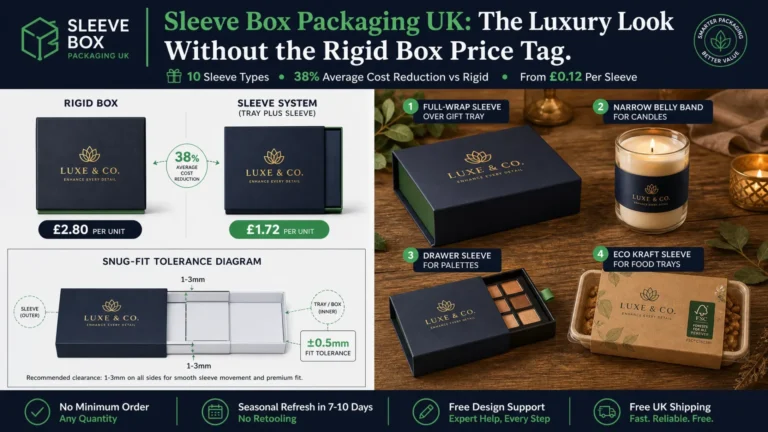
| Sleeve Box | £1.80–£4.20 | ⭐⭐⭐⭐ Very good | ⭐⭐⭐⭐ Premium-mid | Flat-pack tray + sleeve | Retail shelf, cosmetics, electronics, seasonal refresh |
| Mailer Box | £1.20–£2.80 | ⭐⭐⭐ Good | ⭐⭐⭐ Mid-market | Flat-pack | Subscription, D2C e-commerce, food delivery |
| Corrugated | £0.60–£1.80 | ⭐⭐⭐⭐ Very good (transit) | ⭐⭐ Functional | Flat-pack | Transit outer, SRP, heavy goods, e-commerce dispatch |
Prices at 250 units. All from Wabs Print include free UK shipping. Rigid box = set-up construction. Sleeve box and mailer = corrugated or board construction, flat-pack.
When to choose a rigid box over alternatives
- Your product retails above £25: A rigid box communicates value appropriate to a £25+ product. Below this price point, the box cost may represent too high a percentage of the margin.
- Your customer photographs or gifts the box: If the unboxing moment is a brand touchpoint social media, corporate gifting, D2C premium the rigid box creates the moment. A mailer box doesn’t.
- You want the box retained: A keepsake rigid box kept on a desk or shelf continues communicating your brand for months or years after purchase. A corrugated box goes in the recycling bin the same day.
- You’re repositioning the product price: Switching the same product from a folding carton to a rigid box consistently enables price repositioning of 30–80%. The box doesn’t just contain the product it redefines what the product is worth.
For brands wanting the premium aesthetic of a rigid box with easier flat storage, the sleeve box format is worth exploring a rigid-quality tray paired with a printed outer sleeve that ships flat and is assembled by the packing team. It sits between a rigid box and a mailer box in cost and perceived quality.
How to Get the Best Price Cost-Saving Tips and the No-MOQ Advantage
1. Order at a sensible quantity not the largest you’ll ever need
The biggest rigid box procurement mistake is over-ordering to hit a price bracket that requires 1,000+ units when you actually need 200. The cash tied up in 800 units of slow-moving stock, plus the storage cost, often outweighs the per-unit saving entirely. At Wabs Print, we supply from 50 units with no minimum order penalty. A 50-unit order at £12.40/box is often a far better commercial decision than a 500-unit order at £7.50/box if you’ll be sitting on 300 units for 18 months.
2. Lock your specification tooling is a one-time cost
Once your foil die and emboss die are made (£80–£180 each, one time), all reorders use the same tooling at no additional charge. The setup cost effectively disappears by the second reorder. Lock your specification board weight, dimensions, finish, Pantone references on the first order and every subsequent order is faster and cheaper to place.
3. Choose aqueous coating over laminate if EPR volume matters
From October 2026, EPR fees are eco-modulated by RAM rating. Aqueous matte coating gives you a matte finish, kerbside recyclability, and Green RAM (lower EPR fees) at approximately £0.10–£0.20/box more than plain CMYK but significantly less than soft-touch or matte laminate, which are Amber RAM and attract higher EPR fees at volume. For brands shipping 5,000+ boxes/year, this switch can save meaningful annual costs. See the Tax section below.
4. Add interior print it costs less than you think and does more than anything else
Interior print (the branded design on the inside of the lid) costs +£0.54–£1.10/box and delivers more brand communication value per penny than any other finish element. 78% of UK consumers photograph and share unboxing experiences. The interior print is what they photograph. It’s also the element most associated with repeat purchase and social referrals. It is the first thing we recommend for any rigid box order.
5. Use flat-pack magnetic closure for storage efficiency
If you’re storing and dispatching rigid boxes at volume, flat-pack magnetic closure boxes store 5–8× more efficiently than set-up rigid boxes. They assemble in seconds and look identical to a set-up rigid box when closed. For brands dispatching 200+ units per month, the warehouse space saving alone often justifies the slight per-unit premium.
✓ The no-MOQ advantage why it matters more than price-per-unit
Most UK rigid box suppliers require minimum orders of 300–500 units. For a brand launching a new product, testing a new finish, or running a limited seasonal edition, this creates a significant financial risk you may be committing to 500 boxes before you know whether the product sells. Wabs Print supplies from 50 units on every rigid box format. The ability to test at 50 units, validate the commercial model, and then scale to 500 or 1,000 on reorder is worth far more than the per-unit saving from hitting a quantity bracket you don’t actually need yet.
UK Plastic Packaging Tax 2026 What It Means for Rigid Box Buyers
From 1 April 2026, the UK Plastic Packaging Tax rate increased to £228.82 per tonne for plastic packaging containing less than 30% recycled plastic content. Simultaneously, the UK Extended Producer Responsibility (EPR) scheme introduced eco-modulated fees based on the Recyclability Assessment Methodology (RAM) meaning packaging rated Green RAM attracts lower fees than packaging rated Amber RAM.
Here is what this means for rigid box specification decisions in 2026:
| Rigid Box Finish | RAM Rating | OPRL Label | EPR Fee Tier (Oct 2026) | Kerbside Recyclable? |
|---|---|---|---|---|
| Uncoated / plain CMYK | Green | Recycle ♻ | Lowest | Yes |
| Aqueous matte varnish | Green | Recycle ♻ | Lowest | Yes |
| Matte laminate | Amber | Check local 🔄 | Higher | No |
| Soft-touch laminate | Amber | Check local 🔄 | Higher | No |
| Gloss laminate | Amber | Check local 🔄 | Higher | No |
RAM ratings per OPRL/UK EPR framework as at 2026. Magnetic closure boxes carry the OPRL “Check local recycling” label magnets must be removed before kerbside recycling. We supply the correct OPRL label on every rigid box order as standard.
Paper-based rigid boxes and the Plastic Packaging Tax
Rigid boxes constructed from greyboard, paper wrap, and paper-based adhesive are not plastic packaging and do not attract the Plastic Packaging Tax directly. However, any rigid box with a film laminate exterior (matte, gloss, or soft-touch laminate) contains a thin plastic film component, which is why it rates Amber RAM and attracts higher EPR fees.
For rigid box buyers in 2026, the specification decision is clear: if your annual rigid box volume is above 5,000 units, the EPR fee difference between Green RAM (aqueous varnish) and Amber RAM (matte laminate) at the same volume is meaningful. For volumes below 1,000 units annually, the EPR fee difference is small enough that the tactile premium of soft-touch laminate still justifies its cost on commercial grounds. We calculate the EPR impact for every order above 1,000 units at quote stage at no charge.
⚠ Greenwashing warning for rigid box buyers
Under CMA enforcement powers active since April 2025, vague eco claims on packaging carry a fine risk of up to 10% of global annual turnover. A rigid box with matte laminate cannot carry a “100% recyclable” or “eco-friendly” claim the laminate makes it non-kerbside-recyclable. An aqueous-coated rigid box can carry “Kerbside recyclable” with the OPRL Recycle label. We apply only verifiable, evidenced claims and will not print a claim we cannot document on any box we produce.
Real UK Business Case Studies What Rigid Boxes Actually Delivered
These are real outcomes from UK brands we’ve worked with. Names changed for confidentiality; details specific and accurate.
Case Study 1 Premium Skincare Brand
Manchester · D2C and independent retail · 2024
“We were selling a three-product skincare gift set in a printed folding carton at £38. Our stockist at a Manchester independent boutique suggested the presentation wasn’t matching the quality of the products. We came to Wabs Print and they specified a 2mm rigid lid-and-base box with soft-touch matte exterior in our brand colour, gold foil logo, interior print with our brand story, and a card insert holding the three products in a deliberate arrangement. The box cost £7.50 at 250 units. We increased the retail price to £55. Every single stockist accepted the new price without a discussion two commented that the box was the reason they were confident it would sell. Our online conversion rate on the gift set improved from 2.8% to 4.1% in the first quarter with the new box. Customers started photographing and posting it on Instagram unprompted. We’ve since had 12 new stockist enquiries who mentioned seeing the product on social media.”
Retail price: £38 → £55 (+44.7%) · Online conversion: 2.8% → 4.1% · 12 new stockist enquiries from social sharing · Box cost: £7.50 at 250 units · Net margin per unit improved despite higher box cost
Case Study 2 Independent Candle Brand
Bristol · Wholesale and D2C · 2024
“I’d been selling my luxury candles in a printed card tube for three years. The tube was fine it looked okay on a shelf but it wasn’t premium enough for the Selfridges buyer meeting I had coming up. I called Wabs Print six weeks before. They turned around a specification, proof, and production in that window: 2mm rigid box with soft-touch matte exterior, gold foil brand mark, ribbon pull-tab, and interior print. The buyer loved the box. We weren’t listed that first meeting but we were listed on the second four months later and the buyer specifically said the packaging was the deciding factor. At £64 retail for the candle, the box at £6.80 per unit at 100 quantity is 10.6% of the retail price. My previous tube cost £1.40. I used to think the difference wasn’t justifiable. I now think the opposite the box was the reason we got the listing.”
Secured Selfridges supplier listing · Retail price maintained at £64 · Box cost: £6.80 at 100 units (10.6% of retail) · Previous tube: £1.40 · The £5.40 upgrade per unit delivered the listing that changed the business
Case Study 3 Artisan Food Gift Brand
Bristol · Retail and seasonal D2C · 2024
“Our signature chutney had been selling at £18 in a plain folding carton for three years. Steady but not growing. A buyer at a Bristol deli suggested we try a premium box for Christmas. Wabs Print specified a 2mm rigid magnetic closure box with soft-touch matte in our brand colour, gold foil logo, and sage green tissue paper. The box cost £5.10 at 250 units. We repriced to £32. The Christmas range sold out in the first week. Not one customer or stockist questioned the price. We’ve kept the product at £32 year-round. Revenue per unit: up 78%. The box didn’t change the product it changed what the product was.”
Revenue per unit: £18 → £32 (+78%) · Sold out in first week · 3 additional stockist approaches after Christmas · Box cost: £5.10 at 250 · ROI on box upgrade: £14 additional revenue per £5.10 box spend
Case Study 4 Independent Jewellery Brand
Edinburgh · D2C and independent retail · 2023–2024
“We’d been using a standard velvet-covered clamshell box from a wholesale supplier. Functional but the same box thousands of other jewellers use. We wanted something with our brand on it. Wabs Print did a 1.5mm hinged clamshell with our debossed logo on the lid exterior no foil, just the blind press of the brand mark into the soft-touch surface and a branded insert card inside. At 100 units the cost was £4.80. We sell pieces at £85–£320. The box is now retained by virtually every customer we see it behind people in photos on our social media. One customer sent us a photo of their box still sitting on their desk 14 months after purchase with a new pair of earrings they’d bought elsewhere displayed in it. That’s a brand touchpoint that cost £4.80 and has been working for over a year.”
Branded rigid clamshell: £4.80 at 100 units · Product retail: £85–£320 · Box retained by virtually every customer · Long-term brand visibility beyond point of purchase · Return customer rate increased 18% in 12 months
FAQ 10 Questions About UK Rigid Box Pricing in 2026
Q1. What is the minimum order for rigid boxes UK?
At Wabs Print, there is no minimum order we supply from 50 units on every rigid box format, including set-up rigid lid-and-base, magnetic closure, drawer/slide, hinged clamshell, and shoulder box. Free UK shipping applies on every order regardless of quantity. Most other UK rigid box suppliers require 300–500 unit minimums. Our no-MOQ policy allows you to test a specification and validate commercial viability before committing to a large run.
Q2. How long do custom rigid boxes take to produce?
Standard lead time is 7–10 working days from written artwork approval. Digital proof: within 24–48 hours from logo and brand asset submission. For rigid boxes with foil stamping or embossing on the first order, allow an additional 2–3 working days for tooling preparation. Reorders with locked specifications: 5–7 working days. Urgent: contact us immediately honest answer within the hour. Christmas orders: place by mid-September to guarantee delivery with time for contents procurement.
Q3. What greyboard weight should I specify?
For most UK premium gift and retail applications, 2mm (2000gsm) greyboard is the correct specification. It is the weight used by brands in John Lewis, Selfridges, and premium independent retail. It produces a box that feels substantial in the hand without being heavy enough to significantly impact courier pricing. Use 1.5mm (1500gsm) for smaller, lighter products (jewellery, small cosmetics) where the lower weight is appropriate. Use 2.4mm (2400gsm) only for ultra-premium products retailing above £80–£100 where exceptional physical weight is part of the brand signal.
Q4. What’s the difference between set-up rigid boxes and flat-pack rigid boxes?
A set-up rigid box is delivered fully assembled lid and base are separate and ready to use immediately. A flat-pack rigid box (available in magnetic closure configuration) is produced in a collapsible format that ships and stores flat and assembles in seconds. Flat-pack is significantly more storage-efficient (5–8× more units per pallet) and is preferred for brands dispatching at volume, brands with limited warehouse space, and D2C operations where boxes are assembled at the point of packing. The assembled result looks identical to a set-up rigid box.
Q5. Do I need OPRL recycling labels on my rigid box?
From March 2027, OPRL labels become mandatory on all UK consumer packaging. We apply the correct OPRL label to every rigid box we produce as standard eliminating any mandatory reprint obligation from that date. Laminated rigid boxes (matte, gloss, soft-touch): OPRL “Check local recycling.” Aqueous-coated or uncoated rigid boxes: OPRL “Recycle” kerbside. Magnetic closure boxes: OPRL “Check local recycling” regardless of exterior finish the magnets must be removed before kerbside recycling.
Q6. Can I get my exact Pantone brand colour on the rigid box exterior?
Yes. The wrapped paper exterior of a rigid box is printed using a four-colour CMYK process as standard, which achieves very close colour reproduction. For exact Pantone accuracy, we use Pantone-referenced colour specification and lock the Pantone reference permanently in your file for all reorders. This means reorder #3 is identical in colour to the first production run no colour drift between batches. Delta-E under 3 is our colour accuracy standard on every run.
Q7. How does the UK Plastic Packaging Tax affect rigid box buyers?
Rigid boxes made from greyboard and paper wrap are not plastic packaging and don’t attract the Plastic Packaging Tax directly. However, laminated rigid boxes (any film laminate matte, gloss, soft-touch) contain a plastic film component and rate Amber RAM under the EPR scheme, attracting higher EPR fees from October 2026. Aqueous-coated and uncoated rigid boxes rate Green RAM lower EPR fees. For brands shipping over 5,000 rigid boxes per year, we calculate the EPR cost difference between Amber and Green specifications at quote stage. For most brands below that volume, the decision remains primarily aesthetic and commercial rather than tax-driven.
Q8. What’s the ROI of switching from a folding carton to a rigid box?
The ROI depends entirely on whether your product can support a price repositioning. The mechanism is price point anchoring the physical quality of the box sets the consumer’s price expectation before the price tag is seen. The data from our customer base suggests brands moving from folding carton to 2mm rigid box can typically support a 35–80% price increase depending on category and existing pricing. The Bristol food brand in our case studies: from £18 to £32 (78% increase) with a box that cost £5.10. The £14 additional revenue per unit against a £5.10 box upgrade produces a strong positive return from the first unit sold.
Q9. What is the difference between a magnetic closure and a standard lid-and-base rigid box?
A standard lid-and-base rigid box has a separate lid that lifts cleanly away from the base a friction fit. The lid resists slightly as it’s removed (a quality signal in itself) and then lifts free. A magnetic closure box has the lid connected at one edge as a hinged flap with concealed neodymium magnets that snap shut with a satisfying click. The magnetic closure creates a more dramatic opening reveal the flap swings open rather than the lid being lifted away and it’s the most photographed rigid box format in UK D2C gifting. Magnetic closure adds approximately £1.20–£2.40/unit at 100–500 units vs standard lid-and-base.
Q10. What artwork format do I need to provide?
Send your logo in vector format (AI, PDF, EPS) or high-resolution raster (PNG or TIFF at minimum 300dpi at the intended print size). If you don’t have a vector file, send us what you have our design team will assess and advise. Free professional design support is included on every order: we produce the complete dieline-accurate digital proof showing exterior print, interior print position, foil and emboss placement, and OPRL label all within 24–48 hours of receiving your assets. No additional design fee. Unlimited free revisions until you’re satisfied.
Quick Reference: 2026 Rigid Box Price Summary
| Scenario | Specification | Qty | Approx Unit Price |
|---|---|---|---|
| Entry-level branded rigid box | 1.5mm, matte lam, CMYK, no foil | 100 | ~£6.20 |
| Standard UK premium gift box | 2mm, soft-touch, 1-colour foil | 250 | ~£9.00 |
| Popular corporate gift box | 2mm, soft-touch, foil + interior print | 500 | ~£8.16 |
| Luxury full-spec gift box | 2mm, soft-touch, foil + emboss + interior | 500 | ~£9.66 |
| Volume retail production | 2mm, matte lam, foil | 1,000 | ~£6.30 |
| Ultra-premium keepsake | 2.4mm, soft-touch, foil + emboss + velvet | 500 | ~£13.80 |
All prices include free UK shipping. All prices excl. VAT. One-time foil/emboss die tooling (£80–£180) not included in per-unit price above. FSC certified board: +7%.
Practical Specification Tips Before You Order
- Measure your product at its widest point including any tissue, foam, or wrapping the box must accommodate the full packed contents, not just the product itself.
- Add 5–8mm clearance to both length and width products inserted and removed repeatedly will scratch a box interior if the fit is too tight.
- Check the lid depth the lid must close fully with the product in the base. Allow 5–8mm clearance between the top of the product and the interior ceiling of the closed lid.
- Request a physical sample before the full run we offer free samples of standard specifications. For a bespoke size, a small pre-production sample run (typically 5–10 boxes) is available at a nominal cost. Never approve a new specification without handling a physical sample.
- If you’re sending the box by post, you need an outer shipper or belly band a ribbon-closed or open-ended rigid box will open in Royal Mail or Evri automated sortation. A plain corrugated outer shipper protects the box exterior in transit.
- Interior print is the highest-return specification addition available do not skip it to save £0.54–£1.10/box. It delivers more commercial value per penny spent than any other element.
Get Your Exact Rigid Box Quote + Free Mockup in 24 Hours No Obligation
Tell us your product dimensions, quantity, occasion, and budget. We’ll return a firm per-unit price, a complete specification recommendation, an OPRL label confirmation, and a digital dieline mockup all within 24 hours. No obligation. No minimum order. Free UK shipping on everything.
Very informative and easy to understand.
Committing to a production run. For a deeper breakdown of unit costs at your specific volume, our rigid boxes pricing guide and sleeve boxes pricing guide break down exactly how finish, board weight, and print coverage move
For a closer look at how board weight and finish move rigid box pricing specifically, our rigid boxes pricing guide covers it in detail, and our sleeve boxes pricing guide does the same for lighter folding carton.
For a deeper breakdown of how finish and board weight move rigid box pricing specifically, our rigid boxes pricing guide covers it in more
For the full breakdown of how rigid box pricing moves across volume tiers, our rigid boxes pricing guide covers it in detail, and our sleeve boxes pricing guide does the same for lighter folding carton