

No Minimum Order Packaging UK: How Small Businesses Compete on Branding

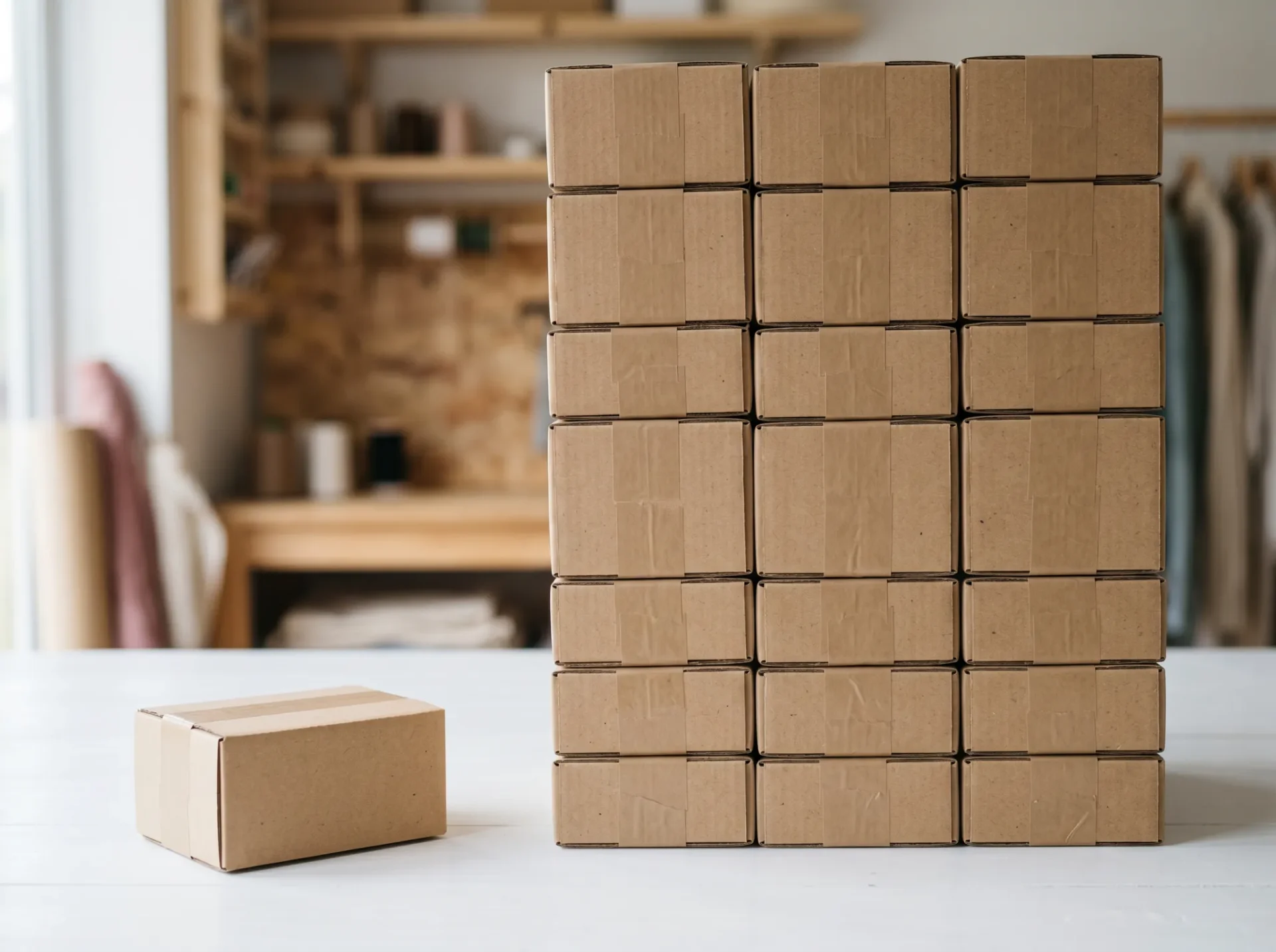
You’ve found a packaging supplier with exactly the finish and material you want, then you reach the quote stage and discover their minimum order is 500 units, sometimes 1,000. For a product you have not launched yet, that is not a quote, it is a demand for capital you do not have a reason to commit yet.
This guide comes from the team at Wabs Print, a UK-wide packaging supplier that has produced custom boxes for UK businesses since 2008. We supply 8,500 plus brands, and a meaningful share of that growth has come specifically from removing the one barrier that keeps small businesses out of premium packaging entirely: the forced minimum order. Wabs Print supplies custom packaging with no minimum order to businesses across the UK, from independent brands in Belfast and Nottingham to growing operations in Edinburgh and London. By the end of this guide you will know why minimum orders exist at most suppliers, what it actually costs to test small instead of committing to a large run, and how to use that flexibility strategically rather than just gratefully. If you want a price now, no minimum order custom packaging UK will get you a quote within 24 hours.
What Does No Minimum Order Actually Mean?
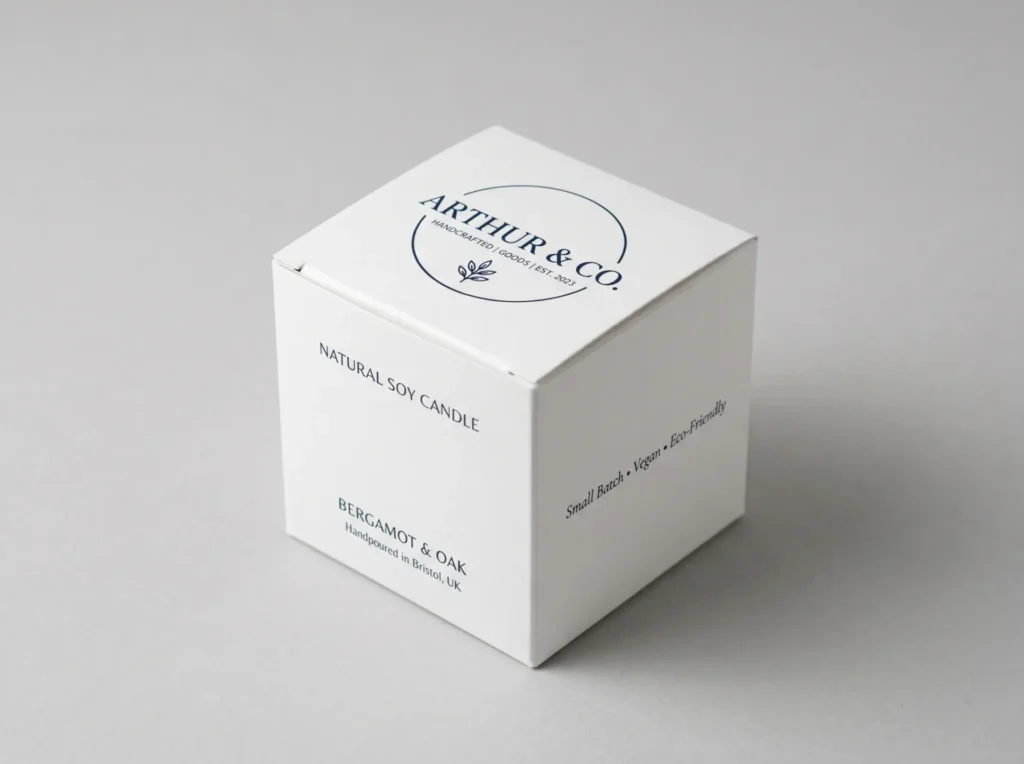
No minimum order means exactly what it says: you can order one box, or a hundred thousand, and get the same print quality and the same level of attention either way. Many UK packaging manufacturers set minimums somewhere between 500 and 5,000 units, a threshold that has nothing to do with your business and everything to do with how their production line is set up to run efficiently.
That threshold exists because of setup cost, not because smaller orders are technically difficult. A print run carries the same plate setup, colour calibration, and die line preparation whether it produces 10 boxes or 10,000, so a supplier built around large efficient runs simply declines to quote below the volume where that setup cost stops looking disproportionate to them. We have built our pricing to absorb that setup cost at low volumes instead of refusing the order, which is the entire difference.
What No Minimum Order Does Not Mean
It is worth being clear about what this policy is not, since the phrase gets used loosely elsewhere in the industry. It does not mean a single box costs the same per unit as a 5,000-unit order, the per-unit price still drops as volume rises, exactly as it would with any supplier. It does not mean instant production regardless of order size, a one-box order still goes through the same artwork approval and standard turnaround as a larger one, it simply is not refused outright. And it does not mean every finish and customisation option is available at any volume without cost implications, a complex die-cut shape or a five-colour Pantone match still carries setup cost that shows up more heavily in a small order’s per-unit price than in a large one’s.
What it does mean, specifically, is that the order will be accepted and produced at all, at a clearly calculated price, rather than declined below a threshold someone else decided was worth their production line’s time.
Why Most Suppliers Set a Minimum, and What It Actually Costs to Skip It
The honest financial logic behind a forced minimum order is straightforward once you see it from the supplier’s side, and understanding it helps explain why testing small genuinely costs more per unit, just not more in total capital risk.
| Approach | Units Ordered | Approximate Total Spend, Rigid Box Example | Capital Risk |
|---|---|---|---|
| Forced minimum order elsewhere | 500 units, a typical industry minimum | 500 x £8.00 to £11.50 per unit, roughly £4,000 to £5,750 | High, fully committed before any demand is proven |
| Wabs Print test batch | 40 units | 40 x £14.00 to £17.00 per unit, roughly £560 to £680 | Low, validates demand with a small fraction of the capital |
| Wabs Print scale-up reorder | 300 units, after validation | 300 x £8.00 to £11.50 per unit, roughly £2,400 to £3,450 | Moderate, but informed by real sales data rather than a guess |
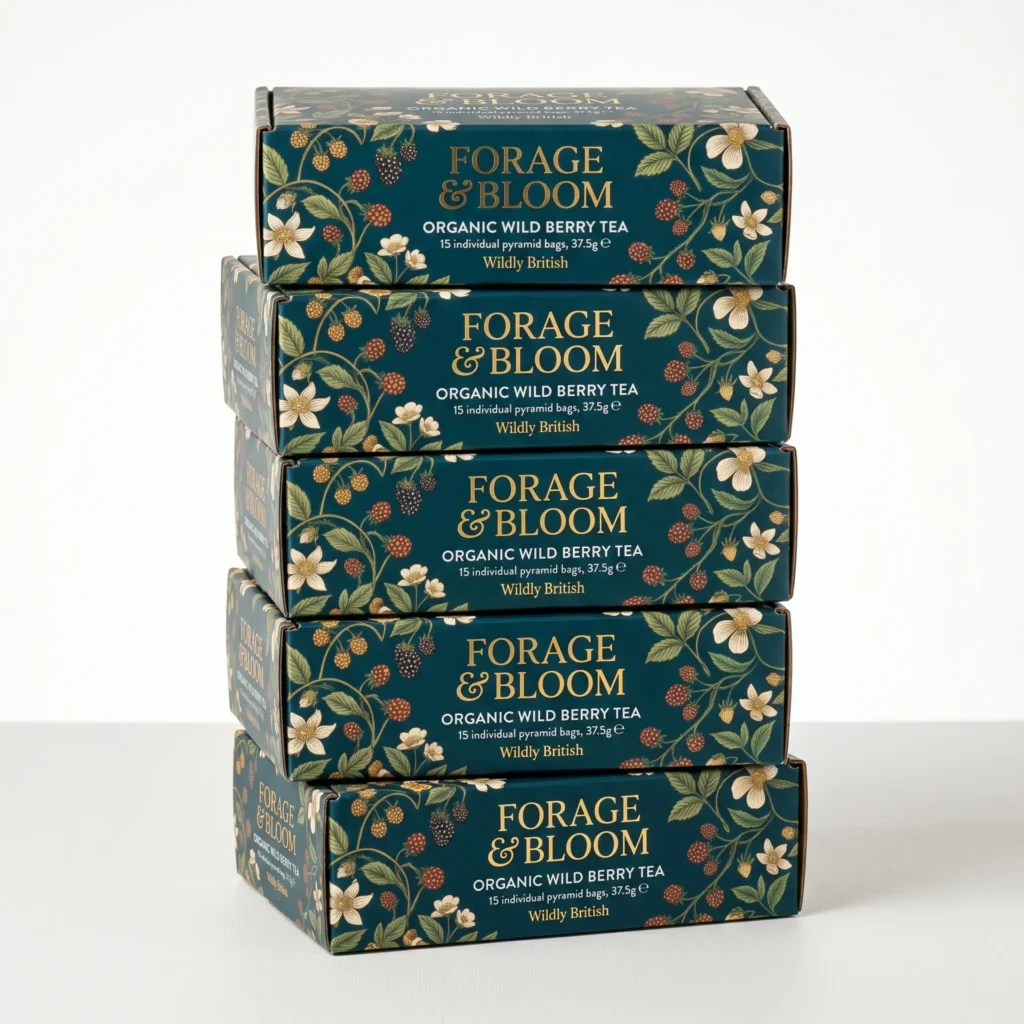
The per-unit cost of the small test batch is noticeably higher than the forced minimum order would have been per unit. That is the honest trade-off. What you get in exchange is the ability to spend a few hundred pounds finding out whether a product sells before deciding whether to spend several thousand on a volume that assumes it will. For the full breakdown of how rigid box pricing moves across volume tiers, our rigid boxes pricing guide covers it in detail, and our sleeve boxes pricing guide does the same for lighter folding carton structures.
How Small Businesses Actually Use This to Compete
The real competitive advantage is not just access to packaging, larger competitors already have that, it is access to packaging without the capital commitment that locks small businesses out of testing new ideas at the same pace as bigger brands with more cash to absorb risk.
Maple Row Stationery, a small gift and stationery brand based in Nottingham, wanted to test a seasonal rigid gift box range ahead of one Christmas period but had been quoted a 500-unit minimum by two other suppliers, more capital than they were willing to risk on an unproven seasonal line. They had a strong instinct that the range would sell, based on customer requests at their existing market stall, but no hard data to back a five-figure stock commitment. We supplied an initial test batch of 40 units. The range sold out within nine days at their market stall and online shop combined, and they reordered at 300 units for the remainder of the season.
Because they had not committed to 500 units upfront, the capital that would have sat in unsold stock under a forced minimum order was instead available to fund that reorder once demand was actually confirmed. The founder later told us the higher per-unit cost on the 40-unit test batch, compared with what a 500-unit minimum order would have cost per unit, came to roughly £140 more in total than if they had somehow known in advance the range would sell and ordered the larger volume from the start. Against the alternative of either risking £2,500 or more upfront on an unproven product, or not testing the range at all, they considered that £140 a small price for the certainty.
This same logic shows up across the businesses we covered in our cosmetic packaging for indie brands guide, where the budget framework for a first production run depends entirely on being able to order a realistic small volume rather than whatever a supplier’s minimum happens to be, and in our subscription box packaging guide, where a pilot cohort of subscribers only makes financial sense if the print run can match that small number exactly.
Satisfying a Retailer’s Trial Order Without Overcommitting
A specific version of this problem comes up when a retailer agrees to stock a product on a trial basis, often for a quantity far smaller than any packaging supplier’s standard minimum. A buyer offering shelf space for 25 units across two stores is a real opportunity, but it is one that a 500-unit packaging minimum makes almost impossible to act on cleanly, since the brand would need to absorb 475 units of stock with no confirmed retail home for them.
Being able to order exactly the 25 to 50 units a trial stocking arrangement actually calls for, rather than rounding up to whatever a supplier’s minimum demands, means a small brand can say yes to a trial opportunity on its own terms rather than turning it down or quietly overproducing and hoping the rest sells elsewhere.
How to Choose: Using No Minimum Order Strategically
Having no minimum order removes a barrier, but it does not remove the need for a sensible ordering strategy. Work through these before placing your first order.
- Order for the test you are actually running, not a round number. If your test market, pop-up, or pilot cohort genuinely needs 40 units, order 40, not 100 because it feels like a tidier figure.
- Accept that your per-unit cost will be higher at low volume, and budget for that honestly. The point of testing small is capital efficiency overall, not the lowest possible unit price.
- Have a reorder threshold in mind before you sell out. Maple Row Stationery’s nine-day sell-through gave them a clear signal to reorder quickly. Decide in advance what signal would trigger your own reorder, rather than figuring it out under pressure once stock runs low.
- Use the savings on capital for something that actually reduces risk further. Whether that is a slightly better marketing push for the test batch or simply keeping more cash in reserve, the money not tied up in a forced minimum order is worth deploying deliberately rather than just feeling relieved it was not spent.
- Resist the temptation to keep ordering small forever once demand is confirmed. No minimum order is a tool for removing risk while you do not have data, not a reason to stay at inefficient low volumes once you do. Maple Row Stationery’s move from 40 to 300 units is the right pattern, test small, then scale once the signal is real, rather than treating every order as a fresh test indefinitely.
Our custom packaging boxes hub covers the full range of box types this applies to, since the no minimum order policy is not specific to one product category, it runs across everything we make.
No Minimum Order Packaging UK: Delivery Across the Country
Wherever your business is based, the lead time and pricing structure stay the same regardless of how small your first order is. A small business ordering a 40-unit test batch from Belfast works to the same standard turnaround from artwork approval as a larger operation in London ordering thousands.
We get a steady run of enquiries from independent brands in Edinburgh asking specifically whether small orders get pushed behind larger ones in the production schedule. They do not. Whether you are testing a new product with 30 units from a small unit in Newcastle upon Tyne or scaling an established line from a warehouse in Nottingham, your order goes through the same process, and the no minimum order policy applies regardless of where in the UK you are based.
This matters more than it might first seem for businesses outside the South East specifically, since some of the capital constraints that make a forced minimum order risky are felt more acutely in regions where access to business finance and investment is less concentrated than it is around London. A flexible ordering policy that does not require five-figure upfront stock commitments is, in a small but real sense, a more level playing field for a brand starting out in Belfast or Glasgow than for one already plugged into London’s funding networks.
Compliance Still Applies at Any Volume
Compliance requirements do not shrink alongside order size. A 30-unit test batch needs the same correct OPRL recycling label, visible on a front-facing panel before opening, as a 30,000-unit production run, and we include that as part of your design layout at no extra cost regardless of volume. Wabs Print is FSC accredited, which applies equally whether your order is a single test box or a full production run, so your packaging can carry the FSC mark on request at any scale.
This is worth flagging specifically for the retail trial scenario above, since a buyer evaluating a small trial stocking order will judge the packaging on the shelf exactly as they would a full rollout. A 25-unit trial run with a missing or incorrectly placed recycling label looks just as unprofessional to that buyer as the same mistake would on a 5,000-unit order, so there is no reason to treat compliance as something to tidy up later once volume grows. This reflects packaging compliance guidance as of June 2026. Always verify current requirements at gov.uk before making compliance decisions for your business.
FAQ
What does no minimum order actually mean for custom packaging?
It means you can order a single box or several thousand and receive the same print quality, the same finish options, and the same level of attention either way. Most UK packaging manufacturers set a minimum somewhere between 500 and 5,000 units based on their own production efficiency, not on any technical requirement of the printing process itself.
Why do other suppliers have minimum order quantities if it is not technically necessary?
A print run carries the same setup cost, plate preparation, colour calibration, and die line cutting, whether it produces 10 units or 10,000. Suppliers built around large, efficient runs set a minimum at the volume where that setup cost stops looking proportionate to them. It is a business model choice, not a limitation of the equipment itself.
I only need 30 units to test a new product, is that actually worth ordering?
Yes, and it is exactly the situation no minimum order is built for. Expect a higher per-unit cost than you would get at volume, but a fraction of the total capital that a forced 500-unit minimum elsewhere would require. That trade-off is usually worth it when you are validating demand rather than fulfilling confirmed orders.
Do you deliver no minimum order packaging to Belfast and Cardiff?
Yes. Wabs Print delivers custom packaging with no minimum order to businesses across the UK, including Belfast, Cardiff, Edinburgh, Glasgow, Newcastle upon Tyne, Nottingham, and London. Standard delivery is included in your quote, and express turnaround options are available at checkout if you need your order faster than standard lead times.
Will my small order be deprioritised behind bigger customers?
No. Small batch orders run through the same production schedule as larger ones, with the same quality standards. The only practical difference between a 30-unit order and a 3,000-unit order is the per-unit price, which reflects how setup cost is spread, not how the order is prioritised.
How quickly can I reorder once I know my test batch is selling?
Reorder lead time is the same as your original order, there is no separate queue for repeat customers. The more useful question is having a clear sales signal in mind before you sell out, so you can place the reorder promptly rather than losing momentum while stock runs out.
Does no minimum order apply to every type of packaging you offer?
Yes. It applies across rigid boxes, sleeve boxes, mailer boxes, subscription box print runs, and every other product in our range. The pricing curve differs by product and volume, but the policy itself, that you can order any quantity, is consistent across everything we make.
Making the Call
No minimum order packaging UK is not just a convenience, it is a genuine capital efficiency tool for small businesses deciding whether a new product is worth scaling. Order for the test you are actually running, accept a higher per-unit cost at low volume as the price of that flexibility, and have a clear reorder signal in mind before you sell out.
Whether you are a small business in Nottingham, a retailer in Edinburgh, or a brand testing a new line from Belfast, Wabs Print delivers custom packaging across the UK with no minimum order and standard turnaround regardless of volume. If you are ready to get a price, no minimum order custom packaging UK and you will have a quote within 24 hours.
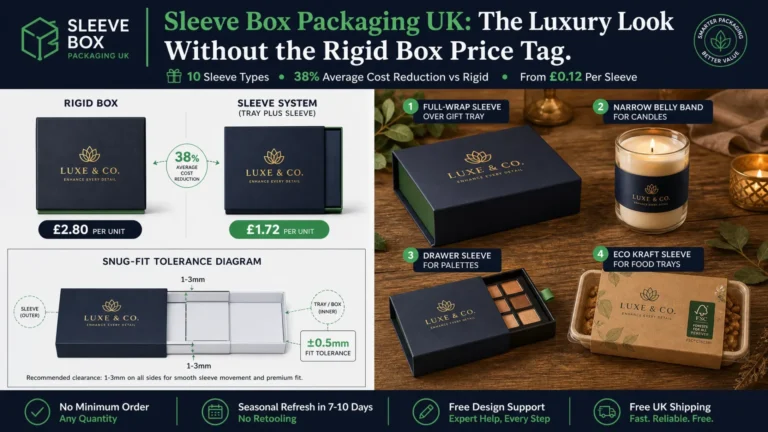
When your brand is built on sustainability credentials that a plastic blister undermines. Our no minimum order packaging guide covers the wider decision framework for early-stage brands choosing packaging formats
At the volume that would justify that investment. Our cosmetic packaging for indie brands guide and no minimum order packaging guide both cover this budget-conscious first-order approach in more depth, including a real example of a