
Perfume Box Packaging UK: Luxury Design, Bottle Protection and Compliance Guide 2026

You have a glass perfume bottle that costs real money to replace if it arrives cracked, a brand that needs to feel expensive on a shelf or in a photo, and a packaging brief that has to satisfy both at once. Most perfume box packaging guides talk about foil stamping and gold lids before they talk about whether the bottle will actually survive a courier van. Get the protection wrong and the prettiest box in the world becomes a refund and a one-star review.
This guide comes from the team at Wabs Print, a UK-wide packaging supplier that has produced custom boxes for UK businesses since 2008. We have made perfume and fragrance packaging for everything from single-bottle indie launches to multi-SKU retail ranges, and the questions are almost always the same: what insert actually protects the bottle, rigid box or folding carton, and how do you keep the unit cost sane below 500 units. Wabs Print supplies custom perfume boxes to fragrance brands across the UK, from independent perfumers in Manchester and Bristol to established beauty retailers in Birmingham, Leeds, and Sheffield. By the end of this guide you will know which insert suits your bottle shape, how rigid and folding carton construction compare on cost, and what compliance points actually apply to fragrance packaging. If you want a price on custom perfume boxes UK, that link will get you a quote within 24 hours once you have a direction.
What Is a Perfume Box?
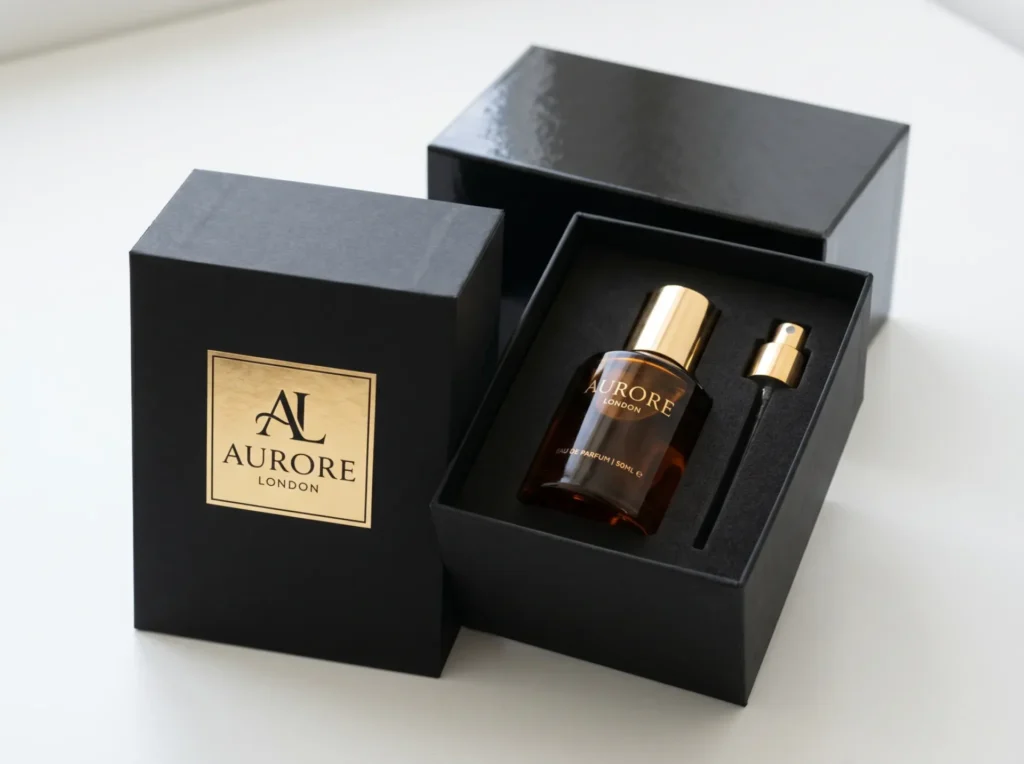
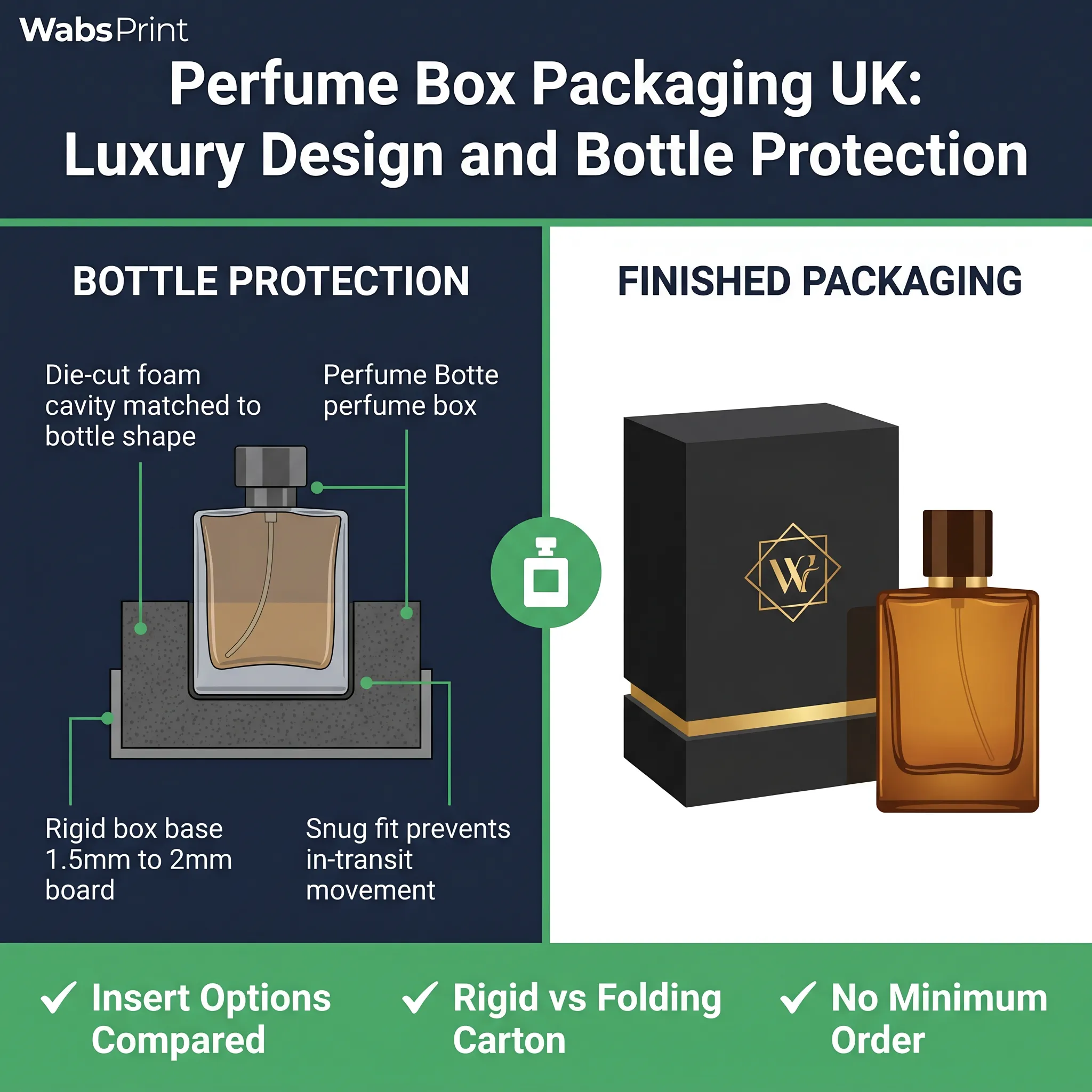
A perfume box is packaging built around two competing needs: keeping a glass bottle intact through handling and shipping, and reinforcing the luxury positioning of the fragrance inside. Most perfume boxes are a two-piece rigid box made from 1.5mm to 2mm board, with a lid that lifts cleanly off a deeper base, holding the bottle in a custom-shaped internal insert.
For lower-cost or higher-volume ranges, a folding carton (sometimes called a tuck-end carton, a simple printed box that is die-cut, folded, and glued flat for shipping) does the same protective job at a fraction of the unit cost, usually paired with a corrugated divider rather than a moulded insert. Both structures need to solve the same problem first: a glass bottle that moves inside its box during transit is a bottle that arrives cracked or, at minimum, scuffed at the shoulder where the cap meets the glass.
One thing most first-time fragrance brands underestimate: the insert matters more than the outer box finish. A beautifully foiled rigid box with a loose-fitting insert will still arrive damaged. We always ask for the bottle’s exact dimensions, including the cap, before quoting the insert, not just the box.
Protecting the Bottle: Insert and Cushioning Options
The insert is the part of perfume packaging doing the actual protective work, and the right choice depends on your bottle’s weight, shape, and your budget per unit. Below are the four options we quote most often for fragrance brands.
| Insert Type | Material | Protection Level | Best For |
|---|---|---|---|
| Die-cut foam | Closed-cell foam, cut to the bottle’s exact silhouette | High, absorbs impact and prevents movement | Heavy glass bottles, premium single-bottle gift boxes |
| Moulded pulp tray | Recycled fibre, pressed into shape | Good cushioning with strong sustainability credentials | Brands making recyclability or eco claims |
| Corrugated divider | Die-cut corrugated board cells | Structural support, holds bottle in place without cushioning impact directly | Lower-cost runs, multi-bottle sets, gift sets |
| Velvet or satin lined tray | Fabric-wrapped rigid insert | Moderate cushioning, strong tactile and visual luxury cue | Ultra-premium single-bottle launches, gifting occasions |
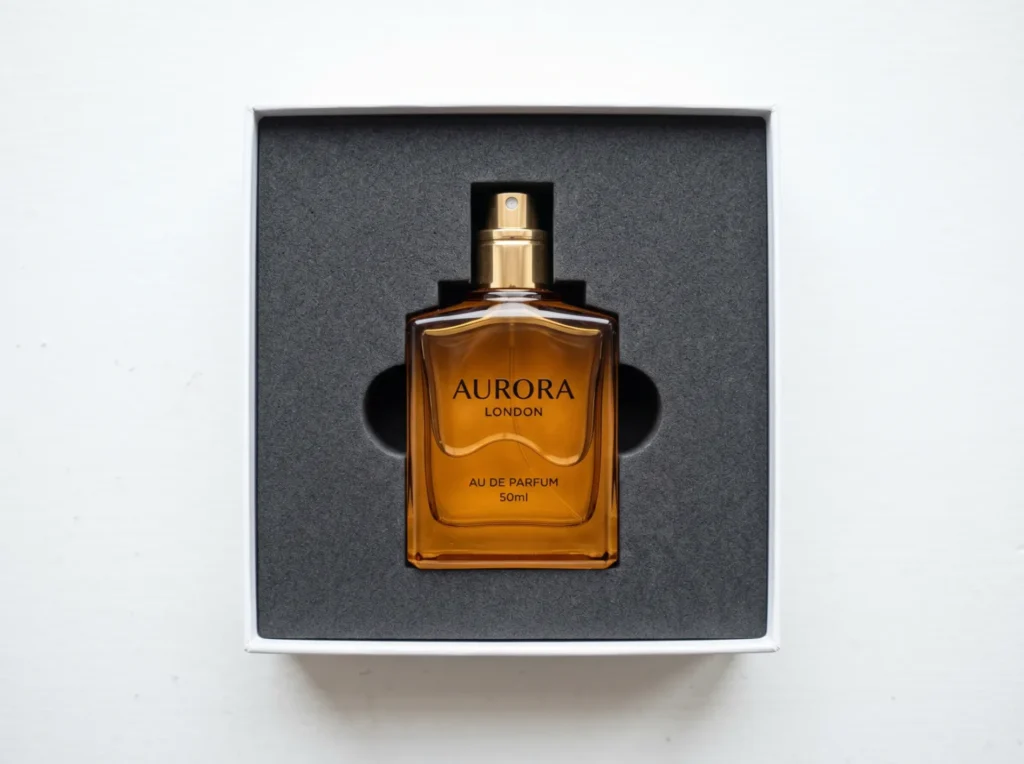
Foam and moulded pulp protect the bottle itself best because they cushion as well as restrain movement. A corrugated divider restrains movement but offers very little cushioning, so it works best with sturdier bottles or as a secondary divider inside an outer shipper rather than the only protection a fragile bottle gets. Velvet linings are chosen for feel and photography first, protection second, so we usually pair them with a firm-fitting cavity rather than relying on the fabric alone.
Rigid Box or Folding Carton: What Actually Decides It
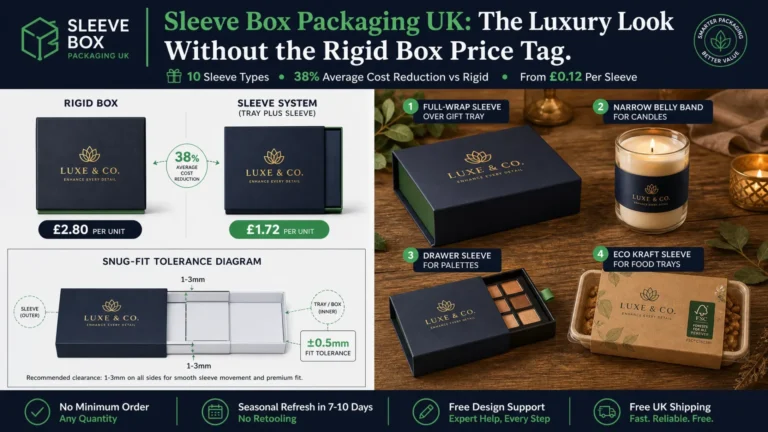
Here is the honest answer: at low volumes, rigid boxes cost roughly two to three times more per unit than a folding carton of similar size, the same gap we see across most rigid versus sleeve-style comparisons in cosmetic and gift packaging. The real question is whether your retail price and your bottle’s fragility justify that gap.
A fragrance retailing under £30 rarely supports the cost of a rigid box once you add a foam insert. A folding carton with a corrugated divider, finished with a single foil-stamped logo, gives a clean, professional result at a unit cost that protects your margin. Above £45 retail, particularly for gifting-led fragrance lines, the rigid box’s weight and the satisfying resistance of the lid lifting off become part of what the customer is paying for, and that perceived value tends to support the higher cost.
An indie fragrance brand in Birmingham came to us last year with their first 150-unit run. Their bottle was a heavier 100ml glass design retailing at £42, and they were nervous about breakage after a previous supplier’s flimsy carton had resulted in three cracked bottles out of an early batch. We recommended a rigid box at 1.5mm board with a die-cut foam insert sized precisely to their bottle and cap. The unit cost came in higher than a folding carton, but it solved the breakage problem entirely, and the box itself became a selling point in their product photography. They have since scaled to 600 units with the same insert design, only adjusting the outer print for seasonal limited editions.
If your fragrance overlaps with a wider skincare or cosmetics range, much of this same cost and structure logic applies across your packaging decisions, and our cosmetic boxes guide covers the broader category in more depth if you are packaging a full beauty line rather than fragrance alone.
Luxury Finishes That Matter for Fragrance Packaging
Finish does more work on a perfume box than on almost any other product category we print, because the box is frequently photographed, gifted, and kept long after the fragrance itself is gone. Soft-touch laminate, a matte film that gives board a velvety texture under the fingers, is the most requested finish for fragrance boxes because it photographs cleanly and feels expensive without shouting about it.
Foil stamping on a logo or a single accent line adds a metallic shine that catches light in product photography, which matters disproportionately for a category sold heavily through Instagram and TikTok unboxing content. Embossing, a raised or recessed texture pressed into the board, works well combined with a matte finish for a brand mark that you feel before you see clearly. Our luxury packaging finishes guide breaks down the cost and application differences between these finishes in more detail than fits here, including which combinations work and which fight each other visually.
Cost and Pricing Guide
Pricing depends on board weight, insert type, and finish complexity, so the ranges below assume a standard single-bottle perfume box with one finish upgrade and a die-cut foam or corrugated insert included.
Rigid Perfume Box Pricing by Volume
| Volume | Approximate Price Per Unit | Notes |
|---|---|---|
| 1 to 49 units | £8.50 to £17.00 | Foam insert tooling cost has the biggest impact at this volume |
| 50 to 199 units | £7.20 to £14.80 | Most common range for first production runs from indie fragrance brands |
| 200 to 499 units | £6.40 to £13.50 | Insert tooling cost is spread further across units |
| 500 to 999 units | £4.80 to £12.60 | Typical reorder volume once a fragrance has proven demand |
| 1,000 plus units | £4.20 to £12.00 | Pricing depends heavily on insert complexity and finish at this scale |
Folding Carton Perfume Box Pricing by Volume
| Volume | Approximate Price Per Unit | Notes |
|---|---|---|
| 1 to 49 units | £2.00 to £5.20 | Good entry point for testing a new fragrance launch |
| 50 to 199 units | £1.30 to £5.00 | Most common range for indie and mass-market fragrance brands |
| 200 to 499 units | £0.90 to £4.40 | Corrugated divider cost still affects this range |
| 500 to 999 units | £0.65 to £3.05 | Typical for brands moving into wider retail listings |
| 1,000 plus units | £0.45 to £2.75 | Pricing depends on board weight and divider complexity |
We will be straight about why minimum orders exist at all: a print run carries the same setup cost whether you order 10 boxes or 10,000. We have built our pricing to absorb that cost at low volumes, which is why a single box is a genuine option if that is what you need, though most fragrance brands start somewhere between 50 and 150 units for a first run. For a deeper breakdown of how finish and board weight move rigid box pricing specifically, our rigid boxes pricing guide covers it in more detail.
[IMAGE 3: Place after pricing guide] PROMPT: “Lifestyle photograph of an open black rigid perfume box with gold foil logo resting on a marble vanity surface, amber glass perfume bottle standing beside the open box, soft folded linen cloth and a small dried flower stem placed nearby, warm natural window light from the side, lifestyle in-use context, commercial product photography, sharp focus throughout, no text overlay, no watermarks, no AI artefacts, photorealistic, 4 to 3 ratio, as if photographed by a professional packaging photographer for a UK fragrance brand” FILENAME: wabs-print-perfume-box-marble-lifestyle.jpg ALT TEXT: “Rigid perfume box gold foil lifestyle shot fragrance packaging custom perfume boxes UK | Wabs Print”
How to Choose: A Decision Framework for Your Fragrance Launch
Work through these in order before requesting a quote, and you will land on the right structure faster than comparing finished samples side by side.
- How heavy and fragile is your bottle? Heavier glass over 100ml or unusually shaped bottles need a die-cut foam or moulded pulp insert regardless of box type, since a corrugated divider alone often is not enough cushioning for weight beyond that range.
- What is your retail price? Under £30, a folding carton with a corrugated divider usually protects your margin without sacrificing much shelf presence. Above £45, particularly for gifting occasions, a rigid box tends to earn back its cost through perceived value.
- How are you shipping to the customer? If your fragrance ships direct to consumer inside a separate outer shipper or mailer, the perfume box itself is getting secondary protection from that outer packaging, which can support choosing a lighter folding carton even at a higher price point. Our e-commerce unboxing guide covers how to think about that outer layer and the unboxing sequence as a whole.
- Are you testing or scaling? A first run under 150 units carries less financial risk with a folding carton. Once you have confirmed demand, the unit cost gap on rigid boxes narrows enough at 500 units and above to make the switch financially sensible if your price point supports it.
If you are still unsure after working through those four questions, request a sample of both the rigid box with foam insert and the folding carton with corrugated divider before committing to a production run. Seeing how each holds your actual bottle tells you more than any spec sheet.
Perfume Box Delivery Across the UK
Wherever your fragrance brand is based, lead time and pricing stay the same. A perfumer working from a small studio in Sheffield works to the same 7 to 10 working day turnaround from artwork approval as a larger fragrance house in Leeds, and the per-unit pricing tables above do not shift based on location.
We get a steady run of enquiries from independent fragrance brands in Manchester asking specifically about insert tooling costs, usually because they are weighing up a custom foam cavity against a simpler corrugated divider for their first production run. The answer is the same one we give everywhere in the UK: tooling cost is a one-time charge that gets absorbed more easily the larger your run, and there is no minimum order regardless. Brands based in Bristol and Birmingham tend to ask more about foil and embossing combinations, since gifting and premium positioning are common in those markets, but turnaround and pricing structure are identical across the country.
Compliance and Sustainable Packaging for Fragrance
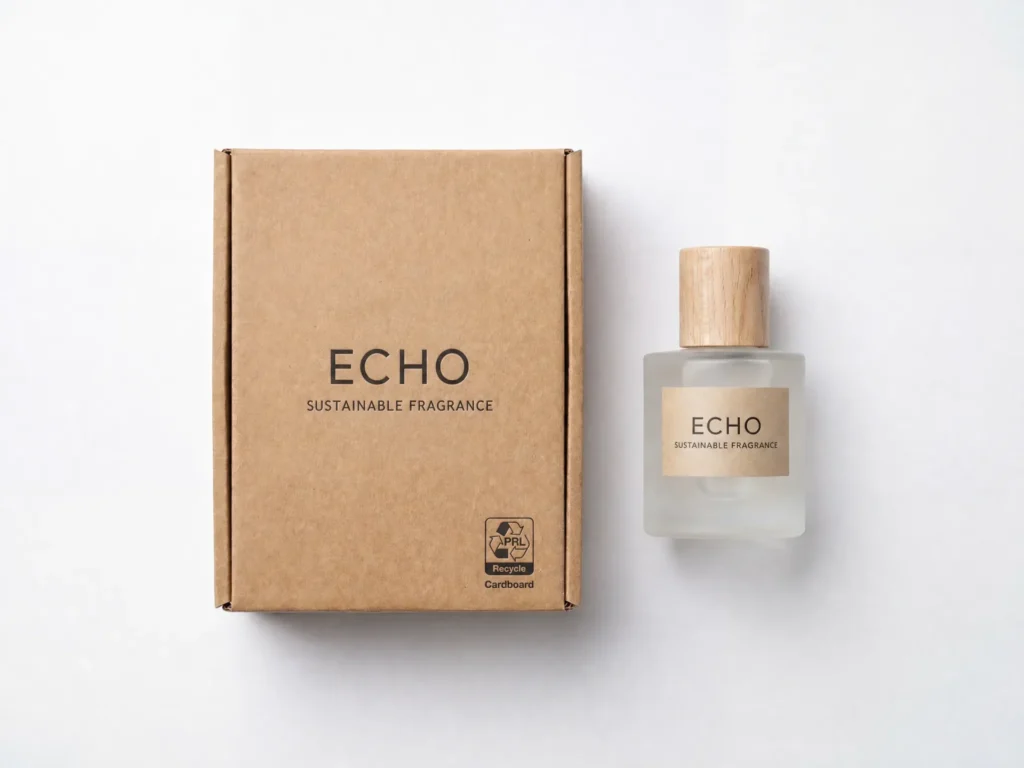
If your perfume box is made from card and board, in line with most fragrance packaging, it should carry a clear recycling label visible before the customer opens the box. Under OPRL guidance, this label belongs on a front-facing panel rather than tucked inside the lid, since the goal is to inform the customer at the point of disposal rather than after they have already unboxed the product. Our OPRL labels guide covers exactly how to apply this to your specific packaging mix if your fragrance box includes multiple materials such as a plastic outer wrap alongside the card box.
Many fragrance brands use a cellophane or shrink wrap layer around the outer box, both for tamper evidence and shelf presentation. Where that wrap is plastic, the Plastic Packaging Tax may apply depending on the recycled content of that specific component, separate from the card box itself. Our Plastic Packaging Tax UK guide explains how the tax applies component by component rather than to the packaging as a whole, which matters if your card box and plastic wrap come from different suppliers. Rates and thresholds are reviewed periodically, so always confirm the current position at gov.uk before finalising your cost of goods.
Worth noting separately from packaging compliance: if your fragrance is classified as a flammable liquid under UK regulations, additional hazard labelling requirements may apply to the product itself rather than the box design. That sits outside packaging and is worth checking directly with your regulatory advisor or gov.uk rather than relying on a packaging supplier’s guidance. This reflects packaging compliance guidance as of June 2026. Always verify current requirements at gov.uk before making compliance decisions for your business.
FAQ
What is the best packaging for perfume bottles?
The best packaging matches the insert to the bottle, not just the outer box style. A die-cut foam insert sized to the bottle’s exact shape gives the strongest protection for heavier or fragile glass. The outer structure, rigid box or folding carton, matters less for protection than the insert does, though rigid boxes generally suit higher retail prices and gifting occasions better than folding cartons.
How much does a custom perfume box cost?
A rigid perfume box with a foam insert typically costs £7.20 to £14.80 per unit at 50 to 199 units, dropping to £4.20to £12.00 per unit above 1,000 units. A folding carton with a corrugated divider costs roughly £1.80 to £4.80per unit at the same lower volume, dropping to £0.35to £2.65 per unit at scale. Insert type and finish complexity move both ranges in either direction.
I’m launching a fragrance brand and worried about my bottles breaking in transit, what should I do?
Start with the insert, not the box. A die-cut foam cavity cut to your bottle’s exact dimensions, including the cap, prevents the movement that causes breakage. Request a sample with your actual bottle inside before committing to a production run, and confirm the insert holds the bottle snugly with no rattle when the box is shaken gently.
Do you deliver custom perfume boxes to Manchester and Birmingham?
Yes. Wabs Print delivers custom perfume boxes to businesses across the UK, including Manchester, Birmingham, London, Leeds, Sheffield, and Bristol. Standard delivery is included in your quote, and express turnaround options are available at checkout if you need your order faster than the standard 7 to 10 working days.
What is the minimum order for custom perfume boxes?
There is no minimum order. You can order a single box or several thousand and receive the same print quality either way. Most independent fragrance brands start their first production run between 50 and 150 units, particularly when testing a new scent or insert design, then scale up once the product is confirmed to be selling.
Do I need a recycling label on my perfume box?
Yes, if the box is recyclable card or board, which most are. Under OPRL guidance, the recycling label should sit on a front-facing panel, visible before the box is opened, not inside the lid. We can include the correct label in your design layout at no extra cost, and our OPRL labels guide covers how this applies if your packaging mixes card with a plastic wrap component.
How long does it take to get custom perfume boxes printed?
Standard turnaround is 7 to 10 working days from approved artwork, for both rigid boxes and folding cartons. If you need it faster, tell us at the quote stage rather than after artwork approval, since express options are far easier to arrange before production scheduling begins.
Making the Call
The decision on perfume box packaging comes down to three things you should know before you request a quote: your bottle’s weight and fragility, your retail price, and how much risk you can absorb on a first production run. Get the insert right first, foam or moulded pulp for fragile or heavy bottles, a corrugated divider if cost matters more and the bottle can take it, and the rigid versus folding carton decision becomes a question of budget and positioning rather than protection.
Whether you are a fragrance startup in Sheffield, a retailer in Leeds, or an independent perfumer shipping from London, Wabs Print delivers custom perfume boxes across the UK with no minimum order and the same 7 to 10 working day turnaround regardless of volume. If you are ready to get a price, custom perfume boxes UK and you will have a quote within 24 hours.