
Subscription Box Packaging UK: Design, Retention and Monthly Refresh Guide 2026

Your first box looked great. Now you’re three months in, the novelty has worn off for your subscribers, and you’re wondering whether to redesign the whole thing again or whether that is exactly the kind of cost that quietly kills a subscription business’s margin.
This guide comes from the team at Wabs Print, a UK-wide packaging supplier that has produced custom boxes for UK businesses since 2008. We supply 8,500 plus brands, and subscription businesses bring a specific version of the packaging question that one-off sellers do not: how do you keep a box feeling fresh across dozens of repeat unboxings without reprinting from scratch every single month. Wabs Print supplies custom subscription box packaging to businesses across the UK, from independent boxes in Glasgow and Cardiff to growing operations in Edinburgh and Newcastle upon Tyne. By the end of this guide you will know how to balance branding consistency against monthly variety, what that actually costs, and where the compliance considerations specific to recurring packaging come in. If you want a price now, custom subscription box packaging UK will get you a quote within 24 hours, no minimum order required.
What Is Subscription Box Packaging?
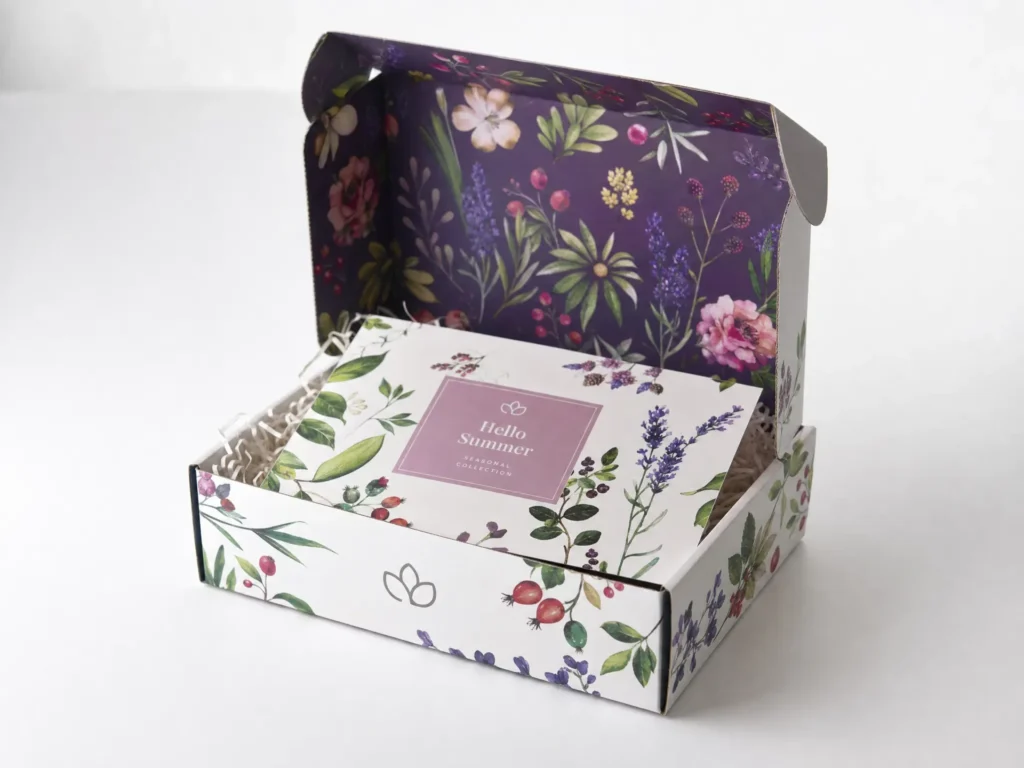
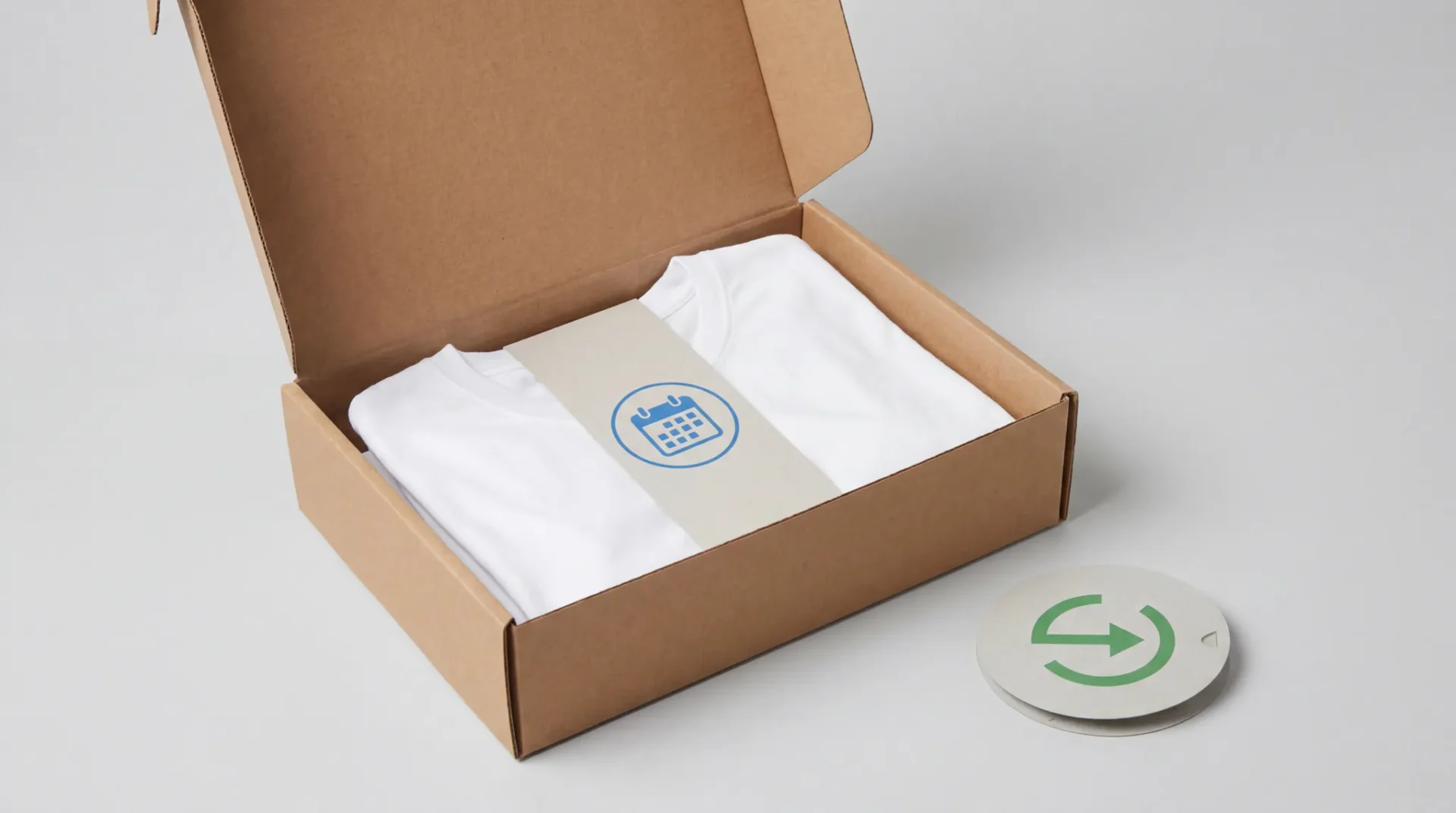
Subscription box packaging is custom packaging built to be ordered and used repeatedly across a recurring delivery cycle, usually monthly, where the box needs to stay consistent enough to be instantly recognisable while still giving subscribers some sense of variety or seasonal refresh each time. Most subscription boxes are built on the same standard mailer box construction covered in our mailer box materials guide, white card with self-locking tabs, rather than a different structure entirely.
The thing that actually distinguishes subscription packaging from a one-off mailer box is not the box itself, it is the print and ordering strategy sitting on top of it. A one-off seller prints one design and reorders it as-is for years. A subscription business has to decide, deliberately, how much of the box stays fixed every month and how much changes, since reprinting the entire box design every cycle gets expensive fast at any meaningful volume.
This matters more for subscription boxes than it might first appear, because the cost of a full redesign does not just hit once, it hits every single cycle for as long as the business runs that approach. A one-off seller absorbs a print setup cost once and amortises it over years of reorders against the same design. A subscription business choosing to fully redesign every month is effectively paying that setup cost twelve times a year, indefinitely, which is the detail that catches a lot of new subscription brands off guard once the bills start arriving.
Designing for Repeat Unboxing Without Going Stale
The honest starting point is that most successful subscription boxes do not redesign the entire box every month, they fix the structural design and vary a smaller, cheaper element instead.
| Refresh Strategy | Cost Impact | Customer Experience | Best For |
|---|---|---|---|
| Full box redesign every cycle | High, new print setup each time | Maximum novelty, but expensive and slower to produce | Premium boxes with high margin per subscriber |
| Fixed box plus rotating insert card or sticker | Low, only the small element changes | Strong sense of variety at a fraction of full redesign cost | Most subscription businesses |
| Fixed box plus seasonal print run, four times a year | Moderate, four setups instead of twelve | Noticeable refresh without monthly cost | Brands wanting some visual change without constant reprinting |
| Same fixed box every cycle, no variation | Lowest, one setup covers a long run | Strongest brand recognition, weakest novelty | Brands where the contents inside change enough on their own |
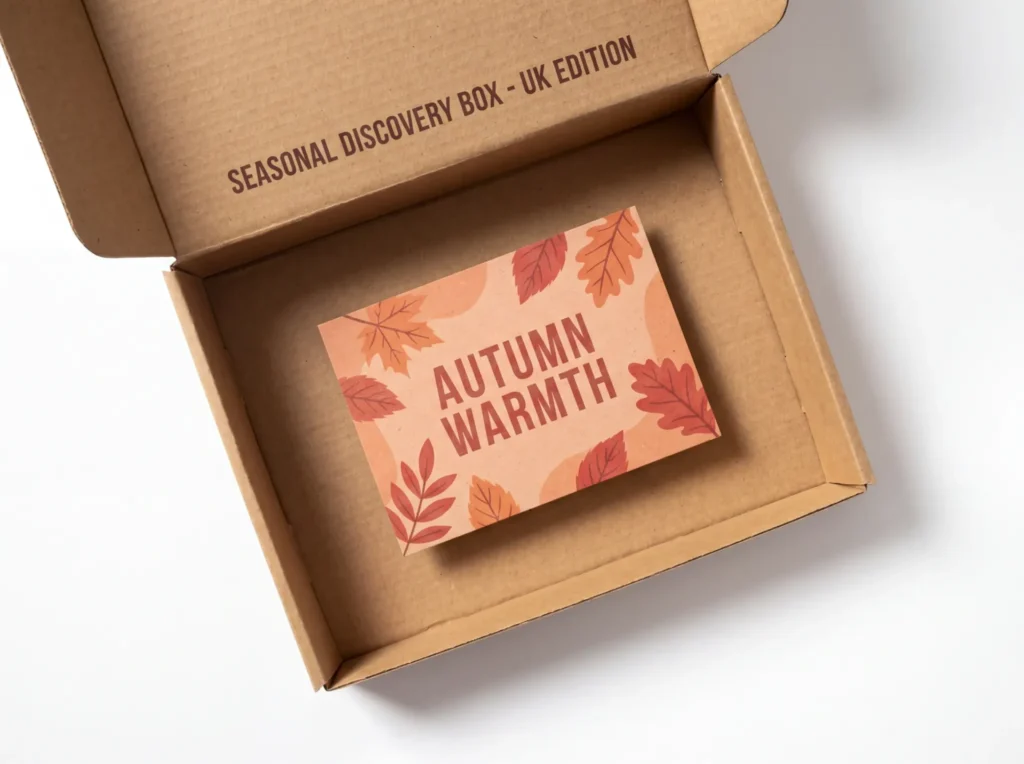
A rotating insert card or sticker gives subscribers the sense that something is different each time without touching the box’s core print run, which is where most of the cost lives. This is the same logic we cover from the branding side in our branded mailer boxes guide, where a printed insert was one of the lower-cost upgrades available, it earns its place here specifically because it is the cheapest lever for monthly variety.
Branding Consistency vs Monthly Variety
Brand recognition and monthly novelty pull in opposite directions, and getting the balance wrong in either direction causes a specific, predictable problem. Too consistent, with zero variation cycle to cycle, and subscribers start to feel like nothing is being made for them specifically, just shipped at them on a schedule. Too varied, with a different box every month, and the brand never builds the instant shelf or doorstep recognition that makes a subscriber feel part of something ongoing.
Hearth & Hide, a dog treat subscription box based in Cardiff, came to us after noticing their cancellation rate climbing around month four or five, a point where several subscribers mentioned in cancellation surveys that the box “felt the same every time.” They had kept an identical box design, with identical print, for over a year to control cost. We moved them to a fixed box structure with a rotating seasonal insert card, four versions printed across the year rather than twelve, each tied to a different theme. They tracked cancellations specifically flagging the box as a factor and saw that figure drop from roughly 18 percent of cancellations citing it to under 6 percent over the following two quarters, while their print cost rose only modestly since the core box itself never changed, only the much cheaper insert did.
Cost and Pricing Guide
Since most subscription boxes use the same standard mailer box construction, pricing follows the same volume curve covered in our materials guide, with the insert or rotating element costing extra on top.
| Volume Per Print Cycle | Approximate Price Per Unit | Notes |
|---|---|---|
| 1 to 49 units | £1.00 to £1.40 | Rare for an established subscription box, more common for a pilot cohort |
| 50 to 199 units | £0.65 to £0.85 | Common for a newly launched subscription box building its first cohort |
| 200 to 499 units | £0.52 to £0.65 | Typical for a growing subscription box with a few hundred active subscribers |
| 500 to 999 units | £0.40 to £0.52 | Established subscription box with a stable subscriber base |
| 1,000 plus units | £0.28 to £0.35 | Larger subscription operations, pricing drops further at higher volumes |
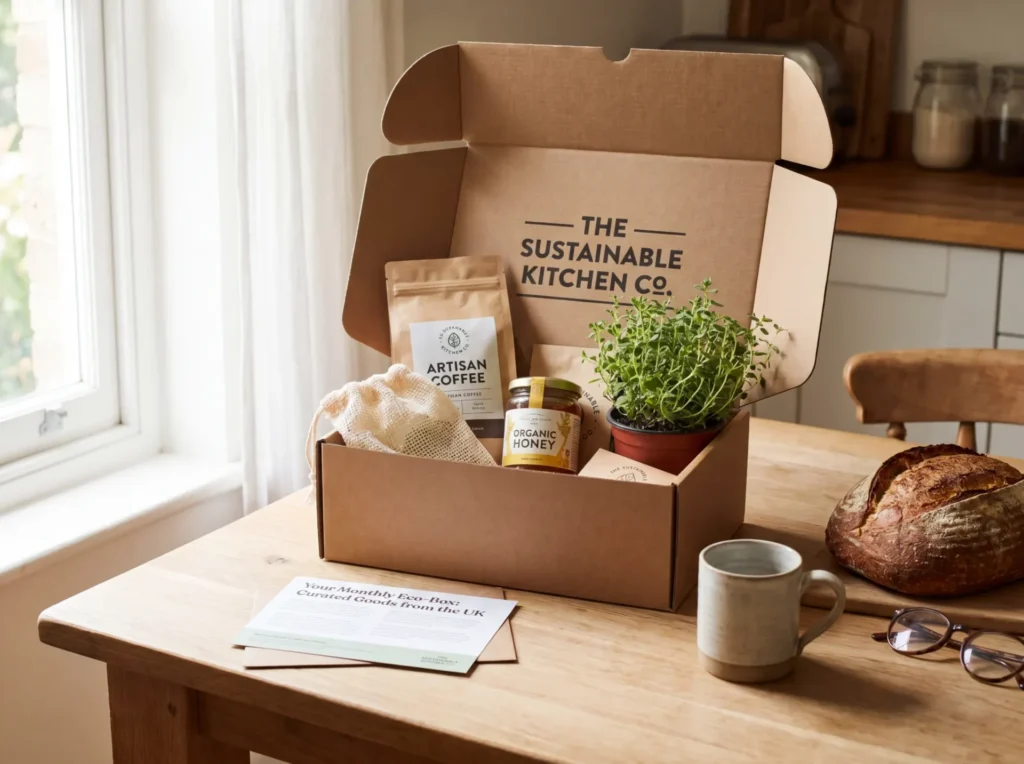
A rotating insert card, printed separately from the fixed box, typically adds £0.08 to £0.30 per unit depending on complexity, the same range covered in our branded mailer boxes guide. There is a genuine cash flow and storage decision sitting alongside the per-unit pricing here: ordering three or four months of your fixed box design in one larger print run usually brings the per-unit cost down compared with ordering monthly, but it means storing more flat-packed stock and committing capital further in advance. Smaller, more frequent print runs cost slightly more per unit but free up storage space and let you adjust your subscriber count estimate more often. Neither is wrong, it depends on your storage capacity and how confident you are in your subscriber numbers a few months out.
We will be straight about why minimum orders exist at all: a print run carries the same setup cost whether you order 10 boxes or 10,000. There is no minimum order, so a pilot cohort of even a few dozen subscribers is a genuine option while you validate the format before committing to a larger print run.
How to Choose: A Decision Framework for Your Subscription
Work through these before committing to a print and refresh strategy.
- Decide how long one box design should last before it needs to feel fresh again. Most subscription businesses find somewhere between three and six months is the point where a fixed design starts to feel repetitive to long-term subscribers, which is roughly what Hearth & Hide’s experience reflected.
- Put your variety budget into the cheapest element, not the box itself. A rotating insert or sticker costs a fraction of a full box reprint and delivers most of the same sense of change for subscribers.
- Match your print run size to your subscriber confidence, not just the lowest unit price. A larger batch print run lowers your per-unit cost, but only makes sense if you are reasonably confident in your subscriber count holding steady or growing across that period.
- Think about unboxing as a sequence, not just the box. Our e-commerce unboxing guide covers how the box, insert, and packing materials work together as a whole experience, which matters more for a repeat subscriber than for a one-off buyer.
- Ask subscribers directly before assuming you know what feels stale. Hearth & Hide found their answer in cancellation survey responses, not in guesswork. A short survey question at the cancellation step, or even a casual prompt in an existing email newsletter, often surfaces exactly which element of the experience needs attention before you spend on a fix for a problem that may not be the one your subscribers actually have.
If you want to understand the broader case for and against spending more on print and finish at all, our branded mailer boxes guide covers that argument in more depth, including a coffee subscription case study facing a similar retention question from a different angle.
Subscription Box Packaging UK: Delivery Across the Country
Wherever your subscription business is based, the lead time, pricing, and free UK shipping policy stay the same regardless of cycle volume. A subscription box packed from a unit in Belfast works to the same 7 to 10 working day turnaround from artwork approval as a larger operation in Edinburgh, and delivery is free to any UK address regardless of order size.
We get a steady run of enquiries from subscription businesses in Newcastle upon Tyne asking specifically how far in advance to place a seasonal print run relative to their billing date. We generally recommend ordering at least three to four weeks ahead of when stock needs to be ready for packing, building in buffer beyond the standard 7 to 10 working day turnaround for artwork revisions and approval. Whether you are packing boxes from a small unit in Glasgow or a larger operation in Cardiff, turnaround and pricing are identical, and there is no minimum order regardless of where in the UK you are based.
Compliance and Sustainability for Subscription Box Packaging
Recurring packaging volume brings a compliance consideration that one-off sellers often do not face at the same scale: UK Extended Producer Responsibility rules place reporting and fee obligations on businesses once they place packaging on the market above certain thresholds, and a subscription business generating the same packaging volume every single month can reach those thresholds faster than its order count alone might suggest. This applies to the business placing the packaging on the market, which in most cases is the subscription brand itself rather than its packaging supplier. Our EPR Packaging UK guide covers what this involves in more detail, since the exact thresholds and obligations are worth checking directly rather than estimating.
Under OPRL guidance, a clear recycling label should sit on a front-facing panel of your box, visible before opening, which we can include in your design layout at no extra cost. If your subscription box contains food or drink items, our sustainable food packaging guide covers material choices and labelling considerations specific to that category. This reflects packaging compliance guidance as of June 2026. Always verify current requirements at gov.uk before making compliance decisions for your business.
FAQ
How often should I redesign my subscription box?
Most subscription businesses find that a fixed box design lasts well for three to six months before subscribers start finding it repetitive. Rather than redesigning the full box on that schedule, a cheaper rotating insert card or sticker, changed every cycle or seasonally, usually delivers most of the same sense of freshness at a fraction of the cost of a full reprint.
What is the cheapest way to add variety to a subscription box without reprinting it?
A rotating insert card or sticker is the standard answer. It costs roughly £0.08 to £0.30 per unit depending on complexity, against the much higher cost of reprinting the entire box. Keep the outer box fixed for brand recognition and let the insert carry the seasonal or monthly change.
My subscribers say the box feels the same every time, what should I do?
This is a common signal that your refresh strategy needs a cheap, low-risk fix before a full redesign. Introducing a rotating insert card tied to a theme or season, without touching the box itself, addresses the complaint directly for most businesses without the cost of reprinting the core design.
Do you deliver subscription box packaging to Edinburgh and Newcastle upon Tyne?
Yes. Wabs Print delivers custom subscription box packaging to businesses across the UK, including Edinburgh, Newcastle upon Tyne, Glasgow, Cardiff, Belfast, and London, with free UK shipping on every order regardless of size. Express turnaround options are available at checkout if you need your order faster than the standard 7 to 10 working days.
What is the minimum order for subscription box packaging?
There is no minimum order. A pilot cohort of a few dozen subscribers is a genuine option while you test your format and refresh strategy, before committing to a larger print run once you are confident in your subscriber numbers.
Should I order my subscription box print run monthly or in bulk for several months at once?
Bulk ordering for three to four months at once typically brings your per-unit cost down, but means storing more flat-packed stock and committing capital further ahead. Monthly ordering costs slightly more per unit but keeps your commitment smaller and easier to adjust if your subscriber numbers change. Neither is universally better, it depends on your storage space and confidence in your numbers.
Do subscription boxes have different compliance requirements to one-off packaging?
The packaging materials themselves follow the same recycling and labelling guidance as any other box. The difference is volume-related: a subscription business generating the same packaging every month can reach UK Extended Producer Responsibility reporting thresholds faster than its order count alone might suggest, which is worth checking specifically rather than assuming a smaller-feeling business falls below the threshold.
Making the Call
Subscription box packaging UK decisions come down to deciding what stays fixed and what changes. Keep the core box consistent for brand recognition, put your variety budget into a cheap rotating insert rather than a full reprint, and match your print run size to how confident you actually are in your subscriber numbers a few months out.
Whether you are a subscription business in Cardiff, a retailer in Edinburgh, or an operation shipping from Glasgow, Wabs Print delivers custom subscription box packaging across the UK with no minimum order, free UK shipping, and the same 7 to 10 working day turnaround regardless of volume. If you are ready to get a price, custom subscription box packaging UK and you will have a quote within 24 hours.